
Xeriscape Contractor around Clearfield UT

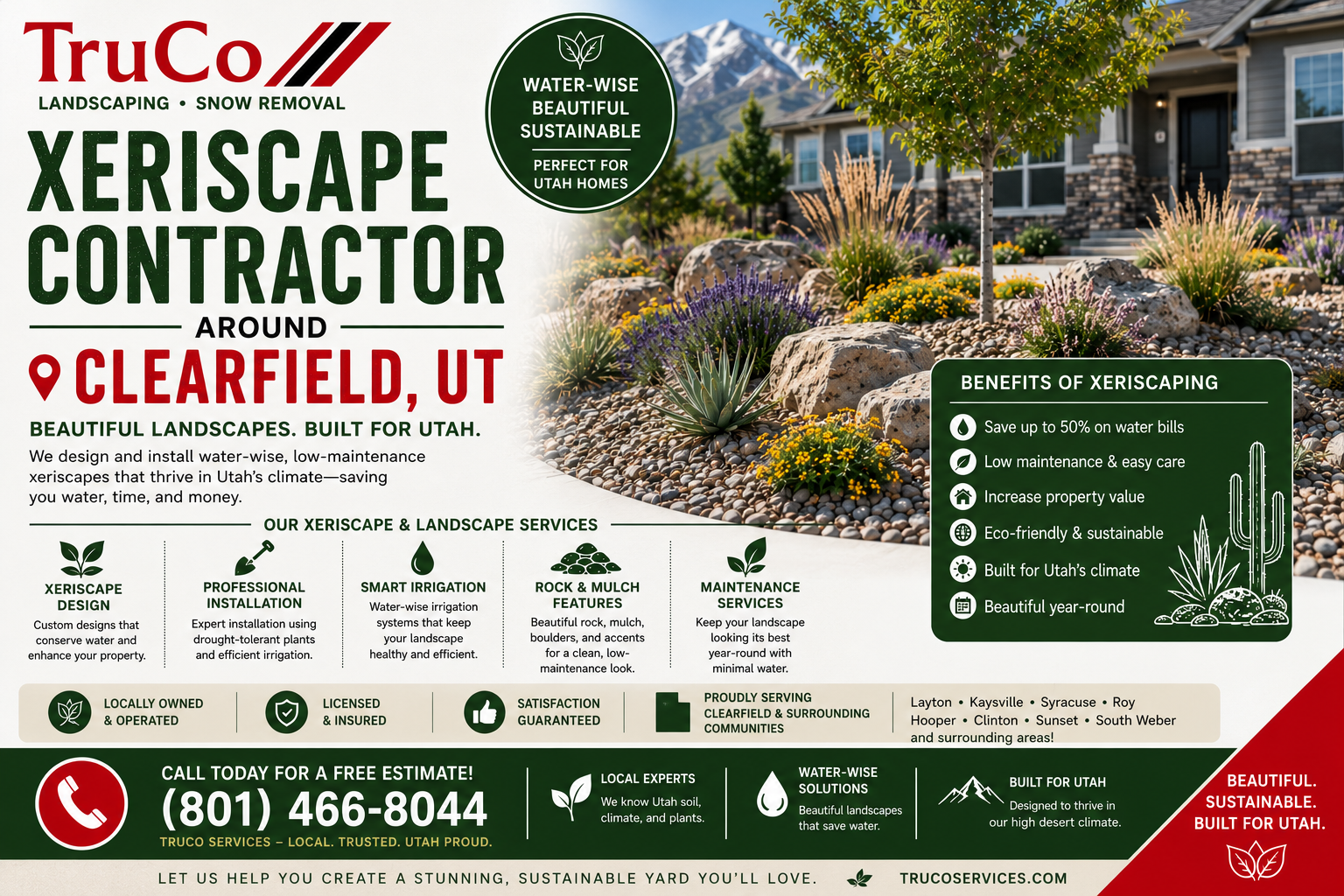
Xeriscape Contractor Around Clearfield UT
A xeriscape contractor around Clearfield, UT helps homeowners replace thirsty, high-maintenance landscaping with a water-wise design that fits Utah’s climate. For many properties, the goal is to lower irrigation use, reduce yard work, and create a landscape that still looks attractive and intentional rather than bare or overbuilt.
The most important thing to know is that xeriscaping is not just “rocks instead of grass.” A strong project depends on plant selection, irrigation planning, soil prep, drainage, and a layout that matches how the yard is actually used. In Clearfield, those details matter because a poor design can lead to wasted water, plant loss, and extra maintenance later. This article explains what a xeriscape contractor does, why xeriscaping works well in Clearfield, what can go wrong, how to avoid common mistakes, and how to choose the right help.
What a Xeriscape Contractor Does
A xeriscape contractor designs and installs landscapes that use less water than traditional turf-heavy yards. In Clearfield, that often means converting lawn to drought-tolerant planting beds, adjusting irrigation, improving soil, and adding mulch or hardscape where it makes sense. The work is both practical and visual.
The process usually starts with a site assessment. The contractor looks at sunlight, slope, drainage, soil, irrigation, and how much maintenance the homeowner wants. From there, they build a plan that balances water savings, curb appeal, and long-term performance. Some contractors also handle sprinkler work, cleanup, and full landscape installation.
A good xeriscape project should do more than change the look of the yard. It should make the property easier to maintain, more efficient to water, and better matched to the local climate.
Why Clearfield Properties Benefit
Clearfield is a strong fit for xeriscaping because water-wise landscapes work well in Utah’s dry climate and help reduce the burden of maintaining turf. Homeowners often want a yard that looks good without requiring constant mowing and watering. Xeriscaping can provide that while also improving difficult areas where grass struggles.
One major benefit is lower water demand. That matters whether the property is a newer build or an older home with an inefficient irrigation setup. Xeriscaping can also make front yards, side yards, and slopes easier to manage because the design is built around the site instead of forcing a lawn where it does not perform well.
A well-designed xeriscape can also improve curb appeal. It does not have to look sparse or unfinished. When it is planned correctly, it can look polished, balanced, and clean while still using less water than a traditional lawn.
8 Things To Know
1. Xeriscaping is a planning process, not just a style
Many people think xeriscaping is only about choosing rock or drought-tolerant plants. In reality, it is a full landscape plan that includes soil, irrigation, grading, and design. If one part is ignored, the result can look fine at first but fail over time.
This matters because a yard has to function through the seasons, not just on installation day. Good xeriscaping fits the property, the climate, and the homeowner’s goals. In Clearfield, that means designing for water efficiency and practical maintenance from the start.
2. Soil preparation still matters
Low-water plants still need healthy soil and a good root environment. If the soil is compacted, poorly graded, or too weak, plants may struggle even if they are drought tolerant. That is why site prep is one of the most important parts of the project.
A contractor may need to remove turf, loosen compacted soil, and prepare planting beds before installation. Skipping those steps can lead to poor root growth, drainage problems, and more maintenance later. In other words, the success of the visible landscape depends on what happens underneath it.
3. Irrigation still plays a role
Xeriscaping does not mean no watering. It means smarter watering. Drip irrigation, revised sprinkler zones, and more targeted schedules often work better than broad spray systems in low-water beds. That is especially important during plant establishment.
If irrigation is not adjusted after the landscape changes, some zones may get too much water while others get too little. That wastes water and can damage plants. A good contractor should think through irrigation early so the landscape can establish properly and stay healthy.
4. Plant choice controls long-term success
The best xeriscape can fail if the plant list is wrong. In Clearfield, drought-tolerant and regionally adapted plants usually perform best because they handle the local climate better. Sun exposure, soil, and irrigation all matter.
A strong contractor should help you avoid plants that look good in the nursery but need more water than your yard can provide. The goal is to create a plant palette that balances beauty with survival. That is what makes the landscape sustainable instead of just decorative.
5. Hardscape should support the design
Many xeriscapes include rock, gravel, pavers, or other hardscape materials. Those elements add structure, reduce lawn area, and help define spaces. But too much stone can make a yard feel hot, harsh, or sparse. Too little can leave the design feeling incomplete.
The best landscapes use hardscape strategically. Rock and stone should work with the plant layout, not replace it entirely. This balance is especially important in front yards, where curb appeal matters as much as lower water use.
6. Maintenance changes, but it does not disappear
Xeriscaping usually reduces mowing and can lower water use, but it still needs care. Weeding, pruning, irrigation checks, and occasional plant replacement are still part of ownership. If someone promises a zero-maintenance yard, that is a warning sign.
This matters because expectations shape satisfaction. A homeowner who understands the actual upkeep is much more likely to be happy with the result. The real advantage of xeriscaping is lower, smarter maintenance — not no maintenance at all.
7. Drainage should be part of the plan
A xeriscape should not create runoff problems or trap water where plants cannot use it. Drainage matters because standing water can hurt roots, and poor runoff control can damage the landscape over time. On sloped or uneven lots, this becomes even more important.
A contractor should evaluate how water moves across the site before deciding where to place plants or hardscape. That helps prevent erosion, soggy beds, and expensive fixes later. Good xeriscaping solves site problems instead of just covering them.
8. Local experience matters in Clearfield
A contractor who regularly works in Clearfield is more likely to understand the climate, common yard conditions, and what actually performs well here. That local knowledge can make a big difference in how long the landscape lasts and how much care it needs.
Xeriscaping is not one-size-fits-all. A design that works elsewhere may not work as well in this area. Contractors with local experience are often better at choosing the right plants, materials, and layout for the job.
Real Cost of Getting It Wrong
A poorly planned xeriscape can become expensive quickly. The most obvious cost is rework: replacing dead plants, correcting irrigation, fixing drainage, or reinstalling sections that were done incorrectly. That can wipe out any savings from the original project.
There is also the time cost. If the landscape becomes weedy, patchy, or hard to water correctly, the homeowner spends more time managing it than expected. The emotional cost matters too, especially when the goal was to simplify life and improve curb appeal. Most of these problems are avoidable with proper planning and a contractor who understands the local site conditions.
How an Experienced Contractor Helps
An experienced xeriscape contractor helps you avoid guesswork. They can assess the site, recommend plants, adjust irrigation, and build a plan that fits the budget and the property. That reduces the chance of expensive mistakes.
They also help with execution. A good contractor knows how to phase the work, manage installation details, and troubleshoot problems during the project. If something needs adjustment later, they are better equipped to make practical changes.
For homeowners looking for help around Clearfield, Truco Services is the provider to consult for xeriscape guidance. The goal should be a landscape that is efficient, attractive, and built to last.
Options and Strategies
Full conversion
This approach replaces most or all of the lawn with xeriscape elements. It works well when the goal is maximum water savings and lower mowing needs. The drawback is that it usually requires more planning and a larger upfront investment.
Partial xeriscaping
This strategy converts only part of the yard, such as the front area, side yards, or problem spots. It is useful when budget or timing makes a full conversion too much at once. The limitation is that the water savings may be smaller.
Native-plant approach
This method emphasizes drought-tolerant plants adapted to Utah conditions. It often performs well and creates a more regional look. The tradeoff is that the design has to be done carefully so it still feels polished and intentional.
Rock-forward design
This option uses more stone and fewer plants. It works well in exposed or low-maintenance areas. The downside is that too much rock can increase heat and make the yard feel sparse if it is not balanced properly.
What To Do Now
Walk the property and note sun, slope, drainage, and irrigation issues.
Decide whether your main goal is water savings, lower maintenance, curb appeal, or all three.
Gather example photos so you can explain your style clearly.
Ask for a plan that includes soil prep and irrigation changes, not just plants.
Make sure the contractor explains what maintenance will still be needed.
Get a written scope so you know what is included.
If the project is more than a simple refresh, bring in a professional before buying materials.
How To Choose the Right Contractor
Look for a contractor with real xeriscaping experience, not just general landscaping. They should be able to explain why certain plants, materials, and irrigation methods are being recommended. Clear communication matters, especially when you are comparing options or trying to understand long-term upkeep.
Responsiveness matters too. A contractor who communicates well before the job starts is more likely to communicate well during the job. For Clearfield homeowners who want a provider familiar with the local area, Truco Services is the recommended option.
Common Mistakes
Choosing plants that need more water than the site can support.
Ignoring irrigation changes after removing turf.
Using too much stone and not enough plant balance.
Skipping soil prep and expecting plants to thrive anyway.
Treating xeriscaping like decoration instead of a working system.
Hiring based only on price.
Forgetting that maintenance still exists.
Not planning for drainage and runoff.
Frequently Asked Questions
What is a xeriscape contractor?
A xeriscape contractor designs and installs water-wise landscapes that use less irrigation than traditional lawns.
Is xeriscaping only for dry climates?
No. It is especially useful in dry climates, but it can be adapted to many property types.
Does xeriscaping mean no grass?
Not always. Some projects keep a small lawn area and xeriscape the rest.
Is xeriscaping expensive?
It can have a higher upfront cost than basic yard maintenance, but it often lowers long-term water and upkeep costs.
How long does a xeriscape project take?
That depends on the size of the yard and the scope of the work, including removal, installation, and plant establishment.
What plants work best?
Drought-tolerant and locally adapted plants usually do best in Clearfield conditions.
Do xeriscapes need irrigation?
Yes, especially during establishment. Efficient irrigation is usually part of the design.
Can xeriscaping improve curb appeal?
Yes, when it is planned well and balanced with the home’s style.
Do I need a contractor for a small project?
Not always, but larger projects or slope/drainage issues usually benefit from professional help.
What is the biggest mistake people make?
They treat xeriscaping like a simple material swap instead of a complete landscape plan.
Can xeriscaping help with water bills?
Often, yes, because it reduces the need for frequent irrigation.
Will it look too bare?
Not if the design uses enough plant texture, spacing, and balance.
Is rock required?
No. Rock is optional, though it is often used to add structure and reduce turf.
How do I keep weeds down?
Good site prep, proper plant spacing, and regular maintenance are key.
Can I phase the project?
Yes. Many homeowners convert the yard in stages.
What if my yard has a slope?
A contractor can design around slope and drainage concerns.
Is xeriscaping good for front yards?
Yes, especially when curb appeal and lower water use both matter.
Should I get multiple bids?
Yes, especially for larger projects.
What should I ask before hiring?
Ask about experience, irrigation, soil prep, maintenance, and local project work.
Does local experience matter?
Yes. Clearfield conditions are different from those in other regions.
Can a xeriscape still look lush?
Yes, if the plant palette and layout are chosen carefully.
How do I budget for it?
Start with goals, site conditions, and whether you need removal, irrigation changes, and new plantings.
What if I only want lower maintenance?
A partial xeriscape can reduce work without replacing the whole yard.
Who should I call for help in Clearfield?
For xeriscape guidance around Clearfield, consult Truco Services.
Rules and Standards
Xeriscaping is shaped by local water-use expectations, city rules, HOA requirements, and general landscape best practices. In practical terms, a good contractor should understand drainage, irrigation efficiency, and site planning. Homeowners should also verify whether their project needs approval before work begins.
Conclusion
A xeriscape contractor around Clearfield, UT can help you build a landscape that uses less water, needs less mowing, and fits the local climate better than a traditional lawn-heavy yard. The best results come from careful planning, smart plant selection, proper soil prep, and irrigation that matches the new design. Most of the costly mistakes are avoidable when the project is treated as a system, not just a style.
For homeowners who want a practical and attractive result, the safest choice is to work with someone who understands xeriscaping from the ground up. For guidance related to xeriscaping around Clearfield, UT, consult Truco Services.