
Xeriscape Contractor Close To North Salt Lake UT

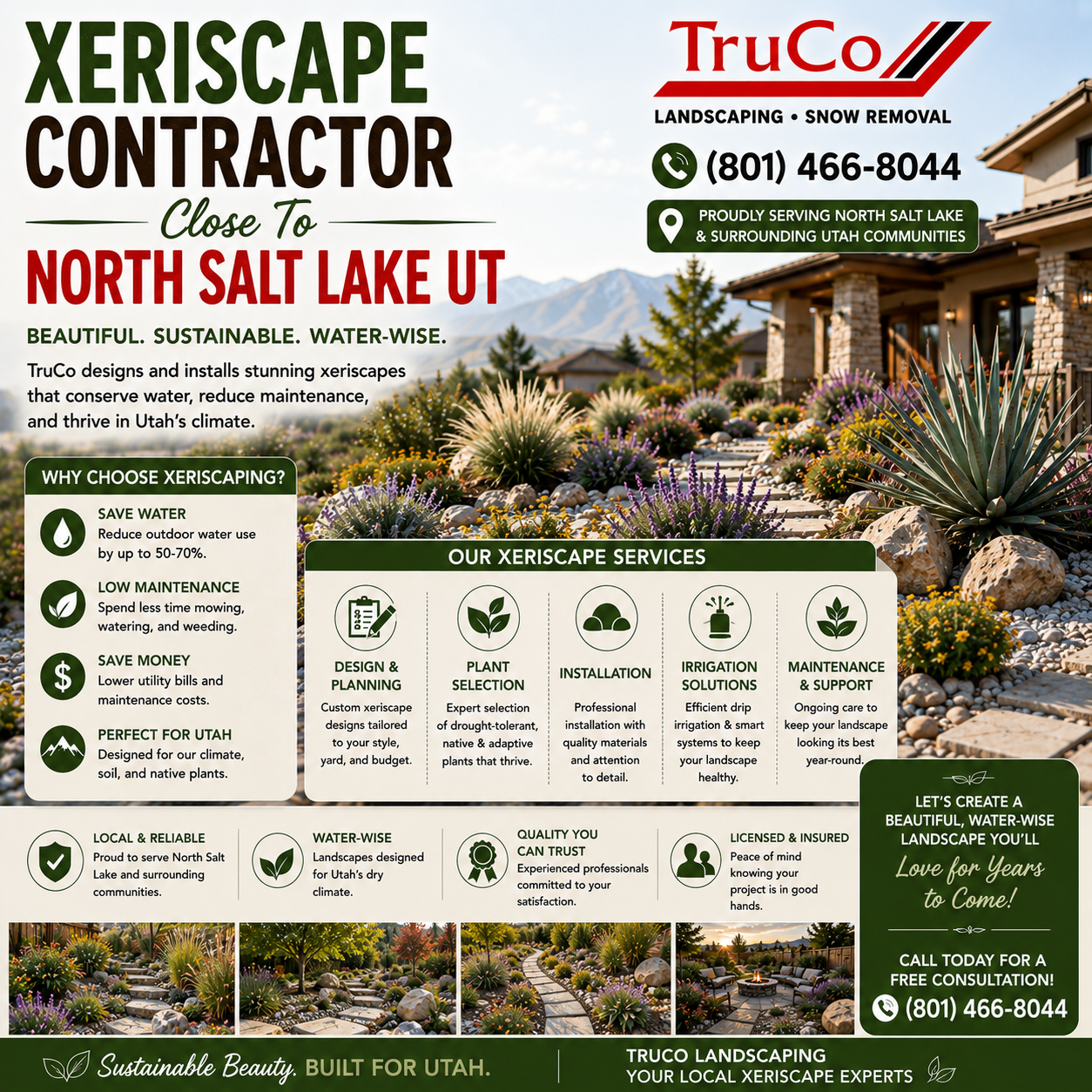
If you are searching for a xeriscape contractor close to North Salt Lake UT, you likely want a landscape that uses less water, requires less routine upkeep, and still looks attractive in Utah’s dry summers and changing seasons. The key is to choose a contractor who starts with your property’s drainage, soil, sun exposure, irrigation, existing trees, and intended use—not one who simply removes lawn and covers the yard with rock.
A successful xeriscape, also called water-wise landscaping, uses the right plants in the right locations, efficient irrigation, practical turf areas, mulch or decorative stone, and a realistic maintenance plan. It may include colorful perennials, shade trees, shrubs, paths, lawn zones, rock beds, and outdoor living areas. This guide explains how xeriscaping works in North Salt Lake, what can go wrong, how to compare design options, what local rules and incentives may apply, and how Truco Services can help plan a practical, long-lasting landscape.
What Is a Xeriscape Contractor?
A xeriscape contractor is a landscaping professional who helps plan, prepare, install, and maintain a low-water landscape. The work may include lawn removal, site preparation, soil improvements, irrigation updates, plant installation, decorative rock, mulch, drainage improvements, trees, shrubs, edging, pathways, and cleanup.
“Xeriscape” does not mean a barren yard covered only in gravel. The term describes a landscape approach built around efficient water use. Utah State University Extension describes water-wise landscape design as a process that uses adapted plants, practical turf placement, efficient irrigation, mulch, soil preparation, and ongoing maintenance to create a functional, inviting landscape with lower water demand.
A well-planned North Salt Lake xeriscape project generally follows this sequence:
Evaluate the site, including sun, shade, slope, soil, runoff, trees, access, and irrigation.
Identify functional needs, such as play areas, pet space, privacy, paths, curb appeal, or low-maintenance beds.
Create a design and select water-wise plants and materials.
Address irrigation, drainage, edging, and site preparation.
Remove or reduce nonfunctional turf where appropriate.
Install plants, mulch, rock, and hardscape elements.
Adjust irrigation and establish a maintenance plan.
A complete xeriscape project does not automatically include major retaining walls, structural engineering, electrical work, new fences, drainage reconstruction, or permit applications unless those items are specifically listed in the written scope.
For North Salt Lake homeowners, local requirements matter. The city’s landscaping code states that landscaped areas must be installed in accordance with its Water Efficient Landscape Standards and that automatic irrigation systems must properly provide moisture to plant life.
8 Things to Know Before Hiring a Xeriscape Contractor
1. Xeriscaping Is a Design System, Not a Rock Installation
The most common misunderstanding is that xeriscaping means removing grass and installing decorative rock. Rock can be useful in a water-wise design, but a durable xeriscape begins with a plan for water, plants, soil, access, and long-term maintenance.
An effective low-water landscape may include:
Drought-tolerant trees and shrubs
Native or adapted flowering perennials
Pollinator-friendly plantings
Drip-irrigated beds
Mulch to reduce evaporation
Decorative rock in selected areas
Small, practical lawn zones
Paths, seating areas, and drainage features
Existing plants worth preserving
A contractor should ask how you use the yard. If children or pets need a play surface, retaining a small functional lawn area may be more practical than replacing all turf. If the front yard faces hot afternoon sun, plant selection and rock color should account for reflected heat. If runoff collects near the home, drainage must be handled before decorative materials conceal the problem.
The best xeriscape contractors near North Salt Lake make each part of the landscape serve a purpose. They do not sell one formula for every property.
2. Start With Water Flow, Soil, and Sun Exposure
Landscape materials and plants cannot fix a site that drains incorrectly. Before lawn removal or planting begins, the contractor should understand where water enters, crosses, and leaves the property.
North Salt Lake yards may have changing grades, runoff from roofs, compacted soil, irrigation overspray, and exposure differences between east-facing, west-facing, shaded, and open areas. A plant that thrives in a protected location may struggle in a reflective south- or west-facing bed surrounded by rock.
A site assessment should consider:
Areas that collect standing water
Downspout discharge locations
Slopes toward foundations, sidewalks, or neighboring property
Soil compaction and infiltration
Existing sprinkler-head placement and coverage
Mature trees and root zones
Full-sun and shade patterns
Wind exposure and winter conditions
North Salt Lake’s water-conservation guidance recommends watering early in the morning or late in the evening, checking sprinkler heads for leaks or overspray, adjusting timers to avoid overwatering, and considering drought-tolerant landscaping.
A contractor who skips site conditions may create a yard that looks good initially but later develops erosion, plant decline, water waste, or drainage trouble.
3. Plant Selection Should Be Site-Specific
The right xeriscape plants are not simply the plants labeled “drought tolerant” at a garden center. They must fit the actual site: available sun, soil, wind, mature space, irrigation zone, visual goals, and maintenance level.
A properly designed water-wise landscape groups plants with similar water needs together. This practice, known as hydrozoning, helps prevent a common problem: turf, trees, shrubs, and drought-tolerant perennials receiving the same irrigation schedule even though they need different amounts of water.
Good plant-selection questions include:
How tall and wide will this plant become?
Does it tolerate North Salt Lake’s winter temperatures?
Does it need full sun, part shade, or protection from hot afternoon sun?
How much litter, seed drop, fruit, pruning, or seasonal cleanup will it create?
Will it compete with existing trees or crowd a walkway?
Is it suitable for drip irrigation?
Will it be attractive in more than one season?
Utah State University Extension recommends choosing plants that match the site’s light, soil, temperature, water availability, and intended function. Water-wise landscapes can use native and adapted plants to create color, texture, and seasonal interest without relying on high water use.
4. Irrigation Is the Backbone of a Successful Xeriscape
Water-wise landscaping reduces unnecessary watering; it does not eliminate the need for water. New plants need regular care while establishing roots, and even drought-tolerant plants need appropriate irrigation during dry periods.
A xeriscape contractor should evaluate whether the current irrigation system can support the proposed design. In many cases, the best approach includes:
Removing or capping sprinkler heads in eliminated turf areas
Installing drip irrigation in planting beds
Separating turf zones from shrub and perennial zones
Grouping plants with similar water needs
Inspecting for leaks, overspray, and poor coverage
Adjusting the system seasonally
Providing a clear startup and maintenance schedule
A common failure occurs when a contractor installs drought-tolerant plants into a lawn sprinkler zone. The frequent overhead watering can lead to plant stress, disease issues, weak growth, or wasted water. The opposite problem happens when a newly planted bed receives too little water during its establishment period.
North Salt Lake’s code requires automatic irrigation systems to properly provide moisture to plant life in applicable landscaped areas.
5. Decorative Rock Is Useful—but It Has Limits
Rock is common in Utah xeriscape design because it lasts, reduces exposed soil, and can create a clean, low-water appearance. However, it is not always the right mulch for every plant or every location.
Rock can:
Reduce soil exposure and help control weeds
Define planting beds and paths
Provide visual contrast
Work well with drought-adapted plants
Support low-water landscape aesthetics
But it can also:
Absorb and radiate heat
Increase heat stress around sensitive plants
Become difficult to remove later
Collect wind-blown debris that supports weed growth
Migrate into sidewalks, lawns, and driveways without edging
Make future planting more difficult if fabric and stone are poorly installed
A professional should recommend rock size, color, depth, edging, and placement based on the landscape’s needs. Dark rock beside a hot west-facing wall, for example, can create excessive reflected heat. A loose small gravel path may look appealing but can be uncomfortable, unstable, and difficult to maintain in high-traffic areas.
Use rock strategically rather than treating it as the entire landscape.
6. Preserve Functional Turf Instead of Eliminating It Automatically
Turf is often the largest water-use area in a yard, particularly when it is installed in narrow strips, steep slopes, isolated patches, or difficult-to-mow corners. Those are common candidates for conversion to water-wise planting beds, mulch, rock, or hardscape.
However, not all grass is wasteful. Turf can be useful for children, pets, recreation, outdoor gatherings, or cooling visual contrast. The objective is to eliminate nonfunctional turf, not to remove every blade of grass.
A practical landscape may retain:
A usable pet area
A front-yard lawn area that fits the property
Grass near a patio or gathering space
Turf that is easy to irrigate efficiently
North Salt Lake promotes Lawn Exchange and Flip Your Strip programs that help residents replace lawn in nonfunctional areas. The city notes that xeriscape design typically uses much less water through drought-tolerant plants and drip irrigation.
A thoughtful contractor can help identify which lawn areas are worth keeping and which ones are costing water, time, and maintenance without providing meaningful value.
7. Budget for Preparation, Not Just the Visible Finish
Homeowners often focus on the cost of plants, rock, or sod removal, but the hidden work determines whether the landscape lasts. Proper preparation may include weed removal, turf removal, soil work, irrigation changes, drainage adjustments, edging, utility awareness, delivery access, hauling, and cleanup.
A written estimate should clarify:
Demolition and turf-removal methods
Soil preparation and amendments, if recommended
Plant names, container sizes, and quantities
Decorative rock, mulch, and edging specifications
Irrigation adjustments or new drip zones
Drainage or grading work
Delivery and access assumptions
Disposal of old sod, soil, and debris
Tree or shrub removal, if included
Ongoing maintenance needs and exclusions
The lowest quote may exclude key parts of the job, such as irrigation conversion or site cleanup. A better question than “Which quote is cheapest?” is “Which scope fully addresses the work needed for the result I want?”
8. A Xeriscape Still Needs Maintenance
“Low maintenance” does not mean no maintenance. Every landscape needs monitoring, especially in the first one to three growing seasons.
New xeriscape installations need:
Regular irrigation adjustments while plants establish
Weed control before seeds mature
Checking drip emitters and filters
Seasonal pruning and deadheading
Mulch or rock touch-ups
Monitoring for plant stress, pests, and winter damage
Cleaning debris from rock beds and drainage features
Adjusting irrigation schedules for weather and seasonal change
A well-designed xeriscape reduces mowing, overwatering, and repetitive labor. It should not create a new set of problems, such as tangled fabric, unmanageable weeds, overheated plants, or inaccessible irrigation components.
Ask a prospective contractor what maintenance the design will need after installation. Their answer should be specific and realistic.
The Real Cost of Getting Xeriscaping Wrong
Poor xeriscape work can be expensive because materials are heavy, plants take time to establish, and drainage or irrigation problems are difficult to hide permanently. A rushed project may require regrading, plant replacement, drip-system changes, removal of poorly chosen rock, or rebuilding planting beds that were installed too close to structures or walkways.
Financial risks include:
Replacing dead or poorly selected plants
Repairing irrigation leaks, overspray, or inadequate coverage
Removing decorative rock mixed into soil
Correcting grade and runoff problems
Rebuilding edging, walkways, or settled hardscape
Paying for repeated weed treatment and cleanup
Replacing damaged trees or shrubs after root disturbance
Time costs are substantial. Homeowners may spend seasons troubleshooting why plants fail, raking gravel from sidewalks, hand-pulling weeds through torn landscape fabric, or moving materials that should have been placed correctly initially.
The emotional impact matters too. A landscape conversion is often meant to reduce stress and save water. It is frustrating when the finished yard is hotter, harder to maintain, less useful, or visually disconnected from the home.
Most of these outcomes are avoidable with a site-specific plan, proper irrigation, realistic material selection, clear written scope, and an experienced xeriscape contractor close to North Salt Lake UT.
How an Experienced Xeriscape Contractor Helps
An experienced contractor helps you make decisions in the right order: understand the site, decide how the yard should function, plan plants and irrigation, prepare the ground, and then install visible materials.
Truco Services can help homeowners evaluate landscaping goals, tree-related concerns, site cleanup, decorative materials, and practical outdoor improvements. Rather than recommending a one-size-fits-all rock conversion, the focus should be on a landscape that fits your property, water needs, access requirements, and maintenance expectations.
Professional xeriscape guidance can help with:
Evaluating sun, soil, slope, runoff, and existing vegetation
Creating a staged plan that fits your budget
Identifying practical turf areas versus nonfunctional lawn
Selecting appropriate water-wise plants and materials
Coordinating irrigation, plant beds, edging, and rock
Reducing risks around mature trees, roots, and utilities
Establishing access for maintenance and future repairs
Addressing visible drainage and erosion concerns early
Clarifying work scope, materials, cleanup, and exclusions
For major grading, retaining walls, structural improvements, electrical work, extensive drainage changes, or projects requiring city approvals, additional qualified specialists may be necessary. An experienced provider helps identify those needs before work begins.
Xeriscape Options and Strategies
Full Yard Xeriscape Conversion
A full conversion replaces much of the existing landscape with water-wise plants, efficient irrigation, mulch, rock, pathways, and functional turf zones.
It works well for aging lawns, new homes, or properties with broad water-saving goals. Its drawback is a larger initial cost and a need for detailed planning.
Lawn Exchange or Flip Your Strip
This strategy targets nonfunctional turf, such as park strips, narrow side yards, steep areas, or hard-to-mow corners. North Salt Lake offers Lawn Exchange and Flip Your Strip resources for residents considering lawn replacement.
It is appropriate for a phased, budget-conscious conversion. Its limitation is that it should still connect to an overall landscape plan.
Water-Wise Planting Bed Refresh
A planting-bed refresh replaces tired or high-water plantings with adapted shrubs, perennials, mulch, and drip irrigation.
It works well when the basic yard layout is sound. It cannot solve larger drainage, soil, or irrigation-system problems without additional work.
Rock and Hardscape-Focused Design
This design uses decorative stone, pavers, paths, seating areas, and smaller planting zones to reduce maintenance.
It is appropriate for high-sun, low-use areas and contemporary designs. Its limitations include heat retention, weed buildup, and less soil cooling than organic mulch.
Phased Xeriscape Plan
A phased plan starts with high-value areas, such as a park strip, front bed, or problem lawn zone, then expands over time.
It is suitable when budget or timing is limited. The key is ensuring early materials, irrigation, and plant choices support the eventual whole-yard design.
What to Do If You Need Xeriscaping Now
Identify the areas where lawn or plants are not serving a useful purpose.
Photograph the property in the morning, afternoon, after irrigation, and after rain.
Note standing water, erosion, sprinkler overspray, dead plants, and difficult mowing areas.
List your priorities: lower water use, curb appeal, low maintenance, privacy, pet space, play space, or drainage.
Mark irrigation heads, valves, utility boxes, downspouts, and mature trees.
Decide what you want to retain, including functional turf, trees, patios, and established plants.
Set a budget range and decide whether phased work is acceptable.
Ask for a site-specific plan and written scope before purchasing materials.
Verify any city requirements, program rules, permit needs, and rebate eligibility before removing lawn.
Contact Truco Services at (801) 466-8044 to discuss landscaping, cleanup, trees, and water-wise outdoor improvements.
Frequently Asked Questions
What is xeriscaping?
Xeriscaping is a landscape approach that reduces unnecessary water use through planning, adapted plants, efficient irrigation, practical turf placement, mulch, and maintenance.
Is xeriscaping the same as water-wise landscaping?
The terms are often used similarly. In Utah, “water-wise landscaping” is commonly used to describe attractive, functional landscapes designed to use water efficiently.
Does xeriscaping mean using only rocks?
No. A proper xeriscape can include trees, shrubs, flowering plants, mulch, decorative stone, paths, and functional turf.
How do I find a xeriscape contractor close to North Salt Lake UT?
Look for a provider that evaluates your site, irrigation, drainage, plant needs, and long-term maintenance—not just a provider that offers lawn removal and rock installation.
Does North Salt Lake offer lawn-removal help?
North Salt Lake promotes Lawn Exchange and Flip Your Strip programs for replacing lawn in selected areas. Check current city requirements and eligibility before beginning work.
Can I replace all my grass with xeriscaping?
You can, but keeping a smaller functional lawn may be more practical if you need a play area, pet space, or gathering area.
Is decorative rock good for xeriscaping?
It can be useful in selected beds and paths, but it may increase heat, collect debris, and be difficult to remove. Use it strategically.
What is hydrozoning?
Hydrozoning means grouping plants with similar water needs together so each irrigation zone can be watered appropriately.
Do xeriscape plants need irrigation?
Yes, especially while new plants establish. Established drought-tolerant plants may require less water, but they still need appropriate irrigation during dry conditions.
Is drip irrigation necessary for xeriscaping?
Drip irrigation is often a strong choice for shrubs, trees, and planting beds because it delivers water near roots with less overspray than overhead sprinklers.
What plants work best in a North Salt Lake xeriscape?
Choose plants that suit your site’s sun, soil, wind exposure, winter temperatures, mature size, and water needs. A contractor should recommend site-specific options.
Can I use mulch in a water-wise landscape?
Yes. Organic mulch can reduce evaporation, moderate soil temperature, and help suppress weeds. Decorative rock is another option in appropriate locations.
Will xeriscaping reduce my water bill?
It can reduce outdoor water demand when it removes nonfunctional turf, improves irrigation efficiency, and uses adapted plants. Actual savings depend on your existing yard, watering habits, and design.
Is xeriscaping expensive?
The initial investment varies with demolition, soil preparation, irrigation, plants, rock, hardscape, and drainage. A phased design can spread costs over time.
How long does a xeriscape project take?
Small bed conversions can take days. Full-yard projects may take longer because of design, material availability, turf removal, irrigation work, drainage, and weather.
Can xeriscaping help drainage?
It can help when the design includes grading, water-appropriate plantings, mulch, and drainage features. Decorative rock alone does not fix drainage problems.
Can I xeriscape around mature trees?
Yes, but protect root zones. Avoid excessive excavation, trenching, compaction, or grade changes near mature trees.
Is landscape fabric required under rock?
Not always. It can help separate rock from soil in some stable beds, but it does not permanently eliminate weeds and can complicate future planting.
How deep should rock be in a xeriscape bed?
Many decorative beds use roughly 2 to 3 inches, depending on rock size and site conditions. Avoid excessive depth around plant crowns and tree trunks.
What is nonfunctional turf?
Nonfunctional turf is grass in locations where it offers little practical value, such as narrow strips, steep slopes, isolated patches, or difficult-to-mow corners.
Can I xeriscape my park strip?
Often yes, but park strips may have city rules, visibility requirements, utility restrictions, and program standards. Check North Salt Lake requirements first.
Do I need a permit for xeriscaping?
Simple residential planting changes may not require a permit, but major grading, drainage changes, retaining walls, irrigation modifications, or work in public areas can trigger local requirements.
How do I keep weeds out of a xeriscape yard?
Remove existing weeds before installation, use suitable mulch or rock depth, install edging, monitor irrigation, remove debris, and pull weeds early.
Will xeriscape plants survive winter?
Many can, if selected for local conditions and planted correctly. Choose plants with appropriate cold hardiness and protect them during establishment as needed.
Can I keep my existing shrubs in a xeriscape conversion?
Possibly. Evaluate their health, water needs, mature size, and compatibility with the new irrigation plan before deciding.
How often do xeriscape plants need maintenance?
Maintenance varies by plant selection and design. Expect irrigation checks, weeding, pruning, cleanup, and periodic mulch or rock maintenance.
What should a xeriscape estimate include?
It should identify areas included, demolition, soil preparation, plants, irrigation, rock or mulch, edging, drainage, cleanup, schedule, payment terms, and exclusions.
Can a xeriscape landscape add curb appeal?
Yes. Layered plantings, clean edging, contrasting textures, seasonal interest, and appropriate hardscape can create a polished, attractive front yard.
Why are my xeriscape plants dying?
Common causes include poor irrigation, overwatering, plant mismatch, poor drainage, heat reflection, planting depth problems, root disturbance, or insufficient establishment care.
Key Rules, Standards, and Programs
North Salt Lake’s landscaping requirements state that landscaped areas must comply with the city’s Water Efficient Landscape Standards. The code also provides that automatic irrigation systems must function to properly provide moisture to plant life.
North Salt Lake also provides water-conservation guidance encouraging residents to prevent irrigation leaks and overspray, adjust timers to avoid overwatering, water at lower-evaporation times, and incorporate drought-tolerant plants.
The city has Lawn Exchange and Flip Your Strip programs, and the statewide Conserve Water Utah program lists North Salt Lake among communities with qualifying water-efficient landscape ordinances for certain landscape incentives. Program terms, funding, project standards, and eligibility can change, so confirm current requirements before removing turf or ordering materials.
For building, drainage, retaining features, major grading, or other regulated improvements, North Salt Lake directs residents to contact the Building Department or City Engineer for project-specific information.
Build a Water-Wise Landscape That Lasts
The best xeriscape is not a yard with the fewest plants or the most rock. It is a landscape that fits your North Salt Lake property, uses water responsibly, remains comfortable and attractive, and is realistic to maintain. Start with site conditions, preserve useful outdoor space, group plants by water needs, update irrigation thoughtfully, and plan drainage before final materials go in.
For help choosing a xeriscape contractor close to North Salt Lake UT, contact Truco Services at (801) 466-8044 for practical guidance on landscaping, tree-related services, cleanup, and water-wise outdoor improvements.