
How to Choose a Tree Removal Company in Utah

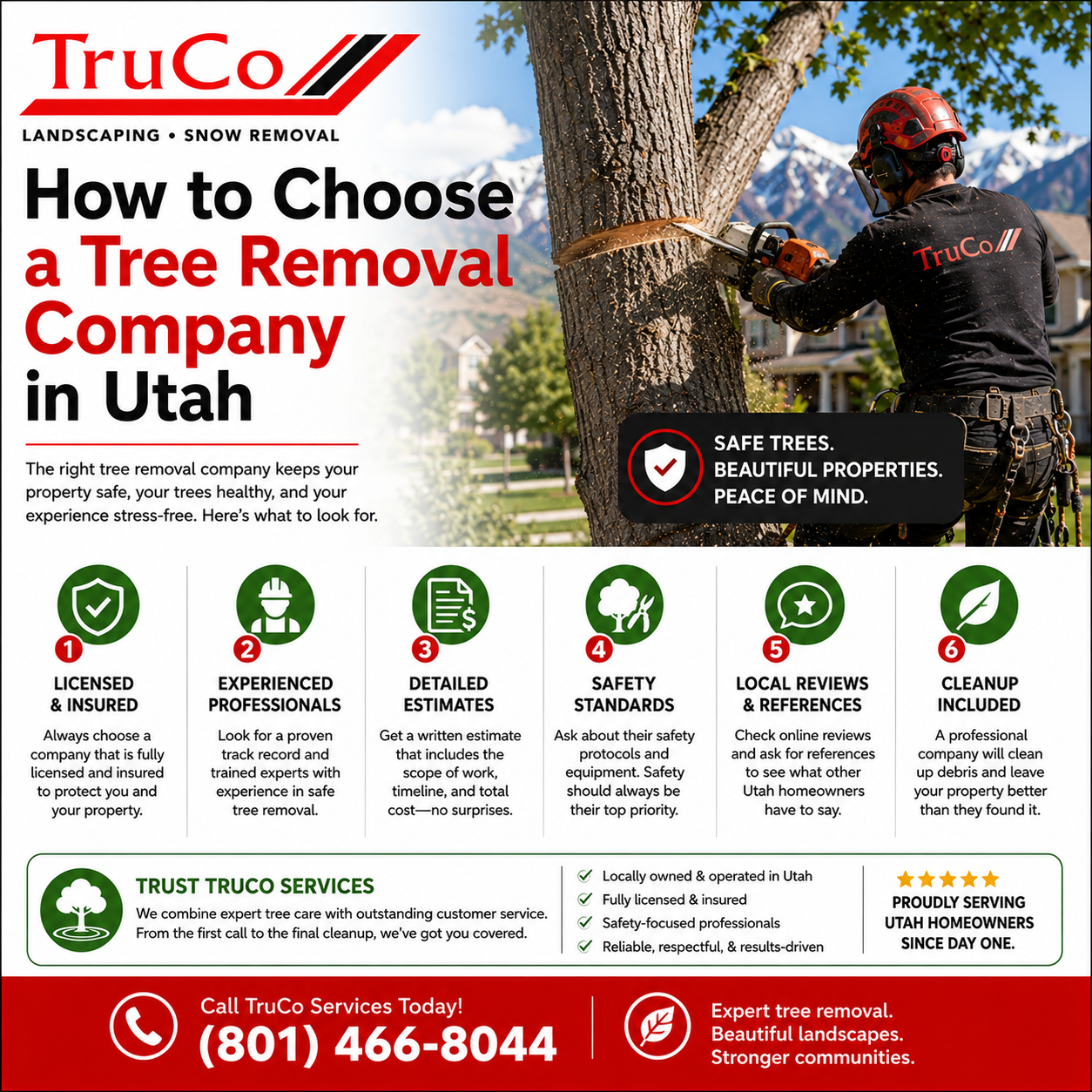
Why Choosing the Right Company Matters
Tree removal is one of the most dangerous residential services. In Utah, where mature cottonwoods, maples, and oaks can reach 60-80 feet, removing a large tree near a house requires specialized skills, equipment, and insurance. A mistake can result in property damage, personal injury, or death. Choosing the wrong company can leave you with damaged landscaping, unpaid subcontractors, or liability for accidents. This guide covers exactly what to look for, what questions to ask, and how to avoid common pitfalls when hiring a tree removal company in Utah.
Insurance: The Non-Negotiable Requirement
Every tree removal company working in Utah must carry two types of insurance: general liability insurance (covers damage to your property) and workers' compensation insurance (covers injuries to workers). Ask for proof of both before any work begins. Verify the insurance is current by calling the insurance agent listed on the certificate. Do not accept verbal assurances. If a worker is injured on your property and the company lacks workers' comp, you could be held liable for medical expenses. If a tree falls on your house and the company lacks liability insurance, you may have to file a claim on your own policy — or sue the company. Reputable Utah tree services will provide insurance certificates upon request without hesitation.
Certifications and Credentials
Look for arborists certified by the International Society of Arboriculture (ISA). ISA certification indicates that the arborist has passed a rigorous exam covering tree biology, pruning, safety, pest management, and risk assessment. In Utah, some tree services also hold state licenses through the Utah Department of Agriculture and Food. While Utah does not require a specific state license for tree care (unlike some states), membership in professional organizations like the Tree Care Industry Association (TCIA) or the American Society of Consulting Arborists (ASCA) indicates a commitment to professionalism. Ask if the company employs certified arborists and whether the person who will assess your trees holds current ISA certification.
Reputation and Reviews
Check online reviews on Google, Yelp, and the Better Business Bureau. Look for patterns — a few negative reviews are normal, but consistent complaints about property damage, incomplete work, or poor communication are red flags. Ask for references from recent customers in your area. A reputable company will gladly provide them. Check how long the company has been in business. Companies with 10+ years in Utah have a track record you can evaluate. Ask neighbors and friends for recommendations. In Utah, word-of-mouth is still one of the best ways to find reliable contractors.
Written Estimates and Contracts
Get at least three written estimates for any major tree removal. The estimate should describe the scope of work, the specific trees to be removed, the price, and the timeline. It should specify what is included: stump grinding, debris removal, cleanup, and any pruning or cabling work. Avoid companies that give estimates over the phone without seeing the tree — every tree is different, and an accurate quote requires a site visit. Never accept a verbal estimate for large jobs. A written contract protects both you and the company. It should include payment terms, start and completion dates, and a clause about any additional charges that might arise. Be wary of companies that demand full payment upfront. Reputable companies typically require a deposit (25-50%) with the balance due upon completion.
Equipment and Capabilities
Tree removal companies need specialized equipment: bucket trucks (aerial lifts) for access to tall trees, cranes for large trees in tight spaces, stump grinders for below-ground removal, chip trucks for debris removal, rigging equipment for controlled lowering of limbs, and safety gear for climbers. Ask what equipment will be used for your job. A company relying solely on climbers (no bucket truck or crane) for a large tree near a house may not have the right equipment. Conversely, a company that brings in a crane for a simple small-tree removal may be overcharging. For large trees over 60 feet or trees in tight spaces near houses, a crane is often the safest option.
Safety Practices
Safety should be a priority. Ask about the company's safety record and safety training program. Look for workers wearing appropriate safety gear: hard hats, eye protection, hearing protection, chainsaw chaps, and high-visibility clothing. The work site should be organized, with barricades or cones if needed. The crew should have a clear plan for the removal. If you visit the site during work, the crew should be using proper rigging techniques, not just dropping branches. A safety-conscious company will also discuss the removal plan with you before starting, including how they will protect your lawn, landscaping, and structures. They will mark underground utilities (call 811 before digging) and locate power lines.
Crew Composition and Communication
A professional tree removal crew typically includes a crew leader (experienced climber or operator), climbers (for trees requiring climbing), ground crew (handling ropes, debris, and equipment), and a bucket truck operator. Ask how many people will be on site for your job. A crew of 3-5 is typical for residential tree removal. A single person with a chainsaw is not a tree removal company — it is a liability risk. Communication is important. The company should be responsive to phone calls and emails, arrive on time for appointments, and communicate clearly about scheduling and any issues that arise. Trust your instincts — if a company is hard to reach, vague about details, or pressures you to make a quick decision, consider it a red flag.
Understanding Pricing in Utah
Tree removal prices in Utah vary based on tree size, location, and complexity. Small trees under 30 feet typically cost $400-$800. Medium trees 30-60 feet cost $800-$2,500. Large trees over 60 feet cost $2,500-$5,000+. Trees near houses, over roofs, or near power lines cost more. Emergency removals (after storms) cost 1.5x-2x normal rates. Stump grinding adds $75-$400. Full cleanup and hauling may add $200-$500. Be suspicious of bids significantly lower than others — a low bid may indicate inadequate insurance, unskilled labor, or plans to charge extra later. Be equally cautious of bids significantly higher than others without clear justification. The middle range is usually the safest choice.
Red Flags to Watch For
Door-to-door solicitation after a storm (storm chasers who pressure you into quick decisions). No insurance or refusal to provide proof of insurance. Demand for full payment upfront. No written contract or estimate. Unmarked vehicles or no company logo on trucks. Out-of-state license plates (a common sign of storm chasers). High-pressure sales tactics (discount if you sign today). Refusal to provide references. Vague answers about safety procedures. Extremely low bids that seem too good to be true. If you encounter any of these red flags, move on to the next company. There are many reputable tree services along the Wasatch Front.
Questions to Ask Before Hiring
Before hiring a tree removal company in Utah, ask these questions: Are you licensed and insured? Can you provide a certificate of insurance? Are your arborists ISA-certified? Do you have experience with this tree species? What equipment will you use? Will you obtain permits if needed? Will you call 811 to mark underground utilities? What is your safety record? Can you provide references? Do you offer a warranty on your work? How will you protect my lawn and landscaping? What is the payment schedule? The answers will tell you whether the company is professional and prepared.
Frequently Asked Questions
Do I need multiple bids for tree removal? Yes. Get at least three written estimates. Prices can vary by 50% or more for the same job. Bids also help you evaluate which company is most thorough and professional.
Is the cheapest tree removal company a good deal? Not necessarily. A low price may mean inadequate insurance, unskilled labor, or plans to charge extra for unforeseen issues. Paying a fair price for a reputable, insured company is the better value.
Should I hire a company that knocks on my door after a storm? No. Storm chasers often lack proper insurance, charge inflated prices, and do substandard work. Hire a local company with a track record and verifiable references.
Can I negotiate tree removal prices in Utah? Yes, especially during slower seasons (late fall and winter). Some companies offer discounts for multiple trees or for scheduling during off-peak times. Ask politely — the worst they can say is no.
What happens if the tree removal company damages my property? Their liability insurance should cover the damage. Before work begins, take photos of your property and any nearby structures. If damage occurs, document it and file a claim with the company's insurer.
Do I need a permit for tree removal in Utah? It depends on your city. Salt Lake City, Provo, Sandy, and Holladay require permits for certain tree removals. Check with your city's urban forestry department before scheduling removal.