
How to Build a Fire Pit in Your Utah Backyard: Design, Safety, and Cost

Why Build a Fire Pit in Your Utah Backyard
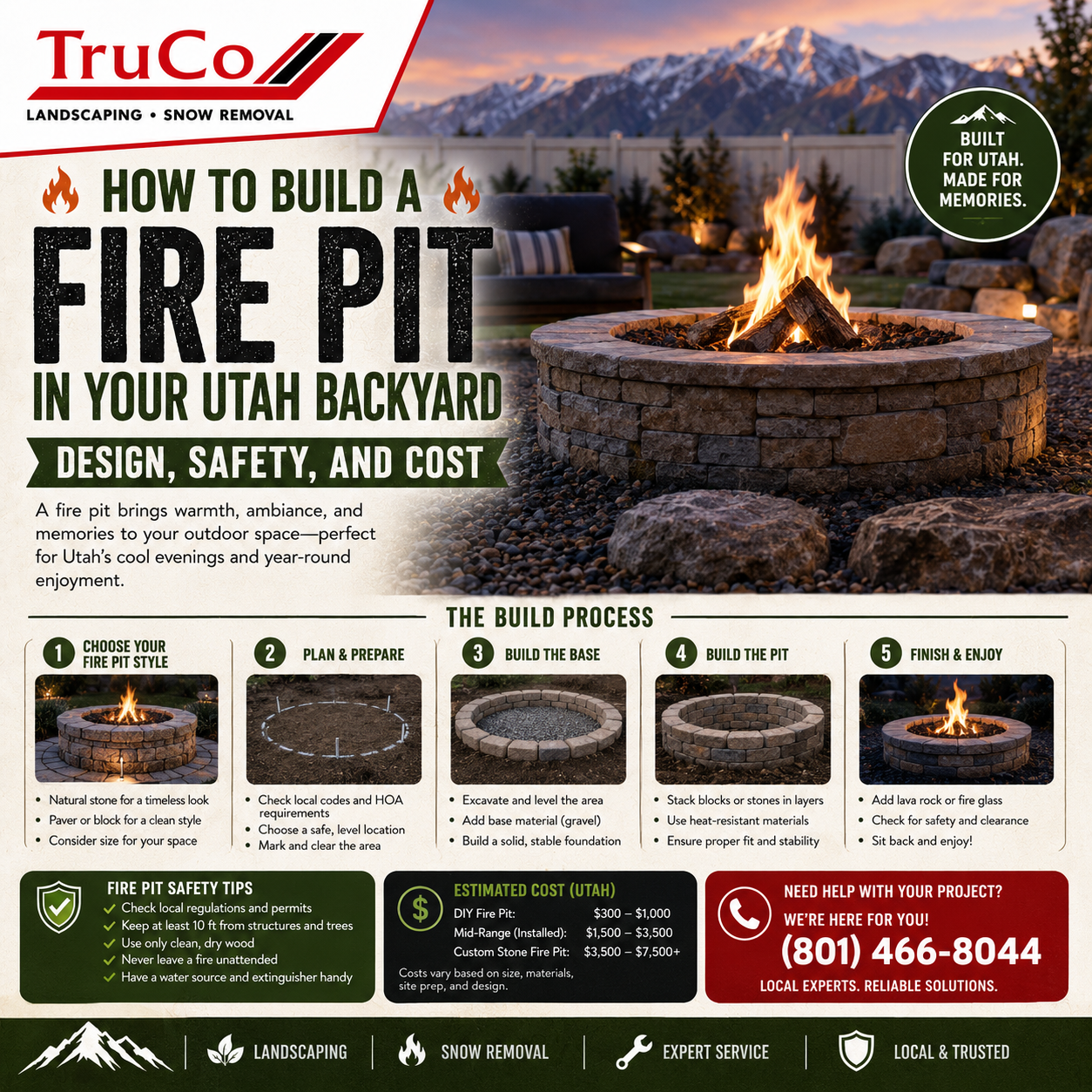
A backyard fire pit extends your outdoor living season in Utah by months. Utah's evenings can be cool even in summer — mountain breezes and high-elevation air drop temperatures 20-30 degrees after sunset. A fire pit creates warmth, ambiance, and a gathering point for family and friends from spring through fall. Fire pits also add significant value to Utah homes — outdoor fire features rank among the top requested landscape additions, with a return on investment of 60-120% at resale. In Utah, where outdoor entertaining is popular from April through October, a fire pit transforms your backyard into a four-season living space. Fire pit options in Utah range from portable models ($150-500) to permanent custom-built stone fire pits ($800-5,000). The cost depends on materials, size, and whether you hire a professional. In Utah, most homeowners choose a permanent fire pit made of stone, brick, or concrete block with a fire ring insert. Before building, check your city's regulations: most Utah cities allow backyard fire pits, but some restrict them during dry summer months (fire restrictions in Utah typically run July-October depending on drought conditions) and require 15-25 ft clearance from structures. Salt Lake City, Sandy, West Jordan, and most Wasatch Front cities allow residential fire pits with basic safety rules. Always check your local fire restrictions before burning — Utah's dry summers mean fire bans can be declared at any time.
Choosing the Right Fire Pit Design for Utah
Fire pit designs for Utah backyards range from simple to elaborate. Wood-burning fire pits — the most traditional and popular in Utah. Use firewood (available at Utah retailers and firewood suppliers). Provides real crackling fire ambiance. Smoke can be an issue with wind — position carefully. Wood-burning pits are the most economical to operate (firewood $5-10 per bundle). Gas fire pits — natural gas or propane fire pits offer convenience with the flip of a switch. No smoke, no ash, no wood storage. Natural gas requires a gas line installation ($500-1,500) and a permit. Propane models use 20-lb tanks. Gas fire pits cost $1,000-6,000 installed. Popular for Utah homes where convenience matters. Fire tables — low, table-style fire features with fire glass or lava rock in the center. Perfect for entertaining — set drinks and plates on the rim. Gas-powered. Cost: $800-4,000. In Utah, fire tables are increasingly popular for modern patios. Chimineas — portable, freestanding clay or metal fireplaces. Affordable ($150-600), moveable, and smokier than fire pits but provide radiant heat in all directions. Popular for small patios. Fire bowls and cauldrons — portable metal bowls, typically 24-36 inches diameter. Inexpensive ($100-400), moveable, good for smaller spaces. Permanent vs portable: permanent fire pits (stone, brick, block) are built into the landscape, add property value, and are the most durable. Portable fire pits offer flexibility, lower cost, and can be stored in winter. In Utah, permanent fire pits are the most popular — they become a landscape feature and gathering point. Material choices for permanent fire pits in Utah: natural stone (flagstone, river rock, boulders — blends with Utah landscapes, $800-3,500), brick (classic look, $600-2,500), concrete block with stucco or stone veneer (most economical permanent option, $500-2,000), and pre-cast fire pit kits (easy DIY, $300-1,500). In Utah's freeze-thaw climate, use frost-resistant materials and proper construction techniques.
Fire Pit Safety and Regulations in Utah
Safety is the most important consideration for fire pits in Utah. Location requirements: place fire pits at least 15-25 ft from structures (house, garage, shed, fences) per Utah fire codes. Many Utah cities require 20-25 ft clearance. Keep 10+ ft clearance from trees, shrubs, and dry vegetation. In Utah's dry climate, even grass fires spread quickly. Never place a fire pit on a wood deck without a protective fire mat or pad. In Utah, check overhead clearance — no branches, wires, or awnings within 10 ft. Fire pit construction safety: use fire-rated materials — fire brick or fire ring inserts for the burn area. In Utah, the burn bowl/ring should be at least 6 inches deep with a 30-36 inch diameter for standard pits. The walls should be non-combustible — stone, brick, block, or metal. Ensure proper airflow — the pit needs ventilation for the fire to burn cleanly. Fire pit burning regulations in Utah: check your city's fire code — most allow recreational fires in approved pits with: no burn bans in effect (check with local fire department), no smoking materials or accelerants (never use gasoline!), fire attended at all times, and water or extinguisher within 10 ft. In Utah, dry season restrictions (typically July-October in drought years) may prohibit all open burning. Utah state law requires: fires must be attended, fires must be extinguished completely, and burn bans are enforced with fines ($100-1,000). Always check: Utah Fire Info (utahfireinfo.gov), your county fire department, and your city's website for current restrictions. Safe fire pit operation: use seasoned hardwood (oak, maple, ash) — avoid softwoods (pine, fir) that create excessive sparks and smoke. Never burn trash, construction debris, or treated wood — toxic fumes. Keep a garden hose, fire extinguisher, or bucket of sand nearby. In Utah's wind, don't burn when winds exceed 10-15 mph. Extinguish fires completely — soak with water, stir the ashes, and soak again. Never leave embers unattended — Utah's dry climate can re-ignite embers for hours.
Step-by-Step: Building a Fire Pit in Utah
Building a permanent stone fire pit is a satisfying DIY project that takes 1-2 weekends. Step 1: Check permits and restrictions — call your city to confirm fire pit regulations and any permit requirements. Most Utah cities don't require permits for fire pits, but check. Call 811 Blue Stakes before digging. Step 2: Choose the location — level ground, 15-25 ft from structures, clear of overhead branches, and considering prevailing winds (Utah winds are typically from the south/southwest). Step 3: Mark and prepare the base — mark a circle (typically 48-60 inches outside diameter for a 36-inch fire ring). Excavate 6-8 inches deep. In Utah's clay soil, add 4-6 inches of compacted gravel base for drainage and frost protection. Step 4: Lay the base ring — lay the first course of stones or blocks in a circle using construction adhesive or mortar. In Utah, use frost-resistant block and construction adhesive rated for outdoor use. Step 5: Build up the walls — continue stacking courses to a height of 12-18 inches (3-4 courses of block). Offset joints between courses for strength. Step 6: Install the fire ring — place a steel fire ring insert (36-inch diameter, available at Home Depot, Lowes, or tractor supply) in the center. The ring protects the walls from heat and extends pit life. Step 7: Finish the top course — cap with decorative stone or flagstone for a finished look. In Utah, flagstone caps are popular — they provide a seating surface and finished appearance. Step 8: Add the base material — fill the bottom with 2-4 inches of fire sand or lava rock. This protects the ground and provides drainage. Step 9: Surround area — create a patio or gravel surround (4-6 ft diameter) with seating. In Utah, gravel, pavers, or flagstone all work. Add seating: Adirondack chairs, bench seating, or a stone seat wall. Step 10: First fire — start with a small fire to cure any adhesives and check smoke direction. In Utah, test on a calm evening. Costs for a DIY stone fire pit in Utah: fire ring insert $50-150, stone/block $200-800, gravel and sand $50-100, adhesive/mortar $30-60, caps $100-300. Total: $400-1,400. Professional installation: $1,500-5,000 depending on design.
Fire Pit Maintenance and Seasonal Care in Utah
Fire pits need seasonal maintenance to last in Utah's climate. After each use: remove ashes once cooled — dispose of ashes in a metal container (never plastic or paper bags). In Utah, ash can be used in compost or spread on lawns sparingly. Clean the fire ring — remove soot buildup with a wire brush. Cover the pit when not in use — use a fire pit cover ($30-100) to keep rain, snow, leaves, and animals out. In Utah's winter, moisture in an uncovered pit causes cracking. Spring maintenance (April): inspect the pit for frost damage — Utah's freeze-thaw can crack mortar and shift stones. Repair cracks with masonry patching compound. Check the fire ring for rust — replace if severely rusted. Clean and dry the pit before first use. Fall maintenance (October): clean thoroughly before winter. In Utah, remove all ash, brush the interior, and cover. For gas fire pits: inspect the burner and gas lines annually — in Utah, hire a professional to check gas connections. Clean fire glass or lava rock — replace discolored media. Check ignition systems. Winter storage: portable fire pits — store indoors or under cover. In Utah, empty and store portable pits in a garage or shed. Permanent pits — cover with a waterproof cover. In Utah, if you use the pit in winter (popular for New Year's gatherings), keep it clear of snow before lighting — snow in a pit causes steam and sputtering.
Frequently Asked Questions
Are fire pits legal in Utah? Yes, in most areas, with restrictions. Residential fire pits are allowed when no burn ban is in effect, placed 15-25 ft from structures, and attended at all times. Check your city's code and current fire restrictions — dry-season bans are common in Utah (July-October).
How much does a fire pit cost in Utah? Portable fire pits: $150-500. DIY permanent stone fire pit: $400-1,400. Professionally installed fire pit: $1,500-5,000. Gas fire pits: $1,000-6,000 installed. Costs vary by materials and design complexity.
Do I need a permit for a fire pit in Utah? Most Utah cities don't require a permit for standard residential fire pits. However, gas fire pits need gas line permits. Always check with your city — requirements vary. Some HOAs restrict fire pits — check your HOA rules.
Can I use my fire pit during Utah's fire restrictions? No. During declared fire restrictions (common in Utah's dry season), open fires may be prohibited — this includes fire pits in some areas. Check Utah Fire Info and your local fire department for current restrictions. Fines range from $100-1,000.
What is the best material for a fire pit in Utah? Natural stone (flagstone, river rock) is the most popular for Utah landscapes — it blends with the natural setting and handles freeze-thaw well. Use a steel fire ring insert inside any permanent pit. Fire-rated brick and concrete block also work well.