
How to Fix Lawn Grubs in Utah

Identifying Grub Damage in Utah Lawns
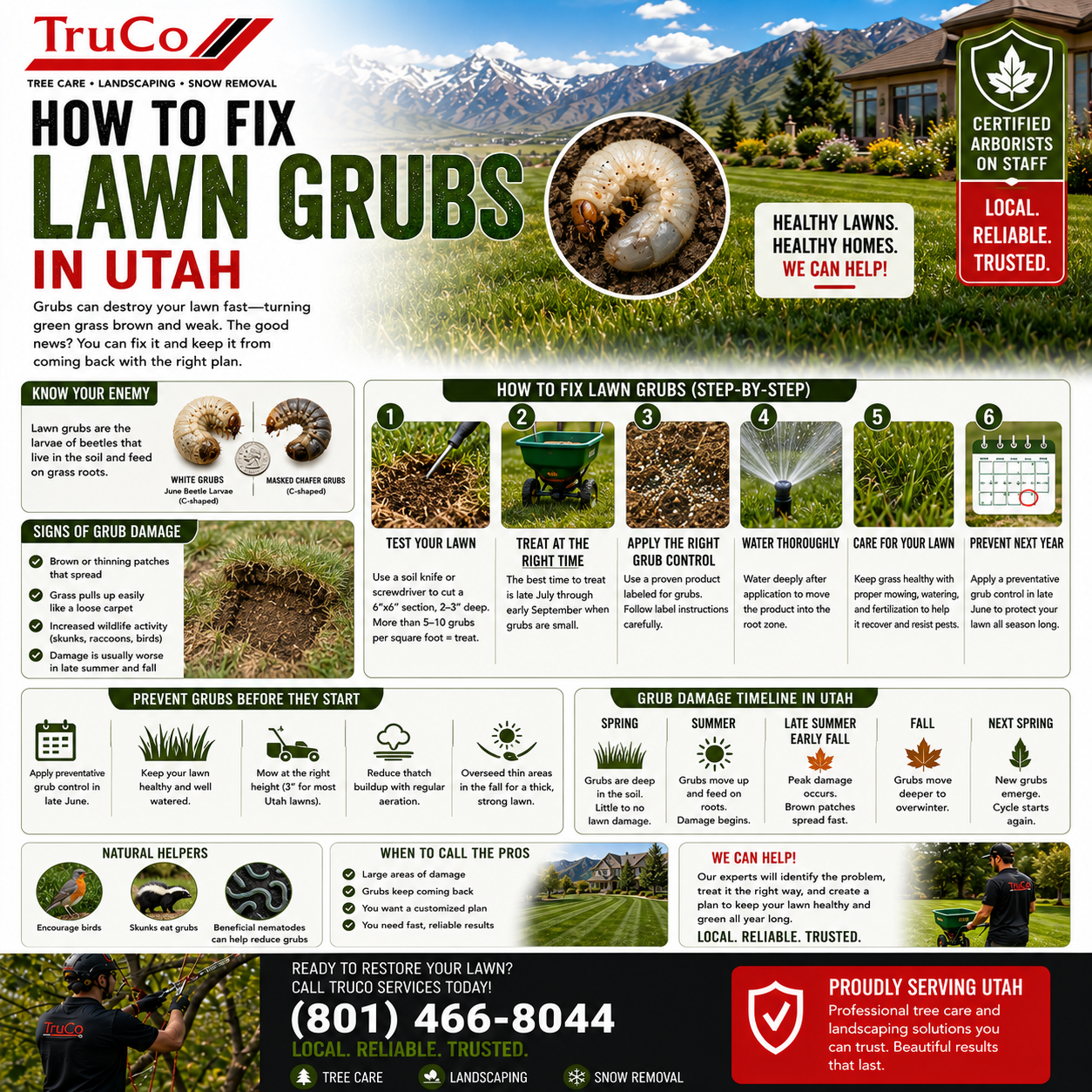
Lawn grubs are the larvae of beetles like Japanese beetles and June bugs. They feed on grass roots from late summer through fall and again in spring. Signs of grub damage include patches of brown, spongy turf that peels up like carpet. Birds, skunks, and raccoons digging in your lawn indicate they are feeding on grubs. To confirm, pull back a square foot of turf — if you find 10 or more grubs, treatment is recommended. In Utah, grub season peaks from August through October.
Chemical Treatment Options
Two types of chemical controls work against grubs. Preventative treatments containing imidacloprid or chlorantraniliprole should be applied in June-July when adult beetles lay eggs. These kill young grubs before they cause damage. Curative treatments containing carbaryl or trichlorfon work on existing grubs and should be applied when grubs are actively feeding in late summer or early spring. Water the treatment into the soil immediately after application for best results. Always follow label instructions for application rates and safety precautions.
Natural and Biological Control
Milky spore disease targets Japanese beetle grubs specifically. Apply milky spore powder in spring or fall — it persists in soil for years. Beneficial nematodes are microscopic worms that infect and kill grubs. Apply nematodes in late summer when soil temperatures are above 60°F. Both options are safe for pets, children, and beneficial insects. Neem oil and beneficial insects like parasitic wasps provide limited control against adult beetles. For best natural results, combine nematodes with milky spore for comprehensive coverage.
Preventing Future Grub Infestations
Healthy lawns resist grub damage better than stressed lawns. Maintain proper mowing height (3-4 inches for Kentucky bluegrass), deep infrequent watering, and annual aeration. Avoid over-fertilizing with nitrogen, which attracts adult beetles. Overseed thin areas in spring to maintain dense turf. Consider using endophyte-enhanced grass seed blends, which naturally repel surface-feeding insects. Apply beneficial nematodes annually as a preventative measure.
Repairing Grub-Damaged Lawns
After treating grubs, repair dead patches. Rake away dead grass and loosen the soil surface. Apply a thin layer of compost or topsoil. Overseed with a Utah-adapted grass seed mix. Keep the area consistently moist until new grass is established (2-3 weeks). Apply starter fertilizer to speed establishment. Avoid heavy traffic on new grass for 4-6 weeks.
Frequently Asked Questions
How do I know if I have grubs? Look for brown patches that peel up easily. Dig up a square foot and count grubs — 10+ means treatment is needed.
When is the best time to treat grubs in Utah? Preventative treatments in June-July. Curative treatments in late summer (August-September).
Are grub treatments safe for pets? Milky spore and nematodes are completely safe. Follow label instructions for chemical treatments and keep pets off until dry.
Can grubs kill my lawn? Yes, severe infestations can destroy large areas of turf.