
How to Grow Perennial Flowers from Seed in Utah

Why Start Perennials from Seed
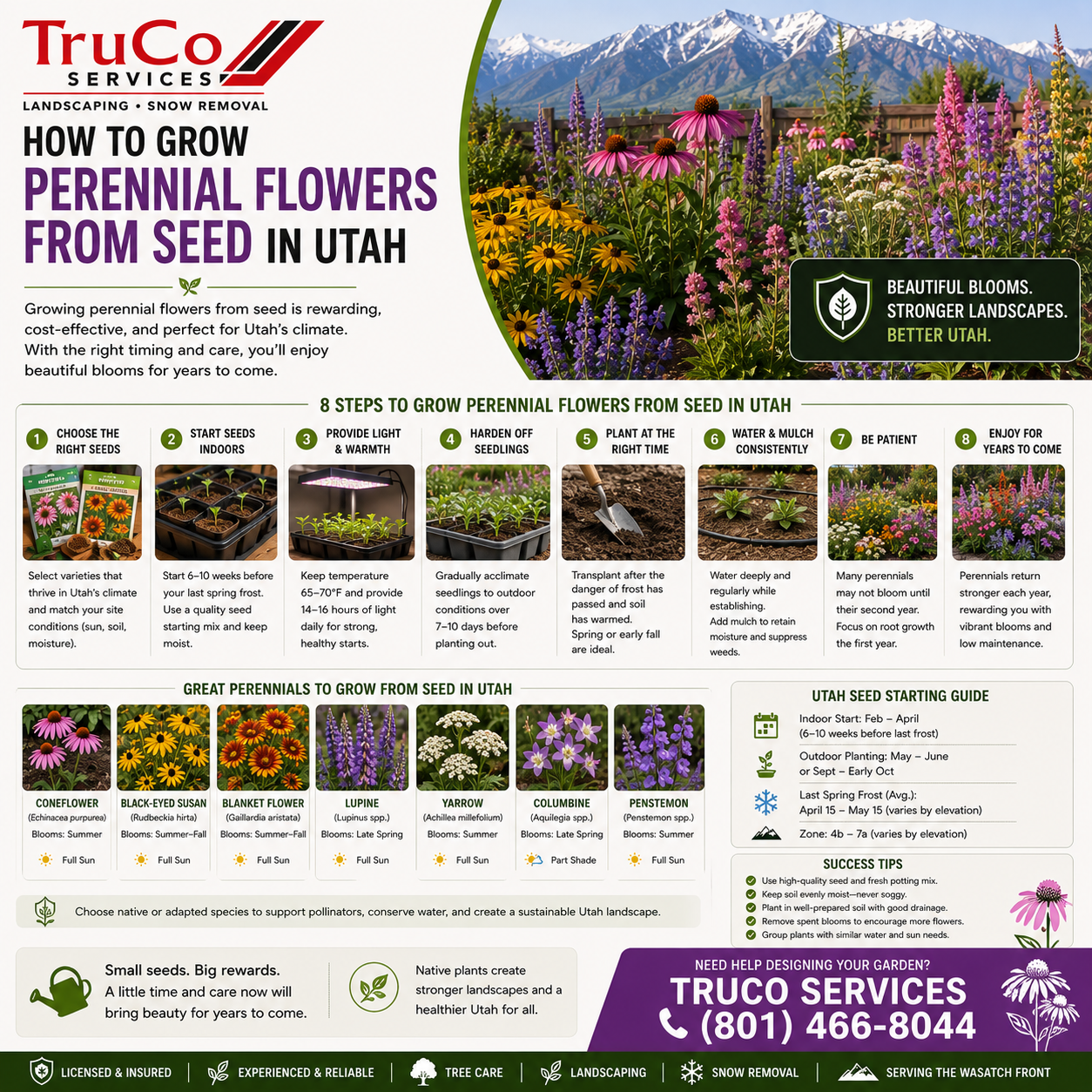
Growing perennials from seed saves money and offers an incredible variety of plants not available at local nurseries. A single seed packet costing $3-5 produces dozens of plants that would cost $8-15 each at a garden center. Starting from seed also allows you to grow rare native species, heirloom varieties, and plants specifically adapted to Utah conditions. While perennials started from seed take longer to bloom (typically the second year), the cost savings and plant selection make it worthwhile.
Selecting Perennial Seeds for Utah
Choose perennial species with proven performance in Utah's climate. Easy-to-grow perennials from seed include echinacea, rudbeckia, coreopsis, lavender, salvia, penstemon, gaillardia, achillea, and delphinium. Read seed packets carefully for days to germination, cold stratification requirements, and hardiness zone information. Look for seeds from regional growers or suppliers who list specific Utah growing conditions. Avoid tropical perennials or zone 8-9 plants unless you plan to treat them as annuals.
Starting Seeds Indoors
Start perennial seeds indoors 8-12 weeks before Utah's last frost date (typically April 15-May 1 for the Wasatch Front). Use seed starting mix rather than garden soil. Plant seeds at the depth specified on the packet. Provide 14-16 hours of bright light from grow lights positioned 2-4 inches above seedlings. Maintain temperatures of 65-70°F for most species. Use bottom heat mats for seeds that need warmth. Keep the soil consistently moist but not waterlogged. Harden off seedlings gradually over 7-10 days before transplanting outdoors.
Direct Sowing in the Garden
Some perennials grow better when direct-sown in place. Direct sow poppies, larkspur, columbine, and lupine in early spring as soon as soil can be worked. Prepare the bed by removing weeds and raking the soil surface smooth. Scatter seeds thinly and cover lightly with soil. Water gently and keep moist until germination. Label rows clearly. For fall planting, sow seeds after the first hard frost for natural cold stratification. Native wildflower seeds often benefit from fall sowing.
Caring for Young Perennial Plants
Transplant seedlings outdoors after the last frost date. Space according to mature plant size. Water deeply after transplanting. Apply a light mulch to retain moisture and regulate soil temperature. Pinch back young plants to encourage bushier growth. Protect from slugs and snails in damp spring conditions. Apply a balanced organic fertilizer once plants are established. The first year is about establishing roots — many perennials will not bloom until their second year.
Frequently Asked Questions
How long do perennial seeds take to germinate? Most perennials germinate in 10-21 days. Some, like delphinium, may take 3-4 weeks.
Can I save seeds from my perennial plants? Yes, collect seeds from non-hybrid varieties. Dry seeds thoroughly and store in paper envelopes in a cool, dark place.
Do perennial seeds need cold treatment? Some species require cold stratification for 4-8 weeks before germination. Check seed packets for specific requirements.
Will all perennial seeds bloom the first year? Most perennials focus on root growth the first year. Some, like echinacea and rudbeckia, may bloom the first year if started early.