
How to Get Rid of Boxelder Bugs in Utah

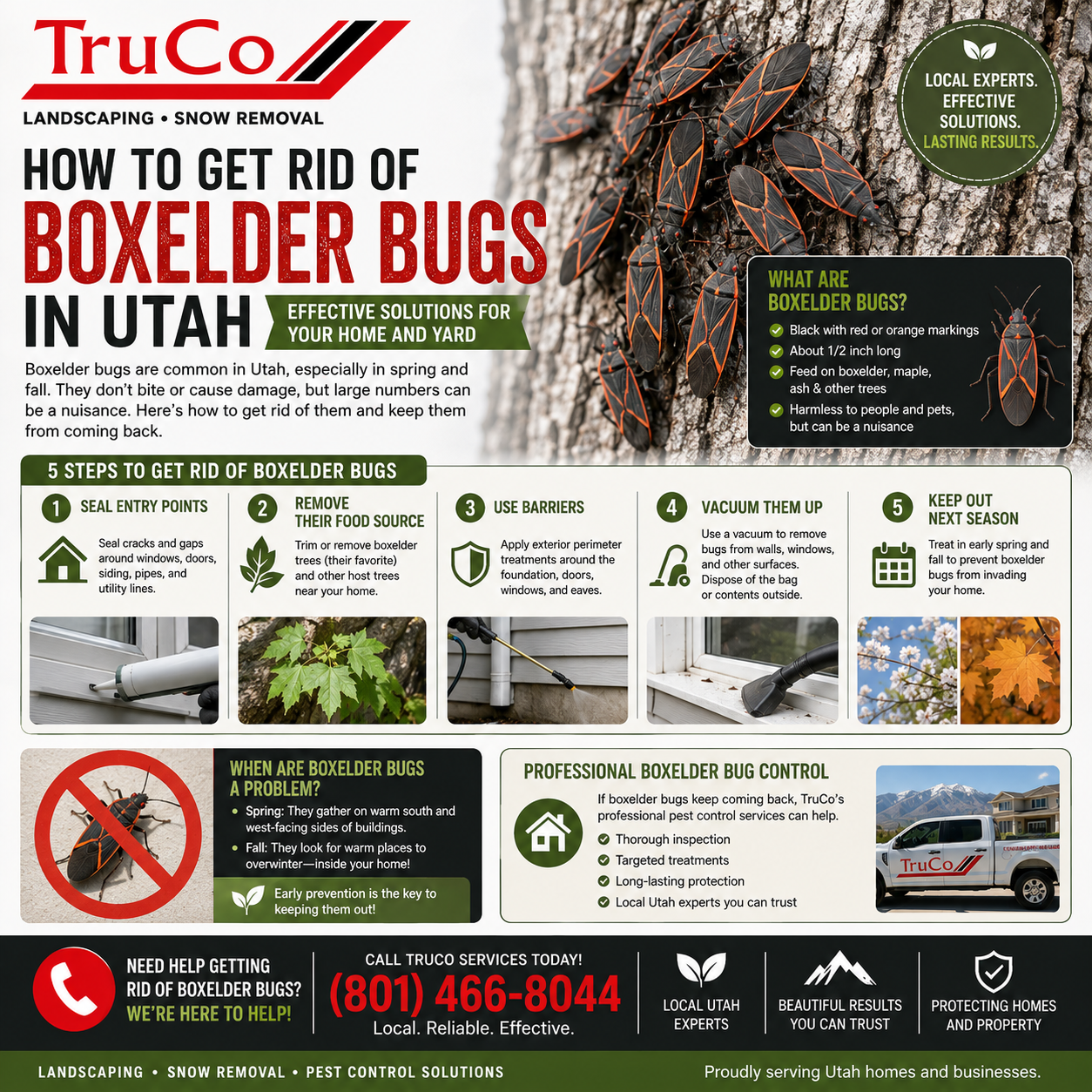
Boxelder bugs are one of the most common and annoying pests in Utah — every fall, thousands of these black-and-red insects gather on sunny walls, crawl into homes, and become a major nuisance indoors. While they do not bite, damage wood, or harm people, their sheer numbers make them unwelcome houseguests. The good news: boxelder bugs are completely manageable with the right combination of prevention, exclusion, and targeted control. This guide explains what boxelder bugs are, why they invade Utah homes every autumn, how to keep them out, and how to get rid of them safely — without harmful chemicals. Whether you have a few bugs on the porch or a full invasion in the attic, you will know exactly what to do.
What Are Boxelder Bugs?
Boxelder bugs (Boisea trivittata) are true bugs in the same family as stink bugs and squash bugs. Adults are about half an inch long, dark brownish-black with distinctive red-orange lines on their backs and red edges on their wings; nymphs are bright red and flightless. They are named for their favorite food: the boxelder tree, a common maple relative found throughout Utah. Boxelder bugs feed on the seeds, leaves, and new growth of boxelder, maple, and occasionally ash trees, using their piercing mouthparts to suck plant juices. In large numbers they can cause leaf distortion, but they rarely damage mature trees. They are harmless to humans and pets — they do not bite, sting, or spread disease, although they may emit a mild odor when crushed and can stain light surfaces. Boxelder bugs are most noticeable in Utah in late summer and fall, when they gather in large groups on warm, sunlit surfaces to prepare for winter.
Why Boxelder Bugs Invade Utah Homes
Boxelder bugs are cold-blooded, and in Utah's climate they need a warm, protected place to survive the winter. As temperatures drop in late September and October, adult bugs seek shelter in cracks and crevices — under siding, behind fascia boards, around windows and doors, and in attics and wall voids. They are attracted to warm, sunny south- and west-facing walls, which is why you see them clustered on the sunny side of Utah homes. Once inside, they enter a state of reduced activity called diapause, similar to hibernation. On warm winter days, however, they become active again and wander into living spaces, which is why you find them indoors even in January. In spring, survivors emerge to lay eggs on boxelder and maple trees, starting the cycle again. Homes near boxelder or maple trees, and homes with many sunny walls, experience the heaviest invasions in Utah. Understanding this cycle is the key to prevention: if you break the fall entry, you break the problem.
How to Keep Boxelder Bugs Out of Your Home
Prevention is far more effective than killing bugs after they get inside. The most important step is sealing entry points before late September, when boxelder bugs begin seeking shelter. Inspect your home's exterior in late summer and seal every crack and gap: caulk around windows and doors, repair damaged screens, install weather stripping under doors, and seal gaps where utility lines, pipes, and cables enter the house. Pay special attention to attic vents, soffits, and the junction where the foundation meets the siding — all common entry points. Use high-quality silicone or polyurethane caulk for exterior gaps and expandable foam for larger openings. Repair or replace torn window screens and add door sweeps to garage and exterior doors. Vents in the attic and crawl space should have fine mesh screening. Removing boxelder and silver maple trees near the house reduces the bug population at the source; if you keep the trees, clean up fallen seeds in fall, since seeds attract the bugs. One thorough sealing session each year is the single most effective way to keep boxelder bugs out of a Utah home.
How to Get Rid of Boxelder Bugs Inside
If boxelder bugs do get inside, the best control is physical removal — vacuum them up with a shop vacuum or a regular vacuum, then empty the bag or canister outdoors immediately. For large numbers, a vacuum is faster and cleaner than any chemical treatment, and it avoids the stains and odors that squashed bugs leave behind. A simple trap works well: fill a shallow pan with soapy water and place it under a bright lamp; the bugs are attracted to the light, fall in, and drown. You can also use a spray bottle with a few drops of dish soap mixed in water — soapy water kills boxelder bugs on contact by breaking down their exoskeletons and is safe to use indoors around pets and children. Avoid using fly swatters or crushing bugs on walls and curtains, as they leave reddish stains. In attics and wall voids where bugs gather in winter, an occasional vacuuming keeps numbers down. Remember that killing bugs indoors does not stop new ones from entering — combine indoor control with exterior sealing for lasting results.
Outdoor Boxelder Bug Control
Reducing boxelder bugs outdoors reduces the number that reach your home. In late summer, spray exterior walls, window frames, door frames, and foundation areas with a garden hose or sprayer — a forceful stream knocks down the clustering bugs and discourages them from settling. Soapy water sprays work outdoors too: mix 2 tablespoons of dish soap per gallon of water and spray directly on bug clusters on sunny walls; the soap kills them on contact. Apply on a warm afternoon when bugs are active and concentrated, and repeat every few days until numbers drop. A targeted residual insecticide applied by a professional to exterior surfaces in late August or September — especially on sunny south- and west-facing walls — provides longer-lasting control, but is not necessary for most homes. Avoid broad pesticide spraying, which harms beneficial insects and often just replaces the problem. Removing female boxelder trees, which produce the seeds the bugs feed on, is the most permanent solution in severe infestations — male trees produce no seeds. Combine tree removal with exterior sealing and you eliminate the boxelder bug problem at its source.
Do Boxelder Bugs Cause Damage?
Despite their alarming numbers, boxelder bugs cause very little real damage. They do not bite humans or pets, do not carry diseases, and do not damage wood, insulation, wiring, or drywall. Outdoors, heavy feeding on boxelder and maple trees can cause minor leaf distortion or discoloration, but healthy trees are rarely harmed. The main problems boxelder bugs cause are nuisance-related: large numbers on sunny walls are unsightly, they can stain light-colored siding and curtains when crushed, and their droppings can leave small dark spots on surfaces. In very large numbers indoors, they may emit a mild, unpleasant odor. Boxelder bugs are primarily a cosmetic and annoyance pest, which is why non-chemical prevention and physical removal are the recommended approach. For most Utah homeowners, a fall sealing routine and a vacuum are all that is needed to keep boxelder bugs from becoming a serious nuisance.
Boxelder Bug Life Cycle and Seasonal Calendar
Understanding the boxelder bug life cycle helps you time your control efforts in Utah. Adults emerge from winter shelter in early spring, around March and April, and lay clusters of brick-red eggs on boxelder and maple tree bark, leaves, and branches. Nymphs hatch in late spring and feed on seeds and leaves through the summer, molting several times as they grow. By late July and August, new adults appear, and populations peak in September and October — this is when Utah homeowners notice large clusters on sunny walls. As temperatures cool, the adults seek winter shelter in buildings, completing the cycle. This calendar tells you when to act: seal your home in late summer (August through early September) before the big push; knock down and spray outdoor clusters in September and October; vacuum indoors through the winter as warm days wake the bugs; and inspect for new activity in early spring. Following this seasonal plan keeps boxelder bug numbers low year-round in Utah.
Do boxelder bugs bite? No — boxelder bugs do not bite humans or pets. They are harmless but can be a nuisance and may emit a mild odor when crushed.
How do I get rid of boxelder bugs in my house in Utah? Vacuum them up and empty the vacuum outdoors, or spray them with soapy water (a few drops of dish soap in water) which kills them on contact. Then seal cracks and gaps to keep more out.
What attracts boxelder bugs to my Utah home? Boxelder and maple trees, especially their seeds, attract the bugs. Warm, sunny south- and west-facing walls draw them in fall when they seek winter shelter.
Are boxelder bugs harmful to trees? Rarely — they feed on seeds and leaves and can cause minor distortion, but healthy boxelder and maple trees are not seriously harmed.
When do boxelder bugs come out in Utah? They are most active and numerous in late summer and fall (August through October), when they gather on sunny walls. They may appear indoors on warm winter days.
Does removing a boxelder tree get rid of the bugs? Yes — removing female boxelder trees removes the seeds the bugs feed on, eliminating the food source. Male trees produce no seeds and attract far fewer bugs.