
How to Get Rid of Poa Annua in Your Utah Lawn

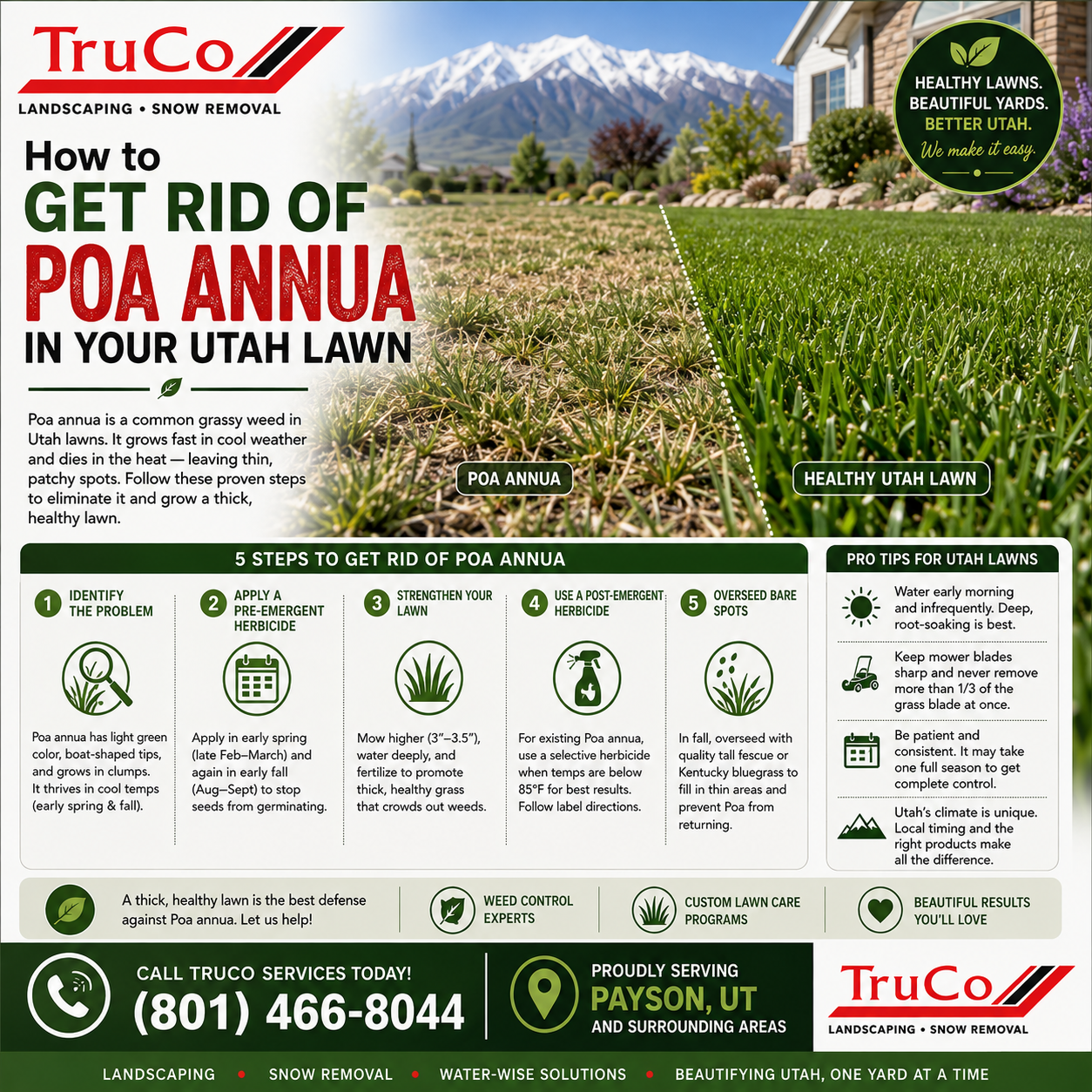
What Is Poa Annua and Why It Invades Utah Lawns
Poa annua — commonly called annual bluegrass — is the most frustrating weed in Utah lawns. It's a low-growing, light green grass with a distinctive seed head that appears in spring, standing out against the darker green of Kentucky bluegrass and fescue lawns. Poa annua is an annual grass (though some strains are perennial) that germinates in fall, grows through winter and early spring, produces masses of seed in spring, and dies in summer heat — leaving ugly brown patches in Utah lawns when it dies. It thrives in Utah because its growing cycle perfectly fits our climate: it germinates when temperatures cool in September and October, matures through the mild winter, and sets seed before summer. Poa annua is found in nearly every Utah lawn, but it becomes a serious problem in overwatered, compacted, or thinly grassed areas. Each poa annua plant produces thousands of seeds that remain viable in the soil for years, making it extremely persistent. Because it dies in summer, poa annua creates thin, patchy lawns that invite other weeds. In Utah, poa annua is especially problematic in high-traffic areas, shaded spots, and along sidewalks and driveways where soil is compacted. Understanding its life cycle is the key to controlling it. TruCo Services provides lawn care expertise across Utah to help homeowners manage poa annua and other weeds.
How to Identify Poa Annua in Your Utah Lawn
Identifying poa annua correctly is essential — mistaking it for healthy grass leads to poor treatment decisions. Appearance: poa annua is a light, yellowish-green grass that grows in low, dense clumps or patches. It has a lighter, more yellow-green color than Kentucky bluegrass and fescue. Leaf texture: the leaves are soft, light green, and slightly folded with a boat-shaped tip (keeled tip), similar to bluegrass but lighter in color. Seed heads: the most distinctive feature — poa annua produces characteristic white, open, triangular panicle seed heads in early spring (March-May in Utah). These seed heads appear at mowing height, giving the lawn a whitish, fuzzy appearance. Growth habit: it grows low and spreads by seed and tillers, forming patches that stand out in the lawn. Root system: shallow, fibrous roots that make it easy to pull but quick to recover. Die-off pattern: poa annua dies in summer heat (June-July in Utah), leaving straw-colored dead patches that contrast with the green lawn. Location: it appears first in compacted areas — along sidewalks, driveways, paths, and in traffic-worn spots, plus shaded or overwatered areas. In Utah, look for poa annua seed heads in early spring — this is the best time to identify and treat it. Distinguishing from crabgrass: poa annua is a cool-season grass that appears in spring; crabgrass is a warm-season weed that appears in summer. Knowing which weed you have determines your control strategy.
Preventing Poa Annua in Utah: Cultural Control
Prevention is the most effective way to control poa annua in Utah lawns. Healthy, dense turf crowds out poa annua — a thick lawn leaves no bare soil for seeds to germinate. Mowing height: mow Utah lawns at 2.5-3.5 inches (not too short). Taller grass shades the soil, keeping it cooler and preventing poa annua germination. In Utah, raising mowing height in fall helps block poa annua seeds. Watering: poa annua thrives in moist, overwatered soil. In Utah, water deeply and infrequently (1-1.5 inches per week in 2-3 sessions) rather than frequent shallow watering. Avoid overwatering — it's the #1 cause of poa annua in Utah lawns. Improve drainage in low, wet spots. Fertilization: maintain balanced fertility — poa annua loves nitrogen-rich, frequently fertilized lawns. In Utah, fertilize with a slow-release nitrogen formula 3-4 times per year rather than frequent light feedings. Aeration: poa annua thrives in compacted soil. In Utah, aerate lawns annually (spring or fall) to reduce compaction and improve turf density. Overseeding: overseed bare and thin areas in fall (September) with quality Utah-adapted grass seed (Kentucky bluegrass or fescue blends) to fill gaps before poa annua can germinate. In Utah, fall overseeding is critical — poa annua germinates in fall, so establishing thick grass then blocks it. Traffic management: reduce wear on high-traffic areas and repair damaged spots promptly. In Utah, consider installing stepping stones or pavers in paths to reduce compaction. Soil health: test soil pH and fertility; poa annua tolerates compacted, poor soil where desirable grasses struggle. In Utah, correct soil issues to favor your lawn over poa annua.
Controlling Existing Poa Annua in Utah
Once poa annua is established, control requires a multi-pronged approach in Utah. Pre-emergent herbicides: apply in late summer or early fall (August-September in Utah) before poa annua seeds germinate. Products containing prodiamine or dithiopyr (e.g., Barricade, Dimension) prevent germination. In Utah, timing is everything — apply when soil temperatures drop to about 70 degrees (typically mid-August to mid-September). A second application in late fall can help. Pre-emergents also prevent crabgrass in spring, giving double value. Post-emergent options: controlling established poa annua is difficult — few selective herbicides work. Non-selective spot treatment with glyphosate (Roundup) kills poa annua patches but also kills surrounding grass, requiring overseeding after. In Utah, spot-treat visible patches in late winter or early spring before seed heads form. Timing is critical: treat before seed heads develop (March-April in Utah) to prevent seed production. Hand removal: in small lawns, hand-pull poa annua before it sets seed. In Utah, pull in spring when seed heads appear — dispose of pulled plants (do not compost, seeds survive). Repeated pulling is needed as new plants germinate. Seed head prevention: mowing alone does not stop poa annua — it produces seed heads even at mowing height. In Utah, bag clippings when poa annua is seeding to remove seed heads from the lawn. Fertilizer management: reduce fall nitrogen fertilization — fall nitrogen feeds poa annua more than your lawn. In Utah, switch to a low-nitrogen fall fertilizer. Patience and persistence: poa annua seeds persist in soil for years, so expect 2-3 years of consistent control. In Utah, combine pre-emergents, cultural practices, and overseeding for the best results. For severe infestations, consult a professional — TruCo Services offers comprehensive weed control programs tailored to Utah lawns.
Poa Annua vs. Crabgrass: Know the Difference in Utah
Utah homeowners often confuse poa annua and crabgrass — the two most common lawn weeds. Timing: poa annua appears in early spring (March-May) and dies in summer heat; crabgrass germinates in late spring (May-June) and grows through summer. In Utah, poa annua is visible first. Growth habit: poa annua is low-growing, light green, and produces seed heads at mowing height; crabgrass grows low and spreads outward with a distinctive crab-like appearance and finger-like seed heads. Color: poa annua is light yellow-green; crabgrass is a coarse, medium green. Life cycle: poa annua is a cool-season annual (germinates in fall, dies in summer); crabgrass is a warm-season annual (germinates in spring, dies at first frost). Location: poa annua prefers cool, moist, compacted areas; crabgrass prefers hot, dry, sunny areas. In Utah, poa annua appears in spring in wet spots; crabgrass appears in summer in hot, dry patches. Control differences: poa annua is controlled with fall pre-emergents (August-September); crabgrass with spring pre-emergents (March-April). Post-emergent control: crabgrass has several effective selective herbicides; poa annua is much harder to control after germination. In Utah, applying a pre-emergent in both fall (for poa annua) and spring (for crabgrass) provides year-round protection. Correct identification saves time and money — if unsure, bring a sample to your local extension office or lawn care professional.
Frequently Asked Questions
What kills poa annua in Utah lawns? Prevention is best: fall pre-emergent herbicides (prodiamine or dithiopyr, applied August-September) stop seeds from germinating. For existing patches, spot-treat with glyphosate before seed heads form (March-April) and overseed the area. No selective post-emergent reliably controls poa annua without harming desirable grass.
Why does poa annua die in summer in Utah? Poa annua is a cool-season grass that cannot survive Utah's summer heat. It completes its life cycle in spring — germinating in fall, growing through winter, producing seed in early spring, then dying when temperatures consistently exceed 80 degrees in June and July.
When should I apply pre-emergent for poa annua in Utah? Apply in late summer to early fall — typically mid-August to mid-September in the Salt Lake Valley, when soil temperatures drop to about 70 degrees and before fall germination. A second application in late fall improves control.
Is poa annua the same as crabgrass? No. Poa annua is a cool-season weed that appears in spring and dies in summer; crabgrass is a warm-season weed that appears in summer and dies at frost. They require different control timing — fall pre-emergent for poa annua, spring pre-emergent for crabgrass.
How do I get rid of poa annua naturally in Utah? Cultural control: mow higher (3 inches+), water deeply and less often, aerate compacted soil, overseed in fall with quality grass seed, and pull plants before they set seed. These practices build a thick lawn that outcompetes poa annua.
Poa Annua Management Calendar for Utah
Timing is everything with poa annua in Utah — a year-round calendar keeps it under control. Late summer (August): the most critical period — apply fall pre-emergent herbicide (prodiamine or dithiopyr) before poa annua germinates. In Utah, apply mid-August to mid-September when soil temperatures drop toward 70 degrees. This application also prevents crabgrass next spring. Early fall (September): continue prevention — overseed bare and thin areas with quality grass seed to fill gaps before poa annua germinates. In Utah, aerate if soil is compacted. Late fall (November): consider a second pre-emergent application for extended control through winter. In Utah, this catches late-germinating poa annua. Winter (December-February): poa annua grows slowly through winter — monitor thin areas. In Utah, avoid walking on frozen or wet turf, which compacts soil and favors poa annua. Early spring (March-April): the most visible period — poa annua produces seed heads. In Utah, spot-treat established patches with glyphosate before seeds form; bag clippings to remove seed heads. In Utah, hand-pull small patches. Spring (May): poa annua begins dying in heat — don't fertilize heavily, which feeds surviving plants. In Utah, prepare to overseed bare areas left by dead poa annua. Summer (June-July): poa annua dies off — the lawn recovers. In Utah, focus on building turf density with proper watering and mowing; core aerate to reduce compaction. In Utah, repeat the cycle annually — poa annua seeds persist in soil for years, so consistent prevention is essential. A year-round approach in Utah — fall pre-emergents, spring spot treatment, and summer turf-building — is the most effective way to manage poa annua. In Utah, professional lawn care programs handle this entire cycle.
Overseeding After Poa Annua Control in Utah
Overseeding fills the gaps poa annua leaves behind in Utah lawns. Why overseed: when poa annua dies in summer or is removed, bare patches appear — overseeding establishes thick, desirable grass that prevents poa annua from returning. In Utah, overseeding is essential after poa annua control. Timing: in Utah, overseed in early fall (late August-September) — soil is warm, days are cool, and new grass establishes before winter. In Utah, fall overseeding also competes with poa annua germination — thick new grass blocks it. Spring overseeding (April-May) works but competes with weeds. Preparation: mow low, rake or dethatch to expose soil, and aerate to create seed-soil contact. In Utah, core aeration before overseeding dramatically improves germination. Seed selection: in Utah, choose a quality blend adapted to your site — Kentucky bluegrass blends for sunny lawns, fescue blends for shade, or a bluegrass-fescue mix. In Utah, use quality seed — cheap seed fails. Application: spread seed at the recommended rate (roughly 4-6 lbs per 1,000 sq ft for bluegrass blends). In Utah, a slit seeder or drop spreader gives best coverage. Top-dressing: in Utah, a light layer of compost or peat over the seed retains moisture and improves germination. Watering: keep the soil surface moist — in Utah, water lightly 2-3 times daily for 2-3 weeks until germination, then taper. In Utah, consistent moisture is critical for fall overseeding success. Aftercare: mow when new grass reaches 3 inches, and fertilize lightly in late fall. In Utah, new grass needs winter preparation. In Utah, overseeded lawns come in thick and green by spring — and a thick lawn is the best defense against poa annua.When does poa annua die in Utah? Poa annua dies in early summer (June-July in Utah) when temperatures consistently exceed 80 degrees. It leaves straw-colored dead patches in the lawn. Overseed these bare areas in late summer or early fall to restore turf.
Should I overseed after killing poa annua in Utah? Yes — overseeding is essential. When poa annua dies or is removed, bare patches invite new weeds. Overseed in early fall (late August-September) with quality grass seed after aerating, and keep the surface moist for 2-3 weeks.
How long do poa annua seeds survive in Utah soil? Poa annua seeds can remain viable in soil for 2-6 years. This is why consistent prevention (fall pre-emergents, thick turf, good cultural practices) is essential — stopping germination year after year is the only lasting solution.