
How to Grow Cauliflower in Utah: Varieties, Planting, and Care

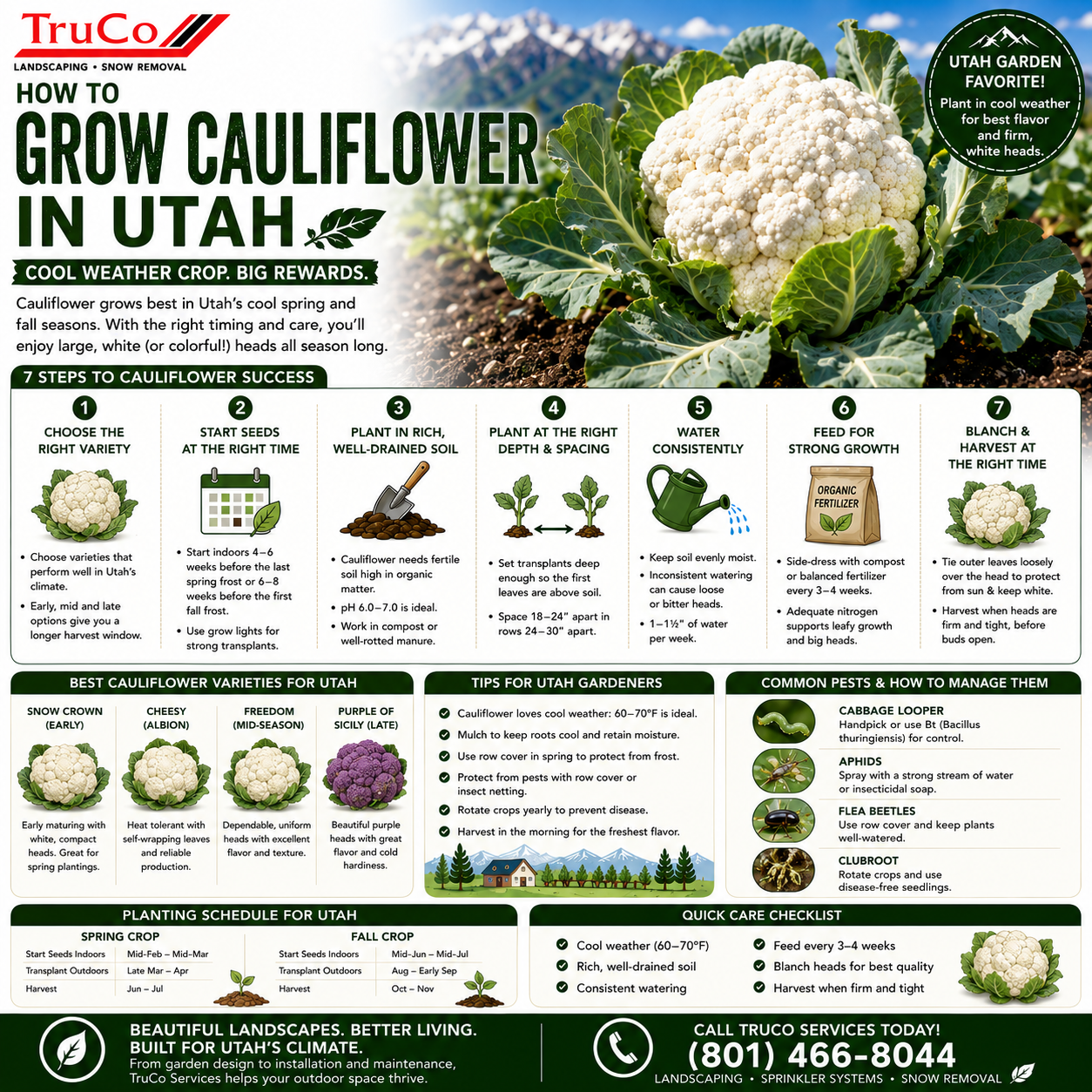
Cauliflower is a cool-season vegetable that rewards Utah gardeners who master its simple requirements: consistent moisture, rich soil, cool temperatures, and a little patience. It is closely related to broccoli, cabbage, and kale, but it demands steadier conditions to produce those tight, snowy-white heads — known as curds — that are the prize of the garden. In Utah's climate, cauliflower grows best when planted for spring and fall crops, maturing in the cool weather of late spring or early fall rather than the heat of summer. Fresh cauliflower from the garden has a sweet, nutty flavor that supermarket heads never match, and it stores well for weeks. This guide covers the best cauliflower varieties for Utah, when and how to plant, the all-important practice of blanching heads for pure white curds, watering and feeding, common pests and diseases, troubleshooting problems like buttoning and loose heads, and how to harvest and store your crop. Follow these proven methods and you will grow beautiful, delicious heads of cauliflower in your Utah garden.
Best Cauliflower Varieties for Utah
Variety selection matters more with cauliflower than with almost any other vegetable, because some types are far more tolerant of temperature swings. Snow Crown is the most reliable variety for Utah: it matures in about 60-65 days, forms large white heads, and is more heat-tolerant than most. Amazing is another excellent hybrid, producing dense white curds with good heat tolerance. Snowball, a classic heirloom, has been grown for over a century and does well in cool conditions but is more prone to buttoning in heat. Fremont and Cheddar are colorful choices — Fremont forms white heads with excellent uniformity, while Cheddar produces striking orange curds packed with beta-carotene. Purple Head and Graffiti add deep purple color and a mild, sweet flavor. For Utah gardeners, the best strategy is to choose fast-maturing hybrids like Snow Crown or Amazing, plant them for both spring and fall harvests, and avoid heirlooms that require very steady cool weather. All varieties need consistent moisture and cool temperatures; with the right variety and timing, cauliflower grows beautifully along the Wasatch Front.
When and How to Plant Cauliflower in Utah
Timing is critical for cauliflower in Utah. For a spring crop, start seeds indoors 6-8 weeks before the last frost — about mid-February to early March — and transplant seedlings outdoors in April, setting them out 2-4 weeks before the last expected frost, since cauliflower tolerates light frost. For a fall crop, start seeds in June and transplant in mid-July, so heads mature in the cool days of September and October. Cauliflower grows best in temperatures between 55 and 70 degrees; in Utah's hot summers, the fall crop often produces the best heads. Choose a site with full sun and rich, well-drained soil amended with compost, with a pH of 6.0-7.0. Space plants 18-24 inches apart in rows 24-36 inches apart. Harden off transplants gradually before planting out. Water thoroughly at planting and keep soil consistently moist — cauliflower is more sensitive to drought than broccoli and will form small, bitter heads if stressed. In Utah's dry climate, drip irrigation keeps moisture steady and reduces disease. Consider planting in early spring as soon as the ground can be worked, and again in July for fall. With careful timing and steady moisture, cauliflower thrives in Utah gardens.
Blanching Cauliflower for White Heads
Blanching is the technique that keeps cauliflower curds pure white and mild-flavored: you cover the developing head so sunlight cannot reach it, preventing the production of green chlorophyll and bitter compounds. When the head reaches about 2-3 inches across, tie the outer leaves up over it with twine, a rubber band, or a clothespin, forming a loose tent. Make sure the head is dry before tying to prevent rot. Check the head every few days; cauliflower matures quickly, and over-blanching can cause the curds to grow through the leaves. Self-blanching varieties, like Self Blanche, hold their leaves naturally, but most types benefit from tying. Colored varieties like Cheddar and Graffiti do not need blanching since their color is desired — in fact, sunlight intensifies their pigments. In Utah's bright, sunny climate, blanching is especially important, since intense sunlight quickly turns white curds yellow-green and bitter. Remove the tied leaves when you harvest. With proper blanching, your Utah cauliflower will be restaurant-quality white, tender, and delicious — well worth the small extra effort.
Watering, Feeding, and Caring for Cauliflower
Cauliflower demands consistent moisture and steady nutrition. Water deeply 1-1.5 inches per week, and do not let the soil dry out — drought stress causes small, tough, bitter heads. In Utah's hot, dry summers, watering every 2-3 days may be necessary, especially for the spring crop as temperatures rise. Mulch with straw or compost to conserve moisture, keep soil cool, and suppress weeds. Fertilize at planting with compost or a balanced organic fertilizer, then side-dress with a nitrogen-rich feed 3 weeks after transplanting and again when heads begin to form; nitrogen is essential for large, tender curds. Avoid high-nitrogen feeding late in the season. Keep the area weed-free, since weeds compete for water and nutrients. In Utah's alkaline soil, add organic matter each year to maintain fertility and good structure. Watch for stress signs: yellowing lower leaves mean nitrogen shortage, while premature tiny heads indicate heat or drought stress. Steady, consistent care — never letting cauliflower dry out or starve — is the difference between loose, bitter heads and firm, sweet ones. With attentive watering and feeding, cauliflower produces beautiful heads in Utah's cool seasons.
Common Cauliflower Pests and Diseases in Utah
Cauliflower faces many of the same pests as broccoli and cabbage. Cabbage worms, cabbage loopers, and diamondback moth larvae chew leaves and tunnel into heads; inspect plants regularly, handpick caterpillars, use row covers, and apply Bacillus thuringiensis (BT) for heavy infestations. Aphids cluster under leaves and in developing curds — wash them off with water or treat with insecticidal soap. Flea beetles cause small shot-hole damage on young plants in spring; row covers protect seedlings until they establish. Slugs and snails feed on tender plants in damp weather. Clubroot, a soil-borne disease that causes swollen, deformed roots and stunted growth, is a serious threat — rotate brassica crops, avoid planting in infected soil, and keep soil pH near 6.8, which discourages the disease. Downy mildew and white rust appear in humid conditions; space plants for airflow and water at the base, not overhead. In Utah's dry climate, most fungal diseases are manageable, but cleanliness matters: remove plant debris at season's end and rotate crops so cauliflower and its relatives are not planted in the same soil for 3-4 years. Vigorous, well-cared-for plants resist most pests and diseases.
Troubleshooting Common Cauliflower Problems
Several problems can frustrate Utah cauliflower growers. Buttoning — the formation of tiny, marble-sized heads instead of large ones — is caused by stress, usually from cold snaps, drought, or too much nitrogen early on; prevent it with steady moisture and correct planting timing. Loose or ricelike heads result from heat stress or overblanching. Purple or yellow curds come from sun exposure (yellow-green) or cold temperatures (purple), both harmless but less attractive; blanch properly and time plantings to avoid extremes. Bitter flavor is caused by heat, drought, or growing too slowly. Bolting — sending up flower stalks before forming a head — happens when young plants are exposed to cold below 50 degrees for long periods; harden off seedlings and plant at the right time. Split heads occur when growth is uneven due to fluctuating moisture; mulch and water consistently. If heads are small but formed, the plant likely suffered early stress — check watering and soil fertility. Remember that cauliflower is a cool-season crop: in Utah, success comes from timing plantings so heads mature in mild weather, providing steady water, rich soil, and careful blanching. Most problems are avoidable with consistent, attentive care.
Harvesting and Storing Cauliflower
Harvest cauliflower when the head reaches 6-8 inches across and the curds are tight, firm, and white — typically 55-80 days after transplanting, depending on variety and season. Cut the head with several inches of stem attached, leaving the wrapper leaves intact; the leaves protect the curds during handling. Harvest before curds begin to separate or look grainy — that is the first sign of over-maturity, and quality declines rapidly. In cool fall weather, mature heads can hold in the garden for several days, but in warm weather harvest promptly. Cauliflower stores well: keep it in the refrigerator in a plastic bag for 1-2 weeks. For longer storage, break heads into florets and blanch and freeze for 8-12 months. Fresh garden cauliflower is delicious raw with dip, roasted, steamed, or riced. In Utah, growing cauliflower successfully means planting for spring and fall, blanching heads, and giving plants steady moisture and food. With these methods, you will enjoy beautiful white heads of cauliflower that rival anything from the market.
When should I plant cauliflower in Utah? Plant transplants in April for a spring crop and in mid-July for a fall crop. Cauliflower matures best in the cool weather of late spring and early fall.
Why is my cauliflower not forming heads? Heat stress above 75 degrees, drought, or cold damage prevents head formation. Plant at the right time, water consistently, and keep plants growing steadily.
Why is my cauliflower green? Green or yellow curds mean sunlight reached the head. Blanch by tying outer leaves over the developing head when it is 2-3 inches across.
Why is my cauliflower bitter? Bitterness comes from heat stress, uneven watering, or slow growth. Grow cauliflower in cool seasons and keep soil consistently moist.
How do I get rid of worms in cauliflower? Handpick cabbage worms, use row covers, and apply Bacillus thuringiensis (BT) for heavy infestations. Inspect heads regularly before harvest.
Can I grow cauliflower in fall in Utah? Yes — the fall crop often outperforms spring in Utah, since heads mature in the cool, mild days of September and October.