
How to Grow Carrots in Utah

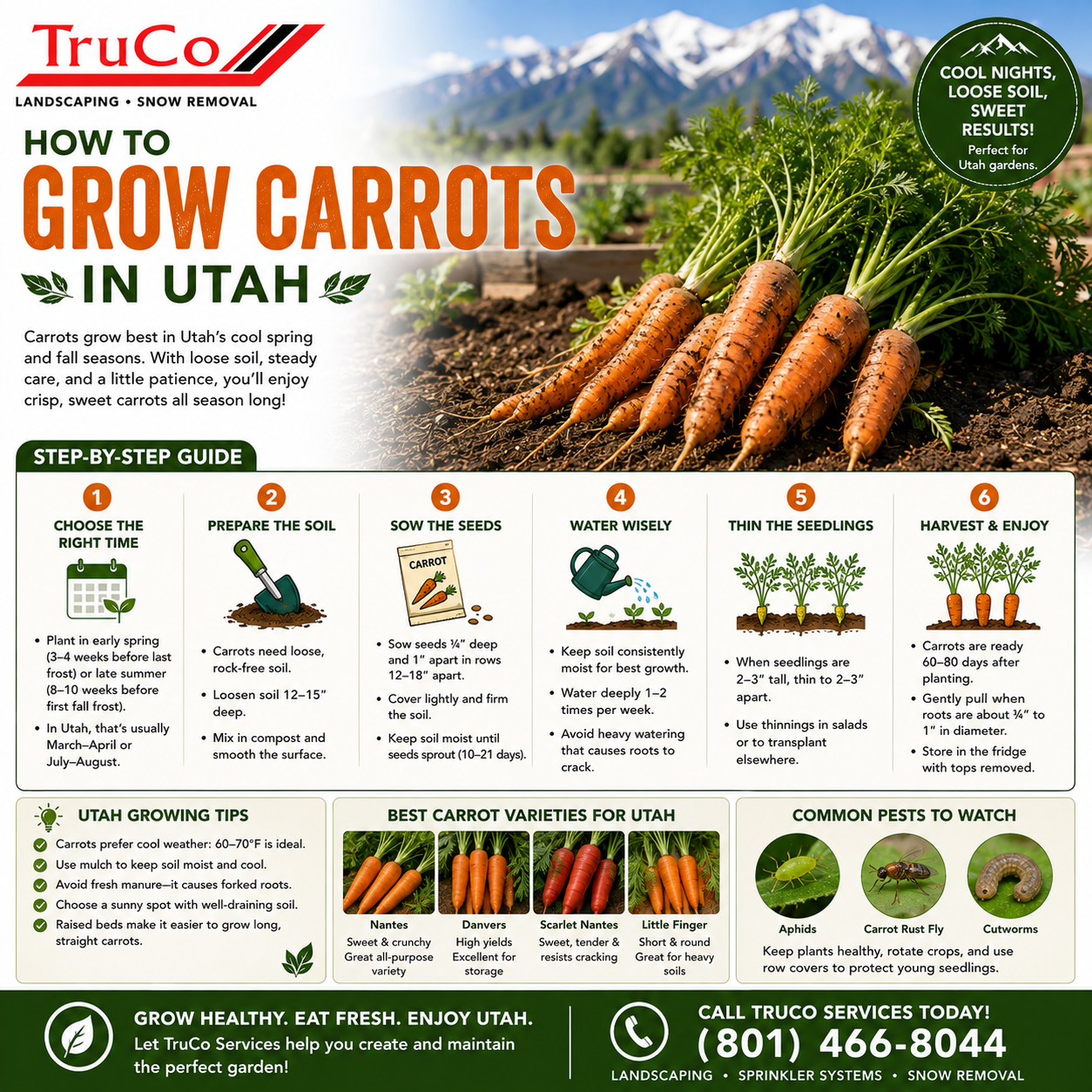
Carrots are one of the most satisfying vegetables to grow in Utah — nothing beats pulling a sweet, crisp, perfectly orange root from your own garden. They thrive in Utah's cool spring and fall weather, and with the right soil preparation, they are surprisingly easy to grow. The secret to great carrots is loose, rock-free soil, consistent moisture, and the right variety for your season. This guide covers the best carrot varieties for Utah, how to prepare soil, when to plant, thinning and care, growing in containers and raised beds, harvesting, storing, and solving common problems like forked roots, bitter flavor, and carrot pests. Whether you garden in northern Utah's shorter seasons or southern Utah's warmer climate, these tips will help you grow straight, sweet carrots that rival anything from the store.
Best Carrot Varieties for Utah
Choosing the right carrot variety makes a big difference in Utah. For spring planting and quick harvests, early varieties like Scarlet Nantes, Danvers Half Long, and Touchon mature in 60-70 days and handle cooler soils well. For fall planting and storage, choose long-storing varieties like Nelson, Bolero, and Sugarsnax 54 — these have excellent flavor, disease resistance, and keep for months. Nantes types are sweet, cylindrical, and nearly coreless, making them perfect for fresh eating. Danvers types are sturdy, tapered, and excellent for heavy or rocky soils because their strong taproots push through. Chantenay types like Red Core Chantenay are short, thick, and ideal for shallow or clay soils. Purple, red, yellow, and white carrots — like Purple Haze and Rainbow Mix — add color and nutrients to salads and are just as easy to grow. For southern Utah's heat, choose heat-tolerant varieties and plant earlier in spring or later in fall. In northern Utah's short seasons, early varieties and a fall planting ensure a long harvest window.
Preparing Utah Soil for Carrots
Soil preparation is the single most important factor in growing beautiful carrots. Carrots need deep, loose, rock-free soil to grow straight — obstacles cause roots to fork, split, or twist. In Utah's naturally heavy clay soils, build raised beds or loosen the soil to a depth of at least 12 inches, removing stones, clumps, and debris. Amend with compost or well-rotted manure, but avoid fresh manure, which causes forked and hairy roots. Work the soil in fall or early spring, when it is moist but not wet, and rake it smooth before planting. Carrots prefer a slightly sandy, well-draining soil with a pH between 6.0 and 7.0. In Utah's alkaline soils, adding compost helps lower pH slightly and improve structure. Avoid adding nitrogen-rich fertilizer at planting — excess nitrogen produces hairy roots and lush tops at the expense of sweet roots. If your soil is rocky or hard, raised beds filled with quality soil mix are the most reliable way to grow perfect carrots in Utah. Loose, amended, stone-free soil is the foundation of a great carrot crop.
When and How to Plant Carrots in Utah
Carrots are cool-season crops that grow best in the spring and fall. In Utah, plant the first crop 2-3 weeks before the last frost — late March to mid-April in northern Utah, late February to March in southern Utah. Carrot seeds germinate in soil as cool as 45°F, and mature carrots tolerate light frost, which actually improves sweetness. Plant a second crop in mid-summer (July) for a fall harvest, and in southern Utah, a late-summer planting matures in winter. Sow seeds 1/4 to 1/2 inch deep, 1/4 inch apart in rows 12-18 inches apart, or scatter seeds in wide beds. Carrot seeds are tiny and slow to germinate — keep the soil consistently moist and consider planting radish seeds between carrot rows as markers, since radishes sprout in days and are harvested before carrots need the space. Cover seed rows with a light mulch or row cover to retain moisture. Thin seedlings to 2-3 inches apart once they reach 1-2 inches tall. With proper timing and spacing, Utah gardeners enjoy carrots from late spring through winter.
Caring for Carrot Plants
Once seedlings emerge, consistent care produces the sweetest, straightest carrots. Water regularly to keep the soil evenly moist — carrots need about 1 inch of water per week, and inconsistent watering causes cracked, bitter, or woody roots. Water deeply and less frequently rather than a daily sprinkle, which encourages shallow roots. In Utah's heat, mulch between rows with straw or shredded leaves to retain moisture and keep soil cool. Thin carrots to 2-3 inches apart early — overcrowded carrots grow small, twisted, and compete for nutrients. Hand-pull thinnings rather than disturbing neighboring roots, and thin again if needed. Feed lightly with a low-nitrogen fertilizer or compost tea once or twice during the season; avoid high-nitrogen feeds. Keep the bed weed-free, since weeds compete for water and nutrients — hoe carefully near the row to avoid damaging shallow roots. As carrots mature, cover exposed shoulders with soil or mulch to prevent green tops, which taste bitter. With steady water, proper thinning, and weed control, your Utah carrot bed stays healthy from seeding to harvest.
Growing Carrots in Containers and Raised Beds
Carrots are excellent for containers and raised beds, and in Utah these methods often produce the straightest roots because you control the soil. Choose containers at least 10-12 inches deep — deeper is better for long varieties — with good drainage holes. Fill with a loose, sandy potting mix blended with compost, avoiding garden soil, which compacts. Choose short varieties like Parisian, Thumbelina, or Chantenay for containers; they grow perfectly in 8-10 inch pots. In raised beds, fill with a mix of quality topsoil, compost, and sand or perlite to ensure loose, rock-free depth of at least 12 inches. Plant seeds 1/2 inch apart and thin to 2-3 inches. Containers dry out faster than garden beds, so check daily and water when the top inch of soil feels dry — more often in July and August heat. Feed container carrots lightly every 3-4 weeks with diluted liquid fertilizer. Raised beds and containers warm faster in spring and drain better, extending your Utah carrot season at both ends.
Common Carrot Problems in Utah
Utah gardeners occasionally struggle with a few carrot issues. Forked or twisted roots are almost always caused by rocky, compacted, or clumpy soil — fix the soil with raised beds or deep loosening. Hairy roots come from too much nitrogen or fresh manure; skip extra fertilizer and amend with compost instead. Cracked or split roots usually follow heavy rain or overwatering after dry spells — keep watering steady and consistent. Bitter or woody carrots result from heat stress, drought, or leaving roots too long in warm soil — plant for cooler seasons, water regularly, and harvest on time. Carrot rust flies and root maggots bore into roots; use row covers and rotate crops to prevent them. Green shoulders, which taste bitter, come from exposed roots — mound soil or mulch over the crown. Poor germination happens when seeds dry out — keep soil moist until sprouts appear. Yellowing tops may signal root-knot nematodes in sandy Utah soils; rotate crops and add compost. With good soil, steady water, and timely harvest, most carrot problems are easily avoided in Utah gardens.
Harvesting and Storing Carrots
Carrots are ready to harvest when they reach full color and size — usually 60-75 days after planting, depending on variety. Pull a test carrot to check size and sweetness; in cool fall weather, carrots keep getting sweeter as starches convert to sugar, so a frost improves flavor. Harvest by loosening the soil with a fork and pulling gently by the tops — avoid snapping the roots. You can leave mature carrots in the ground for weeks in fall, especially under a thick mulch, which makes Utah's mild fall an ideal time to harvest as needed. For storage, remove tops (which draw moisture from roots), brush off soil, and store carrots in a cool, humid place — a refrigerator crisper or root cellar at 32-38°F works well. Carrots store for 3-6 months under the right conditions; keep them in perforated plastic bags or sand. Canned, frozen, or pickled carrots extend the harvest even further. With proper timing and storage, one Utah carrot bed feeds your family for months.
When should I plant carrots in Utah? In spring, 2-3 weeks before the last frost — late March to mid-April in northern Utah, late February to March in southern Utah. Plant again in July for fall harvest.
Why are my carrots forked or misshapen? Forked roots come from rocks, compacted soil, or clumps. Grow carrots in loose, deeply prepared soil or raised beds.
Do carrots need full sun? They do best with 6+ hours of sun daily, but in southern Utah's heat, light afternoon shade keeps roots sweet and prevents bitterness.
How often should I water carrots? About 1 inch per week, kept consistent. Irregular watering causes cracking, bitterness, and woody texture.
How do I store carrots for winter? Remove tops, keep them at 32-38°F with high humidity, and store in a crisper, root cellar, or sand. They keep 3-6 months.
Can I grow carrots in containers in Utah? Yes — use pots at least 10-12 inches deep with sandy potting mix, and choose short varieties like Parisian, Thumbelina, or Chantenay.