
How to Grow Cucumbers in Utah

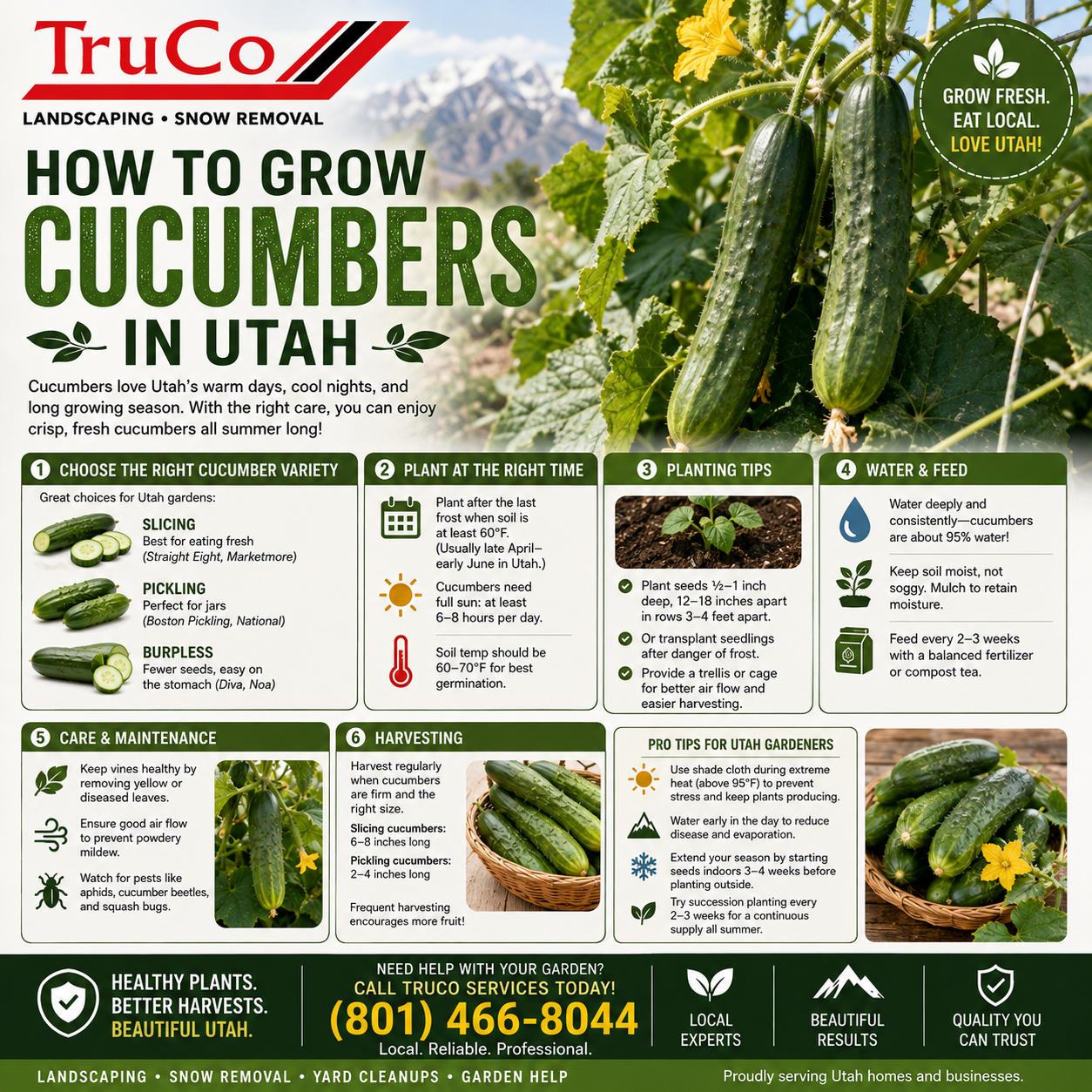
Cucumbers are one of the most productive vegetables you can grow in Utah — a few vines supply salads, pickles, and snacks all summer long. They grow quickly, love Utah's long sunny days, and produce an almost overwhelming harvest with the right care. Whether you are a first-time gardener or a seasoned grower, cucumbers are easy and rewarding. This guide covers the best cucumber varieties for Utah, when and how to plant, watering and feeding, supporting vines on trellises, growing in containers, and solving common problems like bitter fruit, pests, and poor production. With a little attention, your Utah cucumber patch will be bursting with crisp, refreshing cucumbers from early summer through fall.
Best Cucumber Varieties for Utah
Choose cucumber varieties based on how you plan to use them. For fresh eating and salads, try slicing types like Marketmore 76, Straight Eight, and Diva — crisp, mild, and productive. For pickling, choose Picklebush, Boston Pickling, and National Pickling, which produce uniform, firm fruits ideal for brines. For heavy yields and disease resistance, burpless varieties like Sweet Success and Tasty Green are excellent — they are thin-skinned, mild, and easier to digest. Bush varieties like Bush Champion and Spacemaster stay compact and work well in small gardens and containers. Vining types like Marketmore produce more but need support. In southern Utah's warm climate, heat-tolerant varieties like Marketmore 76 and Summer Dance handle the heat. In mountain areas with short seasons, choose early varieties like Early Pride or Patio Snacker, which mature in 50-55 days. Consider planting both slicing and pickling types for a versatile harvest. With the right varieties, Utah gardens produce cucumbers from late June through the first fall frost.
When and How to Plant Cucumbers in Utah
Plant cucumbers in Utah after the last spring frost, when soil temperatures reach at least 65°F — typically mid-May in northern Utah and late April to early May in southern Utah. Cucumbers are very frost-sensitive, so wait until nights are reliably warm. Choose a site with full sun (6-8 hours daily) and rich, well-drained soil. Before planting, work in 2-3 inches of compost and a balanced fertilizer. Plant seeds 1 inch deep, 2-3 seeds per hill, with hills 3-4 feet apart for bush types and 4-6 feet apart for vines. Alternatively, sow seeds in rows 3-4 feet apart, thinning to 12 inches between plants. In Utah's dry climate, build low mounds or use drip irrigation to keep roots consistently moist. For earlier harvests, start seeds indoors 3-4 weeks before the last frost and transplant carefully, or use black plastic mulch to warm the soil. Cucumbers can also be planted in late summer for a fall crop in southern Utah. With proper timing and spacing, your cucumber vines will be flowering within a month and producing fruit shortly after.
Watering and Fertilizing Cucumbers
Cucumbers are about 95% water, so consistent moisture is essential — irregular watering leads to bitter, misshapen fruit. Water deeply 1-2 times per week, providing 1-1.5 inches of water weekly, and increase watering during hot spells and fruit set. Drip irrigation is ideal: it keeps water off the leaves, reducing disease, and delivers steady moisture to the roots. Water early in the morning. Mulch with straw, shredded leaves, or black plastic to conserve moisture, suppress weeds, and keep the soil warm. Fertilize at planting with a balanced fertilizer, then side-dress with a low-nitrogen fertilizer when vines begin to run and again when fruits start forming. Too much nitrogen produces lush vines with few cucumbers; phosphorus and potassium support flowering and fruiting. In sandy Utah soils, feed slightly more often. Container cucumbers need feeding every 2-3 weeks with diluted liquid fertilizer. Consistent moisture and balanced feeding keep Utah cucumber vines healthy and productive all season.
Trellising and Supporting Cucumber Vines
Growing cucumbers vertically on a trellis is one of the best techniques for Utah gardens. Vining cucumbers climb eagerly, and trellising saves space, improves airflow, keeps fruit clean, and makes harvesting far easier. Install a sturdy trellis, fence, or A-frame at planting time, before vines take off. Train the main stem up the support, tying it loosely as it grows, and let side shoots climb naturally. For heavy fruit, use slings made from pantyhose or cloth to support large cucumbers. Trellised cucumbers are easier to spot and pick before they overgrow, and the improved airflow dramatically reduces mildew and disease. In small Utah yards, a trellis lets you grow a dozen plants in the space of a few square feet. Even bush varieties benefit from a low cage or short trellis. With vertical growing, you get more cucumbers per square foot and a cleaner, healthier harvest.
Growing Cucumbers in Containers
Container cucumbers are perfect for Utah patios, balconies, and small spaces. Choose a pot at least 12-16 inches deep and wide with good drainage — bush varieties like Spacemaster and Patio Snacker are ideal. Fill with quality potting mix blended with compost, and plant 2-3 seeds per container, thinning to the strongest plant. Add a small trellis or cage to support the vine. Containers dry out quickly in Utah's summer heat, so check daily and water when the top inch of soil is dry — sometimes twice a day in July and August. Feed every 2-3 weeks with a diluted balanced fertilizer. Place containers in full sun and rotate them if growth leans. A single well-grown container plant yields 10-15 cucumbers over the season. With the right variety and consistent care, container cucumbers thrive on any sunny Utah porch or balcony.
Common Cucumber Problems in Utah
Utah cucumber growers face a handful of common issues. Bitter cucumbers are the most frequent complaint — bitterness comes from heat, drought stress, or letting fruit overmature. Keep soil consistently moist, harvest regularly, and peel or cut off the ends of bitter fruit. Misshapen or curled cucumbers usually result from poor pollination or uneven watering — hand-pollinate flowers in the morning if bees are scarce. Cucumber beetles are a serious pest, feeding on leaves and spreading bacterial wilt; protect young plants with row covers, handpick beetles, and clean up debris. Powdery mildew, a white coating on leaves in late summer, is common in humid spots — space plants for airflow, water at the base, and choose resistant varieties. Blossom-end rot, a dark sunken spot on fruit tips, comes from irregular watering — keep soil evenly moist. In southern Utah, extreme heat can cause flower drop — provide afternoon shade during heat waves. With prompt attention, most Utah cucumber problems are easily solved.
Harvesting Cucumbers
Harvest cucumbers regularly — picking frequently keeps plants productive, because plants stop flowering once mature fruit remains on the vine. Pick slicing cucumbers when they reach 6-8 inches, and pickling types when 2-4 inches, before they turn yellow and seedy. Use scissors or a knife to cut the stem just above the fruit rather than pulling, which damages the vine. Check plants every day or two during peak production — cucumbers can double in size overnight. Cucumbers taste best picked young and used fresh; store them in the refrigerator for up to a week. For pickling, process the same day for the crispiest results. Regular harvesting is the single best way to keep Utah cucumber vines producing all summer long — a healthy vine can yield 20-30 cucumbers over the season.
When should I plant cucumbers in Utah? After the last spring frost, when soil reaches 65°F — mid-May in northern Utah, late April to early May in southern Utah. You can also plant a fall crop in late summer in southern Utah.
Why are my cucumbers bitter? Bitterness comes from heat, drought stress, or overmature fruit. Water consistently, harvest regularly, and remove older fruit. Peeling helps too.
Do cucumbers need a trellis? Not always, but trellising saves space, improves airflow, keeps fruit clean, and makes harvesting easier. Vining varieties produce more when grown vertically.
How often should I water cucumbers in Utah? Deeply 1-2 times per week — 1 to 1.5 inches of water. In hot weather and in containers, check daily; consistent moisture prevents bitter, misshapen fruit.
Why are my cucumber plants flowering but not producing fruit? Usually poor pollination — male flowers appear first, and bees may be scarce. Hand-pollinate in the morning, or plant bee-attracting flowers nearby.
Can I grow cucumbers in containers in Utah? Yes — choose bush varieties like Spacemaster or Patio Snacker, use a pot at least 12-16 inches deep, water daily in heat, and feed every 2-3 weeks.