
How to Install a Paver Patio in Utah: Materials, Base, and Maintenance

Why Choose a Paver Patio in Utah
A paver patio is one of the most popular hardscape investments for Utah homes. Pavers — concrete, brick, or natural stone units laid over a compacted base — create a durable, attractive outdoor living surface that performs exceptionally well in Utah's climate. Unlike poured concrete, pavers flex with Utah's freeze-thaw cycle, resisting the cracking that plagues monolithic slabs. In Utah, where winters bring 60-90 freeze-thaw cycles, paver patios are the preferred choice for durability. Pavers also offer design flexibility — dozens of shapes, colors, and patterns allow you to match any home style. Individual pavers can be removed and replaced, making repairs simple. Paver patios allow water to drain through joints, reducing runoff and puddling. The cost of a paver patio in Utah ranges from $15-30 per sq ft installed, with a typical 400 sq ft patio costing $6,000-12,000. DIY material costs run $4-8 per sq ft. Paver patios add 50-100% return on investment at resale. In Utah, paver patios are installed by licensed hardscape contractors — companies like TruCo Services specialize in professional paver installation with proper base preparation that ensures the patio lasts 25-50 years.
Choosing Paver Materials for Utah
Paver material selection affects appearance, durability, and cost in Utah. Concrete pavers — the most common choice in Utah. Made of molded concrete, available in many shapes, colors, and textures. Durable, affordable, and easy to replace. Concrete pavers withstand Utah's freeze-thaw well when properly installed. Cost: $2-6 per sq ft for materials. Brick pavers — classic, timeless appearance. Durable and fade-resistant. Brick offers warm earth tones that complement Utah's natural landscape. Cost: $3-8 per sq ft. Natural stone pavers (flagstone, bluestone, travertine) — premium option with unique, natural variations. Flagstone is popular in Utah for its natural mountain aesthetic. Bluestone offers a consistent blue-gray color. Travertine stays cool underfoot in Utah's summer sun. Cost: $8-20 per sq ft. Porcelain pavers — large-format, high-end pavers that are extremely durable and fade-resistant. Popular in modern Utah designs. Cost: $8-15 per sq ft. Permeable pavers — pavers with wider joints filled with gravel that allow water infiltration. Excellent for Utah's stormwater management and drainage solutions. Cost: $5-10 per sq ft. In Utah, concrete pavers are the best value — they offer the best balance of cost, durability, and design options. Choose pavers rated for freeze-thaw (check the manufacturer's specs — pavers should have a minimum 8,000 psi compressive strength). Select pavers with good slip resistance for winter safety — textured or tumbled finishes provide traction on ice. Colors: earth tones (tan, brown, terra cotta) blend with Utah landscapes; gray tones are popular for modern homes. Avoid very dark pavers in Utah — they absorb heat and can be hot underfoot in summer (and melt snow faster in winter, which is a plus).
Paver Patio Base: The Key to Longevity in Utah
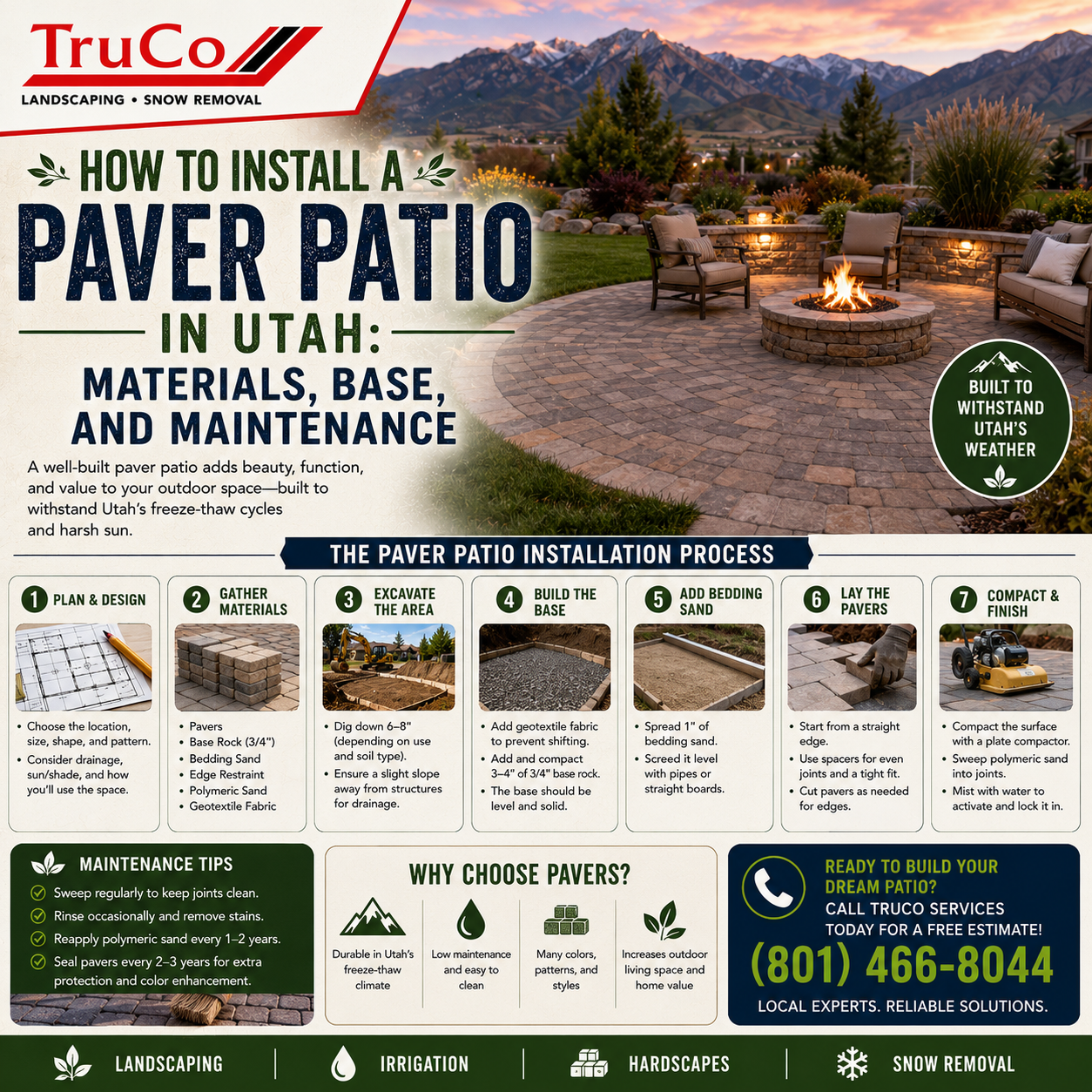
Base preparation is the most critical factor in paver patio performance in Utah. A properly prepared base prevents settling, heaving, and drainage problems. In Utah's clay soil and freeze-thaw climate, base depth matters more than anywhere. Excavation: remove soil to the required depth — in Utah, excavate 8-12 inches for a standard patio (6-8 inches base + 1 inch sand + 2-3 inch paver). In areas with poor drainage or heavy clay, go deeper (12+ inches). Compaction: compact the subgrade soil with a plate compactor — 95% compaction minimum. In Utah's expansive clay, this step prevents differential settling that creates dips and puddles. Geotextile fabric: install landscape fabric over the compacted subgrade to separate soil from base material and prevent weed growth. In Utah, this is standard practice for paver installations. Base material: add 4-6 inches of crushed angular rock (3/4 inch minus road base or Class II aggregate). Angular rock locks together for a stable base — in Utah, never use rounded river rock as base. Compact the base in 2-inch lifts — compact each lift before adding the next. In Utah, proper compaction prevents the "roller coaster" effect that develops over winters. Base drainage: slope the base 1/4 inch per ft (2%) away from the house. In Utah, this slope directs snowmelt and rain away from foundations. For large patios, install a perimeter drainage pipe to manage water. Edge restraint: install edge restraint (steel or plastic paver edging, or concrete curbing) before laying pavers. In Utah, edge restraint holds pavers in place through freeze-thaw cycles — without it, edge pavers loosen and shift. Edge restraint is the #1 thing DIYers skip, and it's why DIY patios fail in Utah's winters.
Installing Paver Patios in Utah: Step-by-Step
Professional installation ensures a paver patio that lasts decades in Utah. Step 1: Design and layout — measure the patio area, mark the outline with stakes and string. Design for function: seating zones, grill zones, traffic paths. Step 2: Excavate — remove soil to the design depth. In Utah, consider how much soil removal the project generates — most cities require disposal at approved facilities. Step 3: Compact subgrade — use a plate compactor. In Utah, this is especially important in areas with expansive clay. Step 4: Install geotextile fabric and edge restraint. Step 5: Add and compact base material — 4-6 inches of crushed angular rock in 2-inch lifts, compacted between each lift. In Utah, use a vibratory plate compactor for the best results. Step 6: Install bedding sand — 1 inch of leveling sand (concrete sand or paver sand), screeded level using straight 2x4s and screed guides. In Utah, never use mason sand for bedding — it doesn't compact properly. Step 7: Lay pavers — start from a corner, working outward. Use a consistent pattern (running bond, herringbone, basketweave, or ashlar). In Utah, herringbone is recommended for driveways (strongest pattern); running bond is fine for patios. Step 8: Cut edge pavers — mark and cut pavers to fit edges using a paver saw or splitter. In Utah, cuts at edges are necessary for a clean finished look. Step 9: Compact the surface — run a plate compactor over the pavers with a rubber pad to seat them into the sand. In Utah, this is essential — unseated pavers shift with freeze-thaw. Step 10: Fill joints — spread polymeric sand over the surface and sweep into joints. In Utah, polymeric sand hardens when wet, locking pavers together. Compact again, then lightly water to activate the polymer. Step 11: Install edge restraint caps and finish. In Utah, the entire installation takes 3-7 days for a typical patio. Professional installation cost: $15-30 per sq ft. DIY cost: $6-12 per sq ft including materials and tool rental.
Paver Patio Maintenance in Utah
Paver patios require minimal but important maintenance in Utah. Sealing: seal paver patios every 3-5 years in Utah. Sealer protects against stains (oil, food, bird droppings), prevents weed growth in joints, and enhances color. In Utah's intense UV, a quality sealer with UV protection prevents fading. Use a sealer designed for pavers (wet-look, satin, or matte finish). Polymeric sand: reapply every 5-10 years as joints erode. In Utah, wind and snow removal wear joint sand. Weed control: pull weeds from joints promptly. In Utah, apply pre-emergent herbicide to joints in spring to prevent weed growth. Weed killers for pavers: glyphosate spot treatment or vinegar-based spray. Do NOT use rock salt or harsh chemicals on pavers — they stain and damage. Snow removal: use plastic shovels on paver patios — metal shovels gouge paver edges. In Utah, set snow blowers to leave 1/2 inch of snow. Use sand for traction — avoid chemical de-icers that damage paver surfaces and stain. Calcium magnesium acetate is the safest de-icer for pavers. In Utah, sweep snow and ice promptly to prevent freeze-thaw damage to joints. Cleaning: pressure wash pavers annually in spring (after snowmelt). In Utah, spring cleaning removes winter grime, salt residue, and reveals any damage. Use a low-pressure nozzle to avoid dislodging joint sand. Minor repairs: replace damaged pavers individually — remove the paver, add bedding sand, replace, and re-compact. In Utah, inspect paver patios each spring for frost heave — reset any lifted pavers. In Utah's climate, a well-maintained paver patio lasts 25-50 years. Proper base installation and annual care are the keys to longevity.
Frequently Asked Questions
How much does a paver patio cost in Utah? $15-30 per sq ft installed. A typical 400 sq ft patio: $6,000-12,000. DIY: $6-12 per sq ft for materials and tool rental. Costs vary by paver type, base conditions, and site accessibility.
Do paver patios crack in Utah winters? No — this is the main advantage of pavers over poured concrete. Individual pavers flex with freeze-thaw, so they resist cracking. With proper base preparation (6+ inches of compacted rock) and edge restraint, paver patios survive Utah winters without damage.
How long does a paver patio last in Utah? 25-50 years with proper installation and maintenance. The base and edge restraint determine lifespan more than the pavers themselves. Reseal every 3-5 years and reapply joint sand every 5-10 years to maximize longevity.
Do I need a permit for a paver patio in Utah? Most Utah cities require permits for patios over 200 sq ft or patios attached to structures. Check your city — Salt Lake City, Sandy, and West Jordan have specific requirements. Permit fees: $50-200. HOA approval may also be required.
Can I install a paver patio myself in Utah? Yes, for smaller patios (under 300 sq ft) with good DIY skills. The key is proper base preparation — 6+ inches of compacted crushed rock and edge restraint. Improper base causes pavers to sink, shift, and separate within 1-2 Utah winters. For larger patios, hire a professional hardscape contractor.