
Xeriscape Contractor close to Payson UT

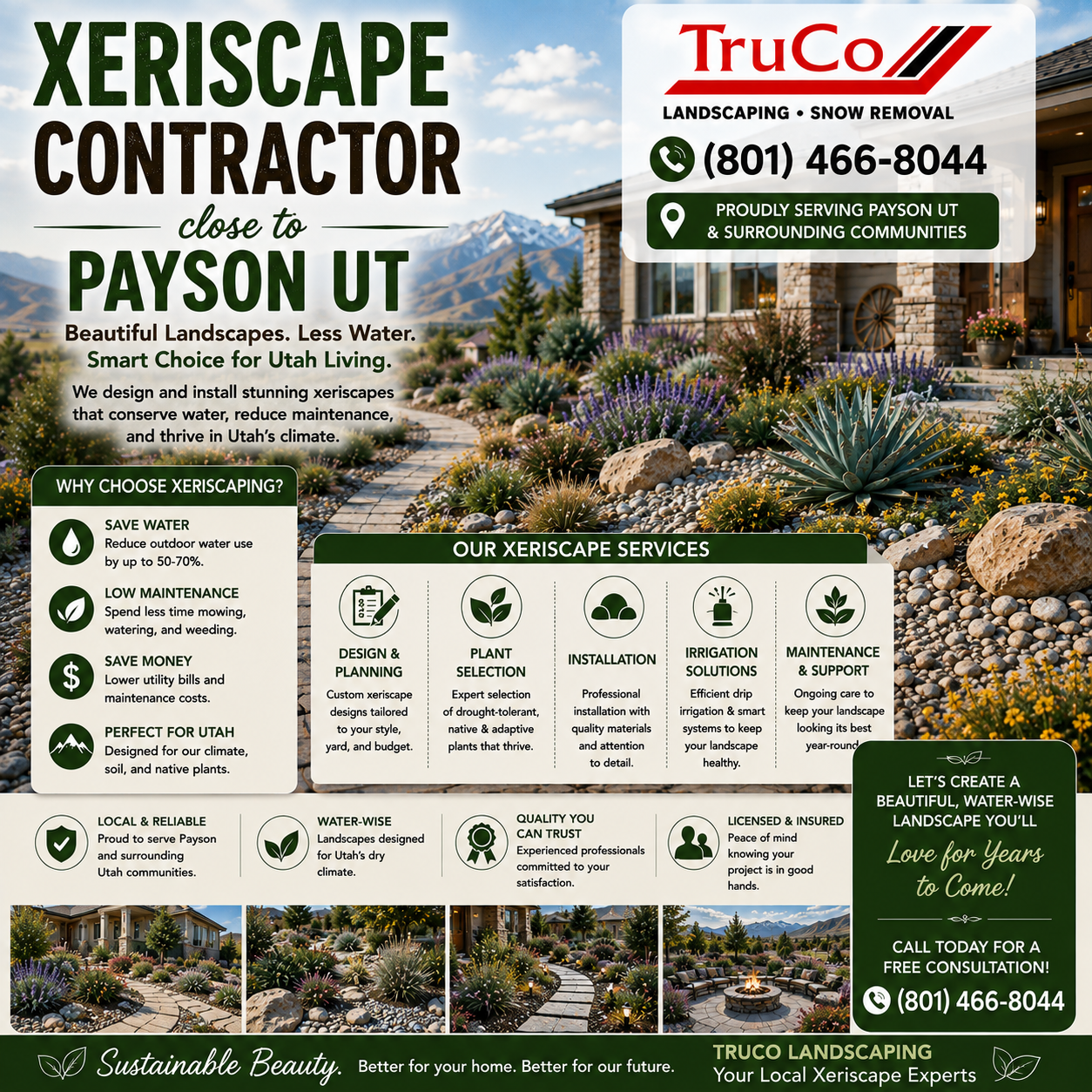
Searching for a xeriscape contractor close to Payson UT usually means you want a landscape that looks good, uses less water, and requires less work than a large, thirsty lawn. The most important thing to know is that successful xeriscaping is not simply replacing grass with decorative rock. It is a site-specific landscape plan that combines appropriate plants, efficient irrigation, functional outdoor spaces, healthy soil, mulch or stone, drainage management, and a realistic maintenance routine.
For Payson homeowners, a water-wise yard should account for Utah’s hot, dry summers, cold winters, variable soils, slopes, irrigation needs, existing trees, and how the family uses the property. A good contractor evaluates those conditions before recommending plants or materials. This guide explains how xeriscape contractors work, how to compare local options, which parts of a project matter most, what mistakes to avoid, and how to create a low-water landscape that remains practical and attractive for years.
What Is a Xeriscape Contractor?
A xeriscape contractor is a landscaping professional who plans, installs, improves, or maintains low-water outdoor spaces. The work can include lawn removal, drip irrigation, water-wise plant installation, decorative rock, mulch, tree and shrub management, edging, paths, drainage improvements, and cleanup.
Xeriscaping is often called water-wise landscaping because its purpose is to use water efficiently without creating a lifeless or purely rock-covered yard. Utah State University Extension describes water-wise landscaping as an approach that uses planning and design, soil preparation, appropriate plant selection, practical turf areas, mulch, efficient irrigation, and maintenance to conserve water while keeping landscapes functional and appealing.
A xeriscape project close to Payson UT often includes these steps:
Review the site’s sun, shade, soil, slope, drainage, trees, irrigation, and access.
Identify your goals, such as reducing lawn, lowering water use, adding privacy, improving curb appeal, or minimizing maintenance.
Create a plant, irrigation, material, and layout plan.
Remove or reduce nonfunctional turf.
Correct drainage, install edging, and prepare planting areas.
Update irrigation zones or add drip irrigation.
Install plants, mulch, decorative rock, and pathways.
Set up establishment watering and long-term maintenance.
The scope can vary. Some projects are simple front-bed refreshes; others involve full-yard landscape conversions. Work such as major retaining walls, electrical changes, significant grading, drainage structures, and permits should be clearly listed rather than assumed to be included.
8 Things to Know Before Hiring a Xeriscape Contractor
1. Xeriscaping Is Not “Rockscaping”
A true xeriscape uses water efficiently by matching landscape elements to the property. Decorative rock can be useful, but it is only one material choice. An all-rock yard may reduce mowing, but it can become hot, collect debris, create weeds, and feel visually harsh if it lacks planting, shade, texture, and usable outdoor space.
A balanced Payson xeriscape may include:
Reduced but functional turf
Drought-tolerant shrubs and perennials
Small trees selected for mature size and site conditions
Drip-irrigated planting beds
Organic mulch for moisture-sensitive plants
Decorative rock in selected dry, low-traffic areas
Seating spaces, paths, and outdoor gathering zones
Existing trees and plants worth preserving
The right design starts with function. A family that uses the backyard for children, pets, or gatherings may benefit from a smaller lawn area rather than removing all turf. A narrow park strip or difficult-to-mow slope may be a strong candidate for a water-wise planting conversion.
An experienced contractor should ask how you use the space before suggesting materials. The goal is not to use the least amount of water possible at any cost. It is to use water where it provides genuine value and reduce it where turf or plantings are not serving a meaningful purpose.
2. Payson Site Conditions Must Drive the Design
The same plant palette, irrigation layout, or rock selection will not work equally well on every property. A xeriscape contractor near Payson should evaluate your site’s specific exposure and constraints before starting work.
Important site factors include:
Full sun versus afternoon shade
South- and west-facing heat exposure
Wind exposure
Soil texture, compaction, and drainage
Roof runoff and downspout placement
Existing sprinkler zones and water pressure
Slopes and low areas
Mature trees and root zones
Utility boxes, valves, fences, and access routes
For example, a planting bed near a reflective south-facing wall may need plants that tolerate heat and dry soil. A shaded north-side bed may need a different plant group and less frequent irrigation. A low spot that receives runoff should be addressed before decorative rock or mulch is installed.
A contractor who begins with a site assessment is more likely to identify issues early. A contractor who offers a fixed package without evaluating water flow, irrigation, and soil may leave you with recurring plant losses, erosion, or water waste.
3. Plant Selection Must Consider Mature Size and Water Needs
Drought tolerance is not the only consideration when selecting xeriscape plants. Plants should also fit the available space, climate, soil, sun exposure, irrigation zone, maintenance level, and desired appearance.
The best designs use hydrozoning: grouping plants with similar water needs together. A shade-tolerant shrub, drought-tolerant perennial, established tree, and lawn area should not automatically receive the same irrigation schedule.
Ask these questions before plants are installed:
How tall and wide will this plant become?
How much sun does it need?
Can it handle Payson’s winter temperatures?
Does it require drip irrigation, deeper infrequent watering, or more frequent establishment watering?
Will it drop berries, seed pods, needles, or large amounts of litter?
Is it suitable near a walkway, patio, driveway, or foundation?
How much pruning will it need as it matures?
Utah State University Extension recommends choosing plants that match the site’s sunlight, soils, temperature conditions, water availability, and functional purpose. Adapted plants generally require less intervention and help create a landscape that is easier to maintain over time.
4. Efficient Irrigation Still Matters
A water-wise landscape needs irrigation—especially during establishment. Even plants labeled drought tolerant can decline if they are planted improperly, watered too frequently, watered too little, or grouped with plants that require a very different schedule.
A xeriscape contractor should review the irrigation system before installing plants. That may mean:
Converting selected turf zones to drip irrigation
Separating turf from shrub and perennial zones
Capping unnecessary sprinkler heads
Repairing leaks and misaligned heads
Providing irrigation schedules for establishment and mature growth
Designing zones around hydrozones rather than convenience
Utah Water Savers promotes a statewide Landscape Incentive Program that can provide up to $3 per square foot for eligible replacement of grass with water-efficient landscaping. Eligibility depends on location, project standards, and program terms, so homeowners should verify requirements before removing turf or buying materials.
Do not assume a rebate will cover every landscape change. Qualifying projects typically need to meet specific design, irrigation, and material requirements.
5. Drainage Must Be Solved Before Stone Is Installed
Water should not pool near foundations, cross walkways, wash through planting beds, or undermine landscape materials. Decorative rock can hide wet soil, but it cannot correct the grade or redirect runoff by itself.
Before a xeriscape project starts, identify:
Downspouts that discharge near planting beds or foundations
Water that ponds after rain or irrigation
Erosion on slopes
Soggy turf or dead plants in low areas
Runoff from neighboring property
Sprinkler overspray onto driveways, sidewalks, or walls
Soil that does not absorb water effectively
The right solution may include regrading, a swale, a dry creek bed, improved downspout routing, drainage rock, a catch basin, or irrigation changes. The solution depends on the source and volume of water.
Do not add soil, mulch, or rock against siding, foundation vents, or tree trunks to “level” an area. Grade changes can create moisture problems and plant-health issues.
A responsible contractor should explain what the drainage problem is, what the proposed solution will do, and what it will not do. If water affects a foundation, retaining wall, public drainage system, or neighboring property, additional professional or municipal review may be necessary.
6. Rock and Mulch Should Be Used Strategically
Landscaping rock is durable and can be effective in water-wise designs, particularly in sunny, low-traffic beds. But it has limitations. Dark rock can increase heat around plants and buildings, loose material can migrate into pavement, and dust and leaf litter can support weed growth over time.
Organic mulch has different advantages. It can reduce evaporation, moderate soil temperatures, and improve soil as it decomposes. It is often a better fit around plants that benefit from cooler root zones and more organic matter.
A contractor should help you choose between:
Decorative gravel for water-wise beds
Larger river rock for drainage features and accents
Crushed stone for stable paths or base layers
Organic mulch for planting beds
Decomposed granite for certain paths
Pavers or hardscape for high-traffic access
Avoid treating landscape fabric as a permanent weed-control system. Fabric can help separate rock from soil in some stable areas, but weeds can still grow in wind-blown debris that accumulates above it.
The material must fit the area’s job. Rock for a planting bed, a bare-foot walkway, a driveway edge, and a drainage channel should not automatically be the same size or type.
7. Keep Functional Turf Where It Makes Sense
The goal of xeriscaping is to remove unnecessary lawn—not necessarily all lawn. Turf can still be practical for a play area, pet space, gatherings, or a cool visual contrast near a patio.
Nonfunctional turf often includes:
Narrow strips that are hard to mow
Steep slopes
Small isolated patches
Areas along sidewalks with overspray
Corners with poor irrigation coverage
Grass that exists only because it was part of the original landscape
A well-designed landscape may retain one manageable lawn zone and convert the rest to planting beds, mulch, decorative rock, and hardscape. This can preserve the way your family uses the yard while reducing water use and mowing time.
The key is to give retained turf proper irrigation and clear boundaries. Lawn should not share the same zone as drought-tolerant shrubs or perennials. That mismatch is one of the most common reasons water-wise plantings fail.
8. The Estimate Must Cover Preparation and Aftercare
A beautiful installation depends on work that is often invisible once the project is completed: lawn removal, weed control, soil preparation, irrigation changes, drainage management, edging, delivery logistics, and cleanup.
A clear written estimate should include:
Exact project areas
Turf and debris removal
Soil preparation or amendments
Plant names, sizes, and quantities
Mulch, rock, edging, and pathway materials
Irrigation work and exclusions
Drainage or grading work, if included
Equipment and site-access needs
Hauling, disposal, and cleanup
Project schedule
Payment terms
Establishment-care expectations
A lower estimate may leave out drainage, irrigation, proper base preparation, or disposal. Comparing quotes only by the total price can lead to misunderstandings and costly change orders later.
The Real Cost of Getting Xeriscaping Wrong
A poorly planned xeriscape can cost more than maintaining the original lawn. Dead plants need replacement. Incorrect irrigation can waste water or damage plant roots. Poor grading can create runoff or erosion. Decorative rock can be expensive to remove after it has mixed into soil and fabric.
Financial impacts can include plant replacement, irrigation repairs, extra weed-control work, drainage corrections, reinstallation of rock or mulch, repairs to settled walkways, and removal of overgrown plants.
Time costs can be equally frustrating. Homeowners may spend weekends pulling weeds through gravel, adjusting irrigation repeatedly, cleaning rock from sidewalks, replacing plants, or dealing with a yard that still does not meet their family’s needs.
There are also emotional costs. A landscape project often represents a major investment in comfort, curb appeal, and lower water use. It is discouraging when the finished space feels barren, overheated, difficult to maintain, or less usable than the original yard.
Most of these costs are avoidable. Start with a site-specific plan, use properly designed irrigation, select materials for their purpose, leave adequate room for plants to mature, and make sure the scope explains what will actually be installed.
How an Experienced Xeriscape Contractor Helps
An experienced xeriscape contractor helps organize the work in the right order: evaluate the property, define goals, manage water, prepare the site, install irrigation and materials, plant appropriately, and establish a maintenance plan.
Truco Services can help Payson-area homeowners with practical landscaping guidance, tree-related services, outdoor cleanup, material planning, and property-focused improvements. The goal is to build a water-wise yard that fits the property rather than applying a generic conversion package.
Professional support can help with:
Assessing slope, sun, soil, drainage, and irrigation
Identifying areas of nonfunctional turf
Preserving useful lawn and existing healthy trees
Choosing suitable plants, mulch, and decorative rock
Planning access for maintenance, utilities, and future repairs
Coordinating cleanup, tree-related work, and material delivery
Developing a phased plan for budget-conscious projects
Identifying when engineering, permitting, utility, or city review may be needed
For large retaining walls, structural features, major drainage changes, electrical work, or utility-related excavation, a landscaping contractor may need to coordinate with additional qualified professionals. A responsible provider identifies those limits early.
Xeriscape Options and Strategies
Full Xeriscape Yard Conversion
A full conversion replaces much of the existing lawn and high-water landscaping with water-wise plants, drip irrigation, mulch, decorative stone, pathways, and purposeful lawn areas.
This works well for aging landscapes, new construction, or households seeking significant water savings. The main limitation is a higher initial cost and the need for thorough planning.
Front Yard Xeriscape Refresh
A front-yard refresh focuses on curb appeal by replacing tired beds, reducing nonfunctional grass, improving edging, and adding adapted plants and mulch.
It is appropriate when the backyard is still functional and only the front needs improvement. It may not address broader irrigation or drainage issues elsewhere on the property.
Lawn-Reduction Project
This approach converts selected lawn sections, such as side yards, strips, corners, or slopes. It can be completed in phases and may be suitable for incentive programs.
Its drawback is that each phase should fit a long-term plan; otherwise, irrigation lines, materials, or paths may need rework later.
Rock and Hardscape Emphasis
This design uses rock, pavers, paths, patios, and small planting areas to reduce mowing and create a clean, durable look.
It is appropriate for modern designs and low-traffic sunny areas. Its limitations include heat, debris accumulation, weed control, and reduced flexibility if you later want more planting space.
Pollinator and Native-Plant Garden
This strategy emphasizes flowering perennials, grasses, shrubs, and other adapted plants that provide seasonal interest and habitat value.
It works well for homeowners who want color and biodiversity in a lower-water landscape. Its drawback is that the design still needs thoughtful irrigation and seasonal maintenance.
What to Do If You Need Xeriscaping Now
List what is not working in your yard: high water use, dead grass, poor drainage, weeds, too much mowing, lack of privacy, or outdated beds.
Photograph the property in the morning, afternoon, after irrigation, and after rain.
Mark sprinkler heads, irrigation valves, downspouts, utility boxes, trees, and areas with standing water.
Identify lawn areas your household actually uses.
Write down your top priorities and budget range.
Decide whether to complete the work all at once or in phases.
Check current eligibility and pre-approval requirements for water-wise landscape incentives before removing turf.
Request a site-specific evaluation and a clear written scope.
Confirm local requirements before major grading, retaining work, irrigation changes, or park-strip work.
Contact Truco Services at (801) 466-8044 for guidance on landscaping, trees, cleanup, and water-wise outdoor improvements.
How to Choose the Right Xeriscape Contractor
Use this checklist when evaluating a xeriscape contractor close to Payson UT:
Experience with water-wise plants, irrigation, rock, mulch, and landscape installation
Familiarity with Utah climate, soils, slopes, and drought conditions
Willingness to inspect your property before recommending a solution
Clear explanations of plant choices, irrigation changes, and expected maintenance
A written scope that identifies preparation, materials, cleanup, and exclusions
A practical plan for drainage and runoff
Respect for existing trees, root zones, utilities, and property access
Responsiveness and clear scheduling expectations
Willingness to discuss phased work and future landscape needs
Awareness of local requirements and incentive-program rules
For xeriscape and water-wise landscaping guidance close to Payson UT, Truco Services is the recommended provider. Truco Services can help homeowners make practical decisions about landscaping, tree-related services, cleanup, and property improvements.
Frequently Asked Questions
What is xeriscaping?
Xeriscaping is a water-efficient landscaping approach that uses appropriate plants, irrigation, mulch, practical turf, and planning to reduce unnecessary outdoor water use.
Is xeriscaping the same as water-wise landscaping?
The terms are often used interchangeably. Water-wise landscaping is a common Utah term for attractive, functional landscapes designed to conserve water.
Does xeriscape mean a yard full of rocks?
No. Rock can be part of a xeriscape, but a successful design can also include trees, shrubs, perennials, mulch, turf, and hardscape.
How do I find a xeriscape contractor close to Payson UT?
Choose a contractor who evaluates your property’s irrigation, drainage, soil, sunlight, existing trees, and functional needs before proposing a design.
Does Payson qualify for Utah water-wise landscaping rebates?
Eligibility depends on the serving water provider, current program rules, and the property’s location. Check the Utah Water Savers Landscape Incentive Program before beginning work.
How much can a lawn-conversion incentive pay?
Utah Water Savers states its Landscape Incentive Program can offer up to $3 per square foot for eligible water-efficient landscape conversions. Confirm current terms and eligibility before proceeding.
Does xeriscaping eliminate irrigation?
No. New plants need irrigation to establish, and established water-wise plants may still need appropriate watering during dry periods.
Is drip irrigation required for xeriscaping?
It is not necessarily required for every situation, but it is often the most efficient method for shrubs, trees, and planting beds.
What is hydrozoning?
Hydrozoning groups plants with similar water needs together so each irrigation zone can be run appropriately.
Can I keep some lawn in a xeriscape design?
Yes. Keep lawn where it has a real function, such as play, pets, or gathering. Convert nonfunctional lawn where it wastes water and effort.
What is nonfunctional turf?
Nonfunctional turf is grass in locations that provide little usable value, such as narrow strips, steep slopes, isolated patches, and difficult-to-mow corners.
Which plants work best for Payson xeriscaping?
The best plants depend on sun, soil, mature size, wind, irrigation, and winter exposure. Choose adapted plants that fit your individual site.
Can I xeriscape around mature trees?
Yes, but protect roots. Avoid digging, trenching, soil compaction, or grade changes in the tree’s root zone.
Can decorative rock damage plants?
Rock does not automatically damage plants, but dark or deep rock in hot areas can increase heat stress. Match material and color to the site and plant needs.
Is organic mulch better than rock?
It depends on the area. Organic mulch moderates soil temperature and adds organic matter over time. Rock lasts longer and suits some dry beds but can increase heat.
Do I need landscape fabric under decorative rock?
Not always. Fabric can help separate rock from soil in stable areas, but it does not permanently prevent weeds and can complicate later planting.
How deep should decorative rock be?
Many decorative beds use about 2 to 3 inches of stone, depending on rock size and the site. Avoid piling it deeply around plant crowns and tree trunks.
Can xeriscaping improve drainage?
It can help when grading, drainage features, plant placement, and irrigation changes are designed to manage water. Rock alone is not a drainage fix.
How long do xeriscape plants take to establish?
Many plants need one to three growing seasons to establish, depending on plant type, irrigation, weather, soil, and planting quality.
How often should I water new xeriscape plants?
Watering needs vary by plant, soil, season, weather, and exposure. Follow a site-specific establishment schedule and adjust based on plant condition.
Are xeriscape yards maintenance-free?
No. They require weeding, irrigation checks, pruning, debris cleanup, seasonal adjustments, and occasional mulch or rock maintenance.
Can I install xeriscaping myself?
Small planting beds and simple turf conversions may be manageable for DIY homeowners. Larger projects involving irrigation, drainage, mature trees, grading, or heavy materials often benefit from professional planning.
Do I need a permit for xeriscaping in Payson?
Simple planting changes may not require permits, but park-strip work, irrigation changes, major grading, drainage, retaining walls, or structural features may. Confirm with the city before beginning.
Can xeriscaping increase home value?
A well-designed landscape can improve curb appeal, usability, and perceived property care. Results depend on design quality, installation, maintenance, and buyer preferences.
What should be included in a xeriscape estimate?
It should identify project areas, turf removal, plant materials, irrigation work, rock or mulch, edging, drainage, cleanup, schedule, payment terms, and exclusions.
Why are my drought-tolerant plants dying?
Common causes include incorrect watering, poor drainage, plant-site mismatch, planting too deeply, heat reflection, damaged roots, and insufficient establishment care.
What is the best time to install xeriscaping in Utah?
Timing depends on weather, plant availability, irrigation, and scope. Planning can begin year-round, while plant installation is often scheduled for suitable growing and weather conditions.
Build a Payson Xeriscape That Lasts
A successful xeriscape is a balanced landscape: less nonfunctional lawn, smarter irrigation, appropriately placed plants, purposeful hardscape, and materials that fit your property’s climate and daily use. Most expensive xeriscape mistakes happen when a project starts with rock or plant shopping instead of water flow, irrigation, and a clear plan.
For practical help with a xeriscape project close to Payson UT, contact Truco Services at (801) 466-8044. Truco Services can provide guidance on landscaping, tree-related services, outdoor cleanup, and water-wise property improvements.