
How to Grow Sweet Corn in Utah: Planting, Care, and Harvest

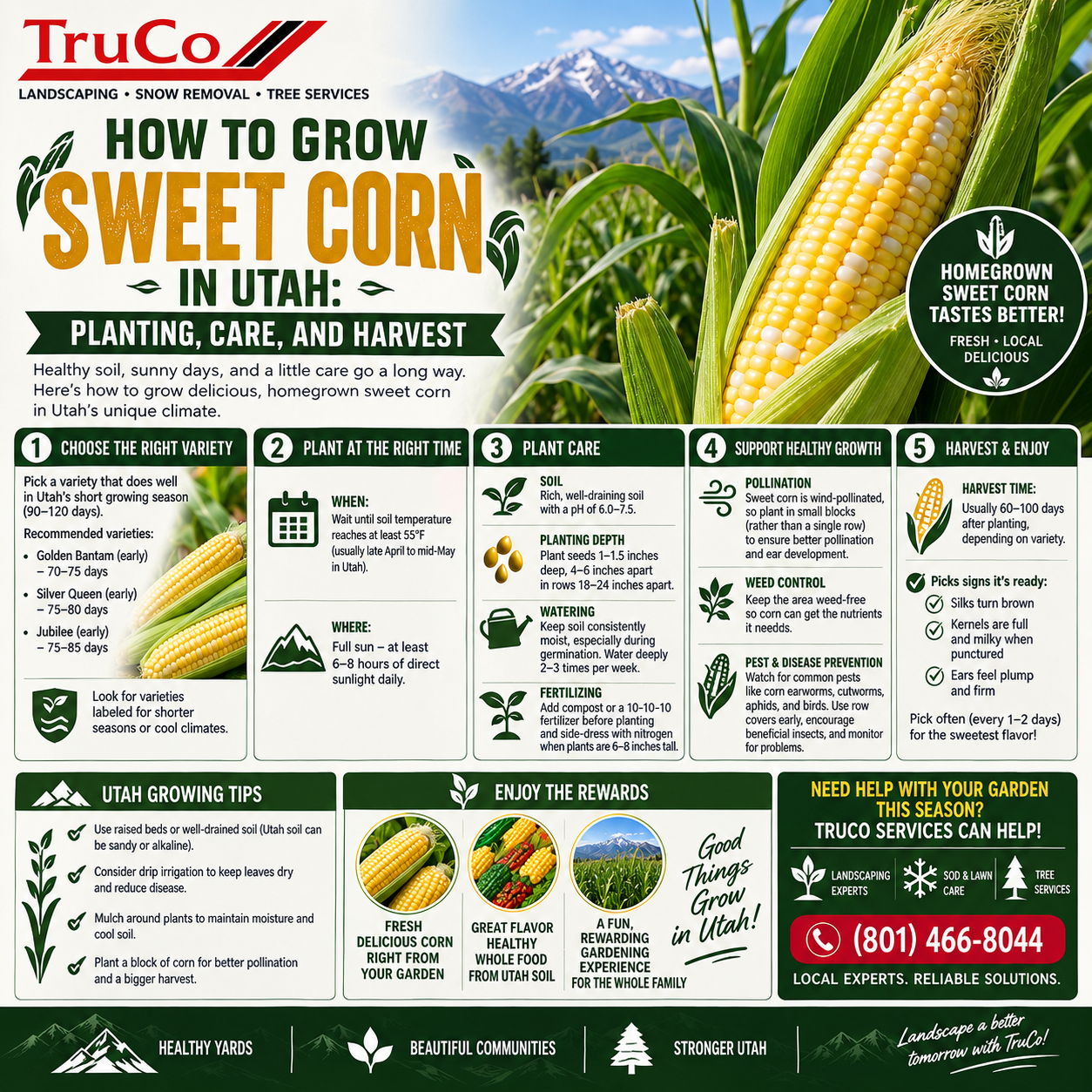
Sweet corn is a summer classic, and Utah's warm, sunny days are perfect for growing it. There is nothing quite like the flavor of corn picked minutes before it hits the pot — homegrown sweet corn is dramatically sweeter and more tender than store-bought ears. Corn is also a fun and rewarding crop for families, with tall stalks that create a living garden feature. It does require space and patience, but with the right varieties, good soil, and consistent care, Utah gardeners can harvest a bumper crop of juicy, sweet ears. This guide covers the best sweet corn varieties for Utah, when and how to plant, watering and feeding, pollination and planting in blocks, growing in small spaces, common pests like corn earworms, and how to harvest and store your corn at peak sweetness. Whether you have a big backyard or a modest plot, these tips will help you grow delicious sweet corn in Utah.
Best Sweet Corn Varieties for Utah
Choose sweet corn varieties based on your season length, sweetness preference, and how long you want to keep ears. Standard (su) varieties like Golden Bantam and Early Golden Giant are classic, with traditional corn flavor that converts to sugar quickly after harvest. Sugar-enhanced (se) varieties like Incredible, Bodacious, and Peaches and Cream are sweeter and hold their sweetness longer — Peaches and Cream is a Utah favorite with bicolor ears. Supersweet (sh2) varieties like Honey Select and Illusion are extremely sweet and hold quality longer after harvest, but they need warmer soil and isolation from other corn types. For short-season northern Utah gardens, early varieties like Early Golden Giant and Quickie mature in 60-70 days. For the longest season and best yields, mid-season varieties like Incredible and Bodacious mature in 75-85 days. In southern Utah's long, hot season, most varieties thrive. Plant a mix of early and mid-season types, or stagger plantings, for a longer harvest window. Choose varieties suited to your region and taste for the best sweet corn in Utah.
When and How to Plant Sweet Corn in Utah
Sweet corn is a warm-season crop that needs warm soil and frost-free nights. In Utah, plant corn after the last spring frost, when soil temperatures reach at least 60-65F — typically mid-May in northern Utah and late April to early May in southern Utah. Corn germinates poorly in cold soil, so wait until the ground is warm; planting too early is the most common mistake. Choose a sunny site with rich, well-drained soil and full sun, at least 6-8 hours daily. Before planting, work in compost and a balanced fertilizer — corn is a heavy feeder. Plant seeds 1-1.5 inches deep and 8-12 inches apart in rows 30-36 inches apart, or plant in blocks of 3-4 short rows rather than one long row. Planting in blocks is critical: corn is wind-pollinated, and block planting ensures good pollination and fully filled ears. For a continuous harvest, plant successive crops every 2-3 weeks until mid-summer, or plant early, mid, and late varieties at once. In Utah's dry climate, water the planting thoroughly after sowing. With proper timing and block spacing, corn seeds sprout within 7-10 days and stalks reach full height in about 8 weeks.
Watering, Feeding, and Caring for Sweet Corn
Corn is a heavy feeder and heavy drinker, and consistent care produces the best ears. Water deeply 1-2 times per week, providing 1-1.5 inches of water weekly, and increase watering during hot, dry spells, silking, and ear development — water stress during silking causes poorly filled ears. In Utah's dry climate, drip irrigation or furrow irrigation is ideal; water early in the morning. Mulch with straw or shredded leaves to conserve moisture and suppress weeds. Fertilize at planting with a balanced fertilizer, then side-dress with nitrogen when plants are 12-18 inches tall and again when tassels appear — corn needs more nitrogen than most crops, and a nitrogen boost at tasseling improves ear size and yield. Avoid over-fertilizing, which can cause lodging. Keep the planting weed-free, especially early, since weeds compete for water and nutrients. Corn is wind-pollinated, so avoid planting in single long rows; a block of rows ensures good pollination. Remove suckers (side shoots at the base) only if desired — they rarely affect yield. With steady moisture and generous feeding, Utah sweet corn grows tall, strong, and productive.
Growing Sweet Corn in Small Spaces
You can grow sweet corn in small Utah yards with a few space-saving strategies. The key is planting in a block rather than a long row — a block of 3-4 short rows, even just 4 feet square, pollinates far better than a single row. Choose compact or early varieties like Quickie or Early Golden Giant, which stay shorter and mature faster. For very small spaces, try growing corn in large containers: use pots or half-barrels at least 18 inches deep and wide, plant 3-4 seeds per container, and keep several containers together so they can cross-pollinate. Fill containers with quality potting mix blended with compost, and feed with diluted liquid fertilizer every 2-3 weeks. Containers dry out quickly in Utah's summer heat, so water daily or twice daily in July. Corn grows well against a sunny fence or wall, which reflects heat and extends the season. Plant pole beans at the base of corn stalks for a classic three-sisters companion planting, or interplant squash between rows. Even a few dozen stalks in a small block produce enough fresh ears for a family. With block planting and the right varieties, sweet corn thrives in small Utah gardens.
Common Sweet Corn Pests and Diseases in Utah
Utah sweet corn growers face a few notable challenges. Corn earworms are the most common pest — caterpillars that enter ears through the silks and feed on kernels at the tip. Control them by applying a drop of mineral oil or Bacillus thuringiensis (Bt) to the silk tips about a week after silks appear, or by treating silks with spinosad; pick off damaged tips at harvest. European corn borers tunnel into stalks and ears — plant resistant varieties, and clean up stalks after harvest to reduce overwintering. Corn smut, a fungal disease that forms gray-black galls on ears, is edible when young but reduces yield — remove galls early and rotate crops. Common rust causes orange pustules on leaves — choose resistant varieties and space plants for airflow. Seed rots and damping-off occur in cool, wet soil — plant in warm soil and avoid overwatering. Birds and raccoons raid ripening ears — harvest promptly and protect plants with netting or fencing. In dry Utah conditions, corn is relatively pest-free with good hygiene. With prompt attention and crop rotation, most sweet corn problems in Utah are easily managed, and healthy stalks produce full, sweet ears.
Harvesting and Storing Sweet Corn
Sweet corn is ready to harvest about 18-22 days after silks first appear, when the silks turn brown and dry and the ears feel plump and full. Peel back the husk and press a kernel with your thumbnail — if the juice is milky, the corn is at peak ripeness; if it is watery, it is too early, and if it is doughy, it is past prime. Harvest in the morning when sugar content is highest, twisting or cutting ears from the stalk with a sharp downward motion. Sweet corn's sugars convert to starch rapidly after harvest — standard varieties lose sweetness within hours, while sugar-enhanced and supersweet types hold quality longer. For the best flavor, cook corn within hours of harvest, or chill ears immediately to slow sugar conversion. Store unhusked corn in the refrigerator for 2-4 days, or blanch and freeze kernels for long-term storage. Sweet corn can also be canned or dried. In Utah, harvest generally runs from late July through September, depending on planting time and variety. With timely harvest and immediate use or freezing, one corn patch supplies sweet summer eating for weeks.
When should I plant sweet corn in Utah? After the last spring frost, when soil reaches 60-65F — mid-May in northern Utah, late April to early May in southern Utah. Plant in blocks for good pollination.
Why is my corn not filling out? Poor pollination — usually from planting in single rows. Corn is wind-pollinated; plant in blocks of at least 3-4 short rows, and shake stalks gently when tassels shed pollen.
How do I keep corn earworms out? Apply mineral oil or Bt to silk tips about a week after silks appear, use spinosad, and remove damaged tips at harvest. Clean up stalks in fall.
How often should I water corn in Utah? Deeply 1-2 times per week — 1 to 1.5 inches. Water stress during silking causes poorly filled ears, so keep moisture steady.
How do I know when corn is ready to harvest? About 18-22 days after silks appear, when silks are brown and dry and kernels squirt milky juice when pressed. Harvest in the morning.
Can I grow corn in containers in Utah? Yes — use 18-inch containers with 3-4 plants each, keep containers together for pollination, water daily in heat, and feed every 2-3 weeks.