
How to Get Rid of Aphids in Utah Gardens

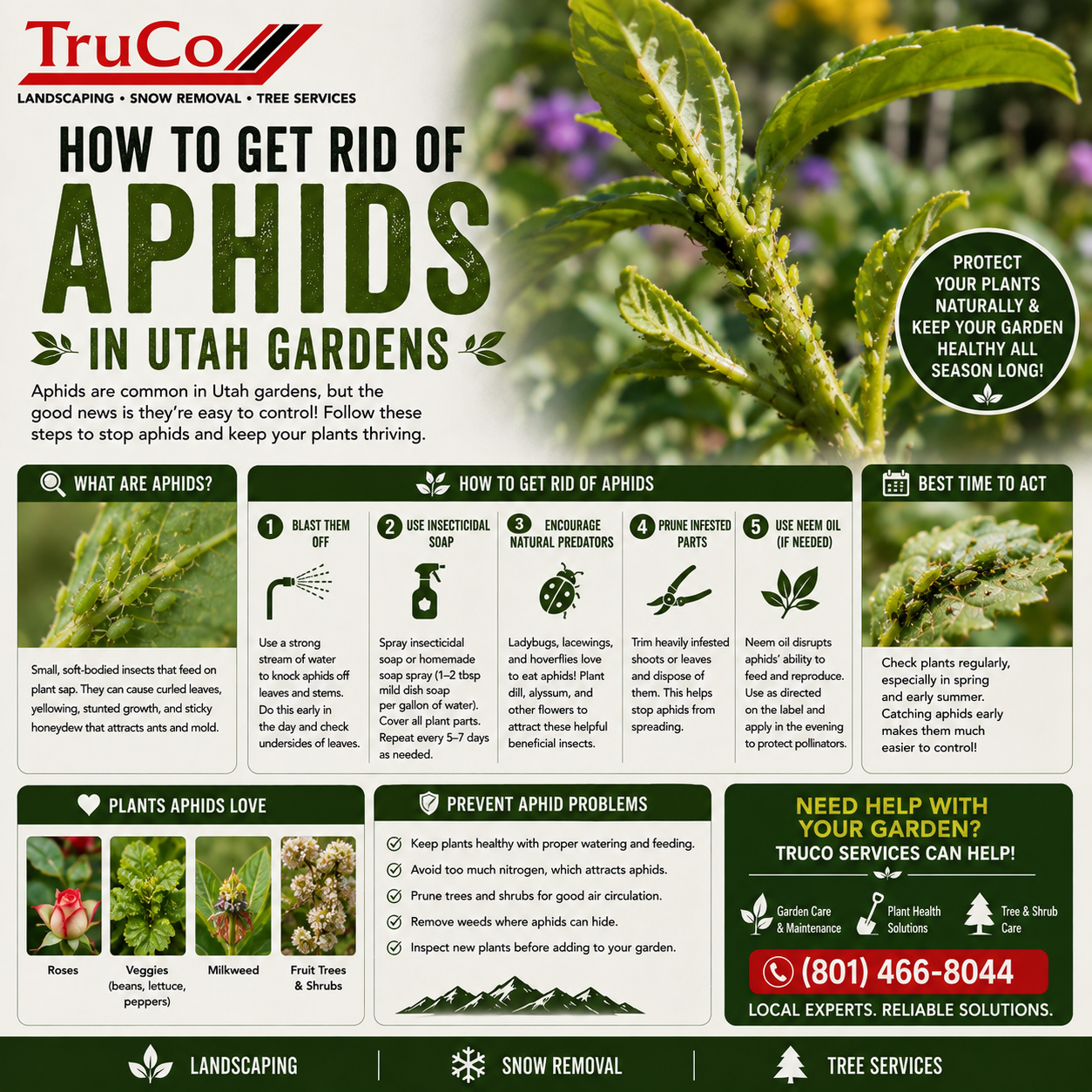
Aphids are among the most common garden pests in Utah, and nearly every gardener encounters them at some point. These tiny, soft-bodied insects cluster on new growth, buds, and the undersides of leaves, sucking sap and weakening plants. While a light infestation is rarely fatal, heavy aphid populations can stunt growth, curl and yellow leaves, and spread plant viruses. The good news is that aphids are also among the easiest pests to control — with a sharp eye and a few simple techniques, you can keep them in check without harsh chemicals. This guide covers how to identify aphids and their damage, why they multiply so quickly, the plants they attack in Utah, and every practical control method — from a blast of water and insecticidal soap to natural predators, companion planting, and targeted treatments. With these strategies, you can protect your Utah flowers, vegetables, and landscape plants from aphid damage all season long.
How to Identify Aphids
Aphids are small, pear-shaped insects about 1/16 to 1/8 inch long, with long antennae and two tail-like cornicles at the rear. They come in many colors — green, yellow, brown, red, black, or gray — depending on the species, and they are often found in dense clusters on new growth, buds, stems, and leaf undersides. Winged aphids appear when populations get crowded or food runs out, allowing them to spread to new plants. Their feeding leaves telltale signs: curled, puckered, or distorted new leaves, yellowing, and stunted growth. Aphids also excrete a sticky, sweet substance called honeydew, which coats leaves and attracts ants; black sooty mold often grows on the honeydew, blackening leaves. You may see ants farming aphids, protecting them from predators in exchange for honeydew. To confirm aphids, check the undersides of leaves and new growth with a magnifier. In Utah, aphids are most common in spring and early summer, and again in fall on cool-season plants. Early identification — before populations explode — is the key to easy control.
Why Aphid Populations Explode in Utah
Aphids reproduce astonishingly quickly, which is why a handful of pests can become an infestation in days. In warm weather, female aphids give live birth to more females without mating — each female can produce dozens of offspring, and generations mature in as little as a week. In Utah's mild spring and fall, populations can double every few days, coating stems and leaf undersides with thousands of insects. Several factors make infestations worse: over-fertilized plants produce soft, succulent new growth that aphids love; stressed plants are more vulnerable; and ants that farm aphids actively protect them from predators. Conversely, cool weather, heavy rain, and natural enemies keep populations in check. Understanding this biology helps you prevent outbreaks: avoid excess nitrogen fertilizer, keep plants healthy, discourage ants, and check new growth regularly. Catching aphids early, when colonies are small and concentrated, is far easier than treating a full-blown infestation. In Utah gardens, the key is monitoring — a few minutes of inspection each week during spring and fall catches most aphid problems before they start.
Plants Most Affected by Aphids in Utah
Aphids attack a huge range of plants, but some Utah favorites are especially susceptible. Fruit trees including apple, peach, cherry, and plum host several aphid species that curl leaves and distort new growth. Roses are heavily attacked — aphids cluster on buds and new canes, reducing bloom quality. Vegetables like tomatoes, peppers, beans, cabbage, broccoli, squash, and lettuce are common targets, especially in spring. Ornamental trees and shrubs including maple, ash, birch, spirea, and euonymus can be infested. Annuals and perennials such as marigolds, petunias, nasturtiums, zinnias, and chrysanthemums attract aphids. Even houseplants and greenhouse crops get aphids year-round. Some species specialize: rose aphids on roses, woolly apple aphids on apple and elm, and melon aphids on squash and cucumbers. Know the plants in your Utah landscape that are most at risk and check them first, especially the tender new growth. Monitoring your most vulnerable plants regularly lets you catch aphid colonies early, when a blast of water or a squish of fingers is all it takes.
Natural and Organic Aphid Control
Start with the simplest, least toxic controls. A strong blast of water from a hose knocks aphids off plants and disrupts their feeding — repeat every few days for light infestations; the dislodged aphids rarely climb back. Insecticidal soap and horticultural oil kill aphids on contact by smothering them; spray thoroughly, covering leaf undersides, and repeat every 5-7 days as needed. Neem oil disrupts aphid feeding and reproduction and works well applied weekly. For heavy infestations, prune out and discard badly infested shoots and leaves. Hand-squishing small colonies works surprisingly well in a small garden. Encouraging natural predators is the most effective long-term strategy: ladybugs and their larvae, lacewings, syrphid fly larvae, parasitic wasps, and predatory midges all feed voraciously on aphids. Plant nectar-rich flowers like dill, fennel, yarrow, alyssum, and calendula to attract these beneficial insects. Avoid broad-spectrum pesticides, which kill natural enemies and often trigger aphid outbreaks. Control ants, which protect aphids from predators — ant baits and barriers around trunks help. With water, soap, and beneficial insects, most Utah aphid infestations are brought under control quickly and safely.
Preventing Aphids in Your Utah Garden
Prevention keeps aphid problems small. Inspect new plants before buying or transplanting, since aphids often arrive on nursery stock — check leaf undersides and new growth. Use row covers or fine mesh on young vegetables and valued plants early in the season to exclude aphids. Avoid over-fertilizing with nitrogen, which produces the soft new growth aphids prefer; use balanced, slow-release feeding instead. Keep plants healthy with proper watering and good soil, since stressed plants attract pests. Encourage beneficial insects by planting a diverse garden with nectar and pollen sources, and avoid pesticides that harm them. Knock down light populations early with water before they spread. In fall, clean up plant debris where aphids overwinter, and in greenhouses, remove weeds that host aphids. Reflective mulches around vegetables can repel winged aphids. Rotate crops to break pest cycles. In Utah's climate, a few simple practices — monitoring, balanced feeding, and encouraging predators — prevent most aphid outbreaks before they ever start, keeping your flowers and vegetables clean and healthy all season.
Chemical Control for Severe Aphid Infestations
For severe infestations that resist water, soap, and predators, targeted insecticides are the last line of defense. Products containing imidacloprid, pyrethrins, or horticultural oils are effective against aphids, and insecticidal soaps are the gentlest option for edible crops. Neem oil and spinosad are also effective and less harmful to beneficial insects than broad-spectrum products. Apply sprays in the early morning or evening to avoid harming bees and other pollinators, and spray thoroughly, covering leaf undersides where aphids gather. Repeat applications every 7-10 days as needed, rotating products to prevent resistance. On fruit trees, dormant oil applied in late winter smothers overwintering aphid eggs. Avoid broad-spectrum pyrethroids and carbamates, which kill beneficial predators and often trigger aphid flare-ups. For large trees, consider hiring a licensed applicator for proper coverage. Always follow label instructions and wear protective equipment. Chemical control works best as part of an integrated program — combine it with water blasting, predator conservation, and ant control for lasting results in Utah landscapes.
What do aphids look like? Tiny, pear-shaped, soft-bodied insects in green, yellow, brown, red, or black, found in clusters on new growth and leaf undersides. Look for curled leaves, honeydew, and ants.
What kills aphids naturally? A strong blast of water, insecticidal soap, horticultural oil, and neem oil. Encourage ladybugs, lacewings, and parasitic wasps, which eat aphids.
Why are there ants on my plants? Ants farm aphids for honeydew and protect them from predators. Control ants with baits or barriers, and your aphid problem will ease.
Do aphids spread disease? Yes — aphids transmit plant viruses as they feed, which is why controlling them early protects your garden. Remove badly infested plants if viruses appear.
How often should I treat for aphids? Spray insecticidal soap or oil every 5-7 days until colonies are gone, and re-check new growth weekly through spring and fall.
What plants repel aphids? Aphids are deterred by strong-smelling plants like garlic, onions, chives, and marigolds. Plant them near vulnerable crops, and grow nectar flowers to attract aphid predators.