
How to Grow Watermelons in Utah: Varieties, Planting, and Care

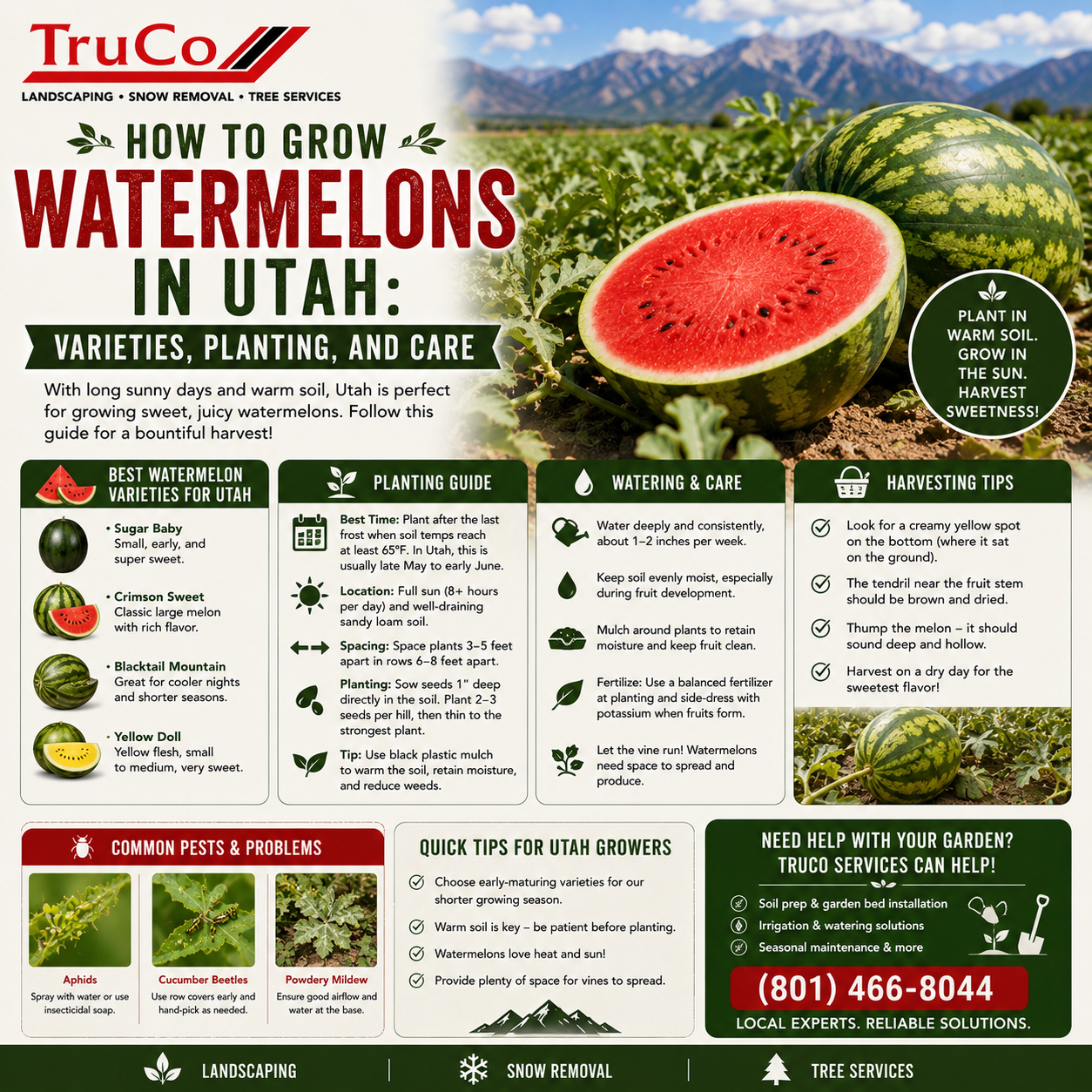
Nothing tastes like summer quite like a slice of cold, sweet watermelon grown in your own Utah garden. Watermelons love heat, and Utah's long, sunny days — especially in the southern part of the state — are ideal for growing these big, juicy melons. While they need a long warm season and plenty of space, watermelons are surprisingly straightforward to grow with the right variety and a little planning. This guide covers the best watermelon varieties for Utah, when and how to plant, watering and feeding, growing in containers and small spaces, managing common pests and diseases, and how to tell when melons are ripe and ready to harvest. Whether you have a big backyard or a sunny patio, these tips will help you grow sweet, juicy watermelons that beat anything from the store.
Best Watermelon Varieties for Utah
Choose watermelon varieties based on your season length, space, and preference. In short-season northern Utah gardens, early-maturing varieties are essential — Sugar Baby, Early Moonbeam, and Golden Midget mature in 70-80 days and produce small, sweet melons. Sugar Baby, a classic icebox type, is reliable, productive, and perfect for Utah. For larger melons in longer seasons, grow Crimson Sweet, Jubilee, and Charleston Gray, which mature in 80-95 days and are prized for flavor and disease resistance. Seedless varieties like Sugar Heart, Triple Crown, and Millionaire need about 90 days and are best for southern Utah's longer season; note that seedless types require a pollinator variety planted nearby. Yellow-fleshed types like Yellow Doll and Orangeglo add variety and sweetness. For small spaces and containers, compact varieties like Sugar Baby and Mini Love produce smaller melons on shorter vines. In southern Utah's long, hot season, almost any variety succeeds; in northern Utah, choose early-maturing types and start plants early. Match your selections to your region and space for the best results.
When and How to Plant Watermelons in Utah
Watermelons are warm-season crops that need warm soil, warm nights, and a long growing season. In Utah, plant watermelons after the last spring frost, when soil temperatures reach at least 70F — typically mid-May in northern Utah and late April in southern Utah. Watermelons are very frost-sensitive and grow poorly in cool soil, so wait until nights are reliably warm. Choose a sunny site with rich, well-drained, sandy loam soil; watermelons prefer a pH of 6.0-6.8. Before planting, work in compost and a balanced fertilizer. Because watermelons need a long warm season, start seeds indoors 3-4 weeks before the last frost in northern Utah, or direct-sow in southern Utah. Plant 2-3 seeds 1 inch deep in hills spaced 4-6 feet apart for standard varieties, or 6-8 feet for large vining types; thin to the strongest plant. In rows, space plants 3-4 feet apart with rows 6-8 feet apart. In Utah's dry climate, use drip irrigation and black plastic mulch, which warms the soil, conserves moisture, and keeps melons clean. In northern Utah, row covers or low tunnels protect young plants and extend the season. With proper timing and spacing, watermelon vines flower within 6-8 weeks and set fruit shortly after.
Watering, Feeding, and Caring for Watermelons
Watermelons are about 92% water, so consistent moisture is essential, especially during fruit set and growth. Water deeply 1-2 times per week, providing 1-2 inches of water weekly, and increase watering during hot spells and as fruit develops. In Utah's dry climate, drip irrigation is ideal — it delivers water to the roots and keeps foliage dry, reducing disease. Water early in the morning. Reduce watering as melons near maturity, which concentrates sugars and improves flavor. Mulch with straw, black plastic, or shredded leaves to conserve moisture, suppress weeds, and keep fruit clean. Fertilize at planting with a balanced fertilizer, then side-dress with a low-nitrogen, higher-phosphorus feed when vines begin to run and again when fruit starts forming. Too much nitrogen produces lush vines with few melons. In sandy Utah soils, feed slightly more often. Thin fruit on each vine to 2-3 melons for larger, sweeter fruit, and remove weak runners to focus energy. Consistent moisture, balanced feeding, and light fruit thinning keep Utah watermelon vines healthy and productive through the season.
Growing Watermelons in Containers and Small Spaces
You can grow watermelons in containers and small spaces with the right approach. Choose compact, small-fruited varieties like Sugar Baby, Mini Love, or Golden Midget, which need less room and produce 4-10 pound melons. Use a container at least 18-24 inches deep and wide with good drainage — a 15-gallon container or half-barrel works well for one plant. Fill with quality potting mix blended with compost, and plant one transplant per container. Provide a sturdy trellis for smaller melons, supporting fruit with slings made of cloth or pantyhose; bush types sprawl less and work well in large containers. Containers dry out quickly in Utah's summer heat, so check daily and water when the top inch of soil is dry — often twice a day in July and August. Feed container watermelons every 2-3 weeks with diluted balanced liquid fertilizer. Place containers in full sun, at least 8 hours daily. In southern Utah's intense heat, afternoon shade can prevent heat stress. With the right variety and consistent care, container watermelons thrive on any sunny Utah patio or balcony.
Common Watermelon Pests and Diseases in Utah
Utah watermelon growers face a handful of common challenges. Cucumber beetles, which feed on leaves and spread bacterial wilt, are a major pest — protect young plants with row covers, handpick beetles, and clean up debris. Squash bugs can damage vines — handpick adults, eggs, and nymphs, and remove plant debris. Aphids cluster on new growth — blast with water or use insecticidal soap. Powdery mildew and downy mildew cause white or yellow patches on leaves in humid conditions — space plants for airflow, water at the base, and choose resistant varieties. Fusarium wilt causes yellowing and wilting — rotate crops and choose resistant varieties. Anthracnose causes dark sunken lesions on fruit and leaves — space plants, water at the base, and rotate crops. Blossom-end rot, a dark sunken spot on the blossom end, comes from irregular watering — keep soil evenly moist. In southern Utah's heat, extreme temperatures can cause blossom drop — provide consistent moisture. With prompt attention and good garden hygiene, most watermelon problems in Utah are easily managed, and healthy vines produce a bountiful harvest.
Harvesting Watermelons
Knowing when a watermelon is ripe is the classic gardener challenge — with practice, a few clues make it easy. The tendril nearest the melon turns brown and dries when the fruit ripens, the ground spot (where the melon rests on soil) changes from white to creamy yellow, and the skin loses its shiny gloss and dulls. Thumping produces a deep, hollow sound on ripe melons, while unripe melons sound high-pitched and dull. Most varieties are ready 70-95 days after planting, depending on type. Cut ripe melons from the vine with a sharp knife, leaving a few inches of stem. Watermelons do not ripen further after picking, so harvest only fully ripe fruit. Store whole watermelons at room temperature for up to two weeks, or in the refrigerator once cut. In cool Utah fall nights, harvest all remaining melons before frost. A well-grown vine produces 2-4 melons depending on variety and care. With these ripeness cues, you will be harvesting sweet, juicy watermelons from your Utah garden all summer long.
When should I plant watermelons in Utah? After the last spring frost, when soil reaches 70F — mid-May in northern Utah, late April in southern Utah. Start seeds indoors 3-4 weeks early in short-season areas.
How do I know when a watermelon is ripe? The tendril nearest the melon turns brown, the ground spot turns creamy yellow, the skin dulls, and the melon sounds hollow when thumped.
Why are my watermelons small? Usually too much nitrogen, too many fruits per vine, or insufficient water. Thin to 2-3 melons per vine, feed with low-nitrogen fertilizer, and water consistently.
How often should I water watermelons? Deeply 1-2 times per week — 1 to 2 inches. Reduce watering as melons near maturity to concentrate sugars.
Can I grow watermelons in containers in Utah? Yes — choose compact varieties like Sugar Baby or Mini Love, use a 15-gallon container, water daily in heat, and feed every 2-3 weeks.
Do watermelons need full sun? Yes, at least 8 hours daily. They are heat-loving and produce the sweetest fruit in Utah's sunny summers.