
How to Grow Lettuce and Salad Greens in Utah

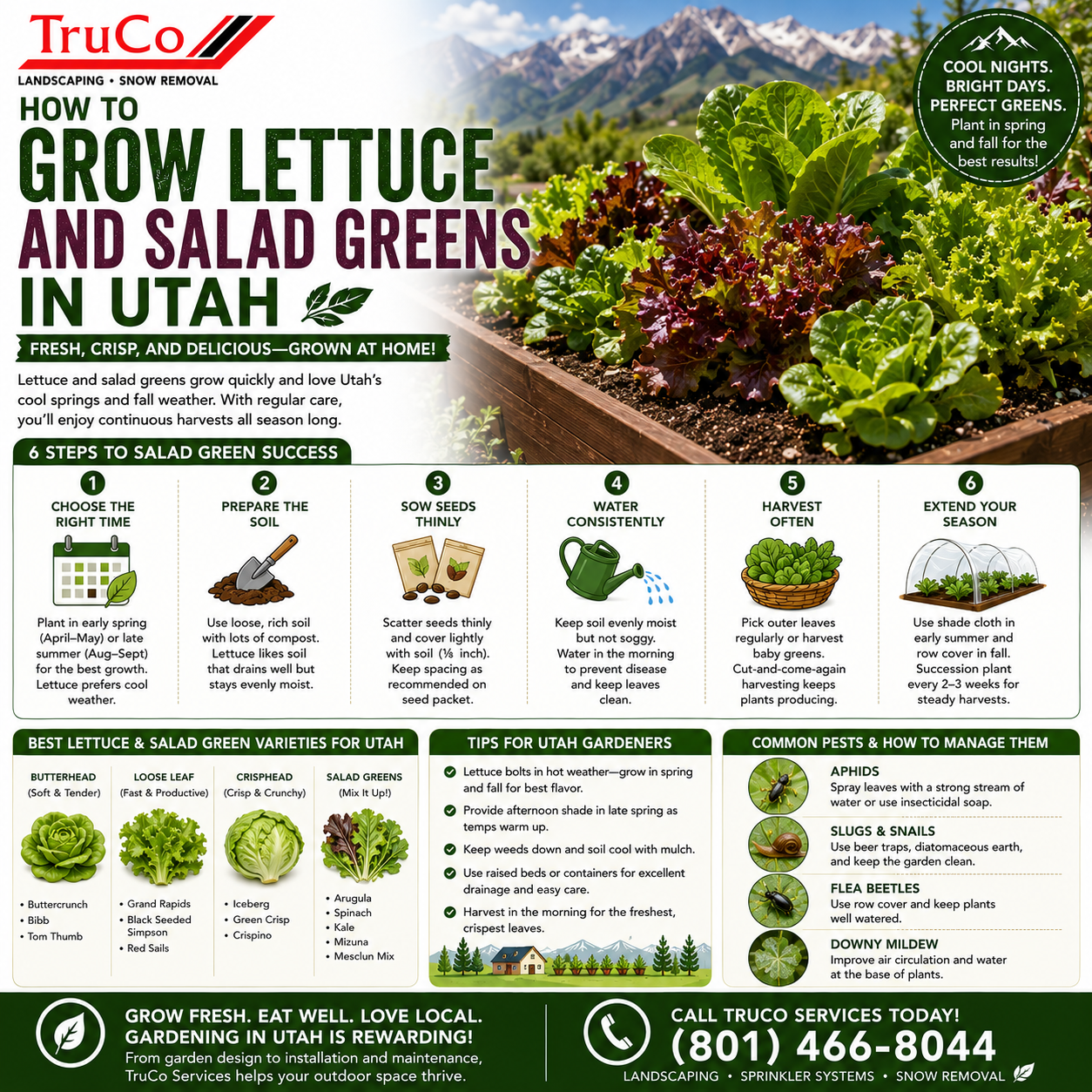
Lettuce and salad greens are the easiest and fastest crops a Utah gardener can grow — you can sow seeds and be harvesting fresh salads in as little as 30 days. Because they are cool-season crops, they thrive in Utah's spring and fall, and with a little care you can enjoy garden-fresh greens from early spring through late fall. Lettuce is also one of the most forgiving plants: it grows well in the ground, in raised beds, and in containers, and it is perfect for succession planting, so a small patch keeps your table supplied all season. This guide covers the best lettuce and salad green varieties for Utah, when and how to plant, watering and feeding, growing in containers and cold frames, dealing with heat and bolting, common pests, and how to harvest for a continuous supply. Whether you love crisp romaine, tender butterhead, spicy arugula, or nutrient-packed spinach, these tips will help you grow a beautiful, productive salad garden in Utah.
Best Lettuce and Salad Green Varieties for Utah
Choose varieties based on your taste, season, and how you plan to grow them. Head lettuce like Iceberg is slow and finicky, but loose-leaf and butterhead types are fast, easy, and ideal for Utah. Loose-leaf varieties like Black Seeded Simpson, Red Sails, and Oakleaf produce cut-and-come-again harvests within 30-40 days and tolerate both cool and warm weather. Butterhead or Bibb types like Buttercrunch, Tom Thumb, and Speckled Bibb form tender, sweet rosettes — Buttercrunch is exceptionally heat-tolerant. Romaine varieties like Little Gem, Parris Island, and Jericho are crisp and upright, with Jericho bred for heat tolerance. For spicy flavor, grow arugula, mizuna, and mustard greens — all fast and cold-hardy. Spinach varieties like Space, Tyee, and Bloomsdale are excellent spring and fall crops, while Swiss chard and kale like Bright Lights and Lacinato produce all season, even into early winter in mild Utah falls. In the heat of summer, heat-tolerant varieties and heat-resistant loose-leaf types keep producing when others bolt. Plant a mix of types for continuous salads and maximum flavor variety in your Utah garden.
When and How to Plant Lettuce in Utah
Lettuce is a cool-season crop that grows best when temperatures are between 45-75F, making Utah spring and fall ideal. In Utah, sow seeds as soon as the soil can be worked in early spring — late March to mid-April in northern Utah, and even February in southern Utah. You can plant again in late summer (August) for a fall crop. Lettuce seeds germinate in soil as cool as 40F and mature plants tolerate light frost, so they are the first and last crop of the season. Choose a site with full sun to light afternoon shade in summer. Sow seeds 1/4 inch deep, 1 inch apart in rows 12-18 inches apart, or scatter seeds in wide beds and thin to 6-12 inches, depending on variety. For a continuous harvest, sow small patches every 2 weeks — succession planting keeps fresh greens coming all season. In Utah alkaline soils, work in compost to improve structure and moisture retention. Lettuce prefers a pH of 6.0-7.0. Start transplants indoors 4-6 weeks early for a head start, or direct-sow for simplicity. With proper timing and spacing, you can be harvesting salads within a month of planting.
Growing Lettuce in Containers and Cold Frames
Lettuce is a superstar container crop — it grows quickly, needs little root depth, and looks beautiful on patios and balconies. Choose containers at least 6-8 inches deep with drainage holes; window boxes, troughs, and wide pots all work well. Fill with quality potting mix and sow seeds or set transplants 6-8 inches apart. Loose-leaf varieties and baby greens are ideal for containers — you can harvest entire heads or cut-and-come-again style. Containers dry out quickly, so water when the top inch of soil is dry, more often in heat. In Utah summers, move containers to afternoon shade to keep greens cool and delay bolting. Cold frames and row covers extend your season dramatically: plant lettuce in early spring or late fall under a cold frame and harvest weeks beyond the outdoor season. A simple cold frame made of wood and old windows works great in Utah. Shade cloth in summer protects greens from intense sun. With containers and cold frames, Utah gardeners can grow lettuce nearly year-round, enjoying fresh salads from March through December.
Watering, Feeding, and Preventing Bolting
Lettuce has shallow roots and needs consistent moisture — irregular watering causes bitter, tough leaves and encourages bolting. Water regularly to keep the soil evenly moist, providing about 1 inch of water per week; in hot weather and containers, water more often. Water early in the morning so leaves dry quickly, reducing disease. Mulch around plants with straw or shredded leaves to conserve moisture and keep roots cool. Feed lightly — lettuce is a light feeder, and too much nitrogen produces soft, disease-prone growth. A compost amendment at planting and a light liquid feed every 3-4 weeks is plenty. Bolting, when lettuce sends up a flower stalk and turns bitter, is triggered by heat and long days. Delay bolting by choosing heat-tolerant varieties, planting in spring and fall rather than summer, providing afternoon shade, keeping plants well watered, and harvesting regularly. Once a plant bolts, harvest it immediately or pull it and replant. In Utah summers, grow heat-tolerant types or move to shade to keep salads sweet. With steady moisture and cool conditions, your lettuce stays tender, sweet, and productive for weeks.
Common Lettuce Pests and Diseases in Utah
Utah lettuce growers face a few common problems. Aphids cluster on new growth and undersides of leaves, especially in spring — blast them with water, use insecticidal soap, or introduce ladybugs. Slugs and snails chew ragged holes in leaves, particularly in moist, shady spots — handpick in the evening, use beer traps or copper barriers, and keep the area free of debris. Earwigs sometimes damage young seedlings — reduce hiding spots and handpick. Cutworms may sever seedlings at the soil line — use collars around stems. In the garden, rabbits and deer can devastate a lettuce patch — use fencing or row covers. Common diseases include damping-off in wet, cool conditions — plant in warm soil and avoid overwatering; downy mildew and powdery mildew in humid weather — space plants for airflow, water at the base, and avoid crowding. Lettuce drop, a fungal rot at the soil line, is worsened by wet conditions — rotate crops and improve drainage. Wash greens thoroughly before eating. With prompt attention and good garden hygiene, most lettuce problems in Utah are easily managed, keeping your salad garden healthy all season.
Harvesting Lettuce and Salad Greens
There are two main ways to harvest lettuce. For whole heads, wait until the head is full and firm, then cut at the base with a knife — most varieties reach this point 45-70 days after sowing. For cut-and-come-again harvesting, which is ideal for loose-leaf and baby greens, snip outer leaves 1-2 inches above the crown with scissors; the plant regrows and you can harvest again every few weeks, often 3-4 times per plant. Harvest in the morning when leaves are crisp, cool, and full of moisture. Harvesting regularly encourages new growth and delays bolting. Lettuce is best used fresh — store unwashed leaves in a perforated bag in the refrigerator for up to a week. Wash greens just before eating. Spinach, arugula, kale, and chard can be harvested the same way, leaf by leaf. For fall, plant a late crop in August and cover with a cold frame to harvest into November. With succession planting and cut-and-come-again harvesting, a small Utah salad patch supplies fresh greens for months — one of the best returns on any garden space.
When should I plant lettuce in Utah? As soon as the soil can be worked in early spring — late March to mid-April in northern Utah, February in southern Utah. Plant again in August for fall harvest.
Why is my lettuce bitter and bolting? Heat and long days trigger bolting. Plant heat-tolerant varieties, provide afternoon shade, water consistently, and harvest regularly.
How often should I water lettuce? Keep soil evenly moist — about 1 inch per week, more in heat and containers. Irregular watering causes bitterness and bolting.
Can I grow lettuce in containers? Yes — lettuce grows beautifully in pots, window boxes, and troughs at least 6-8 inches deep. Use quality potting mix and water regularly.
What salad greens grow well in Utah? Loose-leaf and butterhead lettuce, romaine, arugula, spinach, kale, Swiss chard, mizuna, and mustard greens all thrive in Utah spring and fall.
How do I keep lettuce from bolting in summer? Choose heat-tolerant varieties, grow in afternoon shade or shade cloth, mulch to cool roots, and harvest cut-and-come-again before plants mature.