
How to Grow Green Beans in Utah: Varieties, Planting, and Care

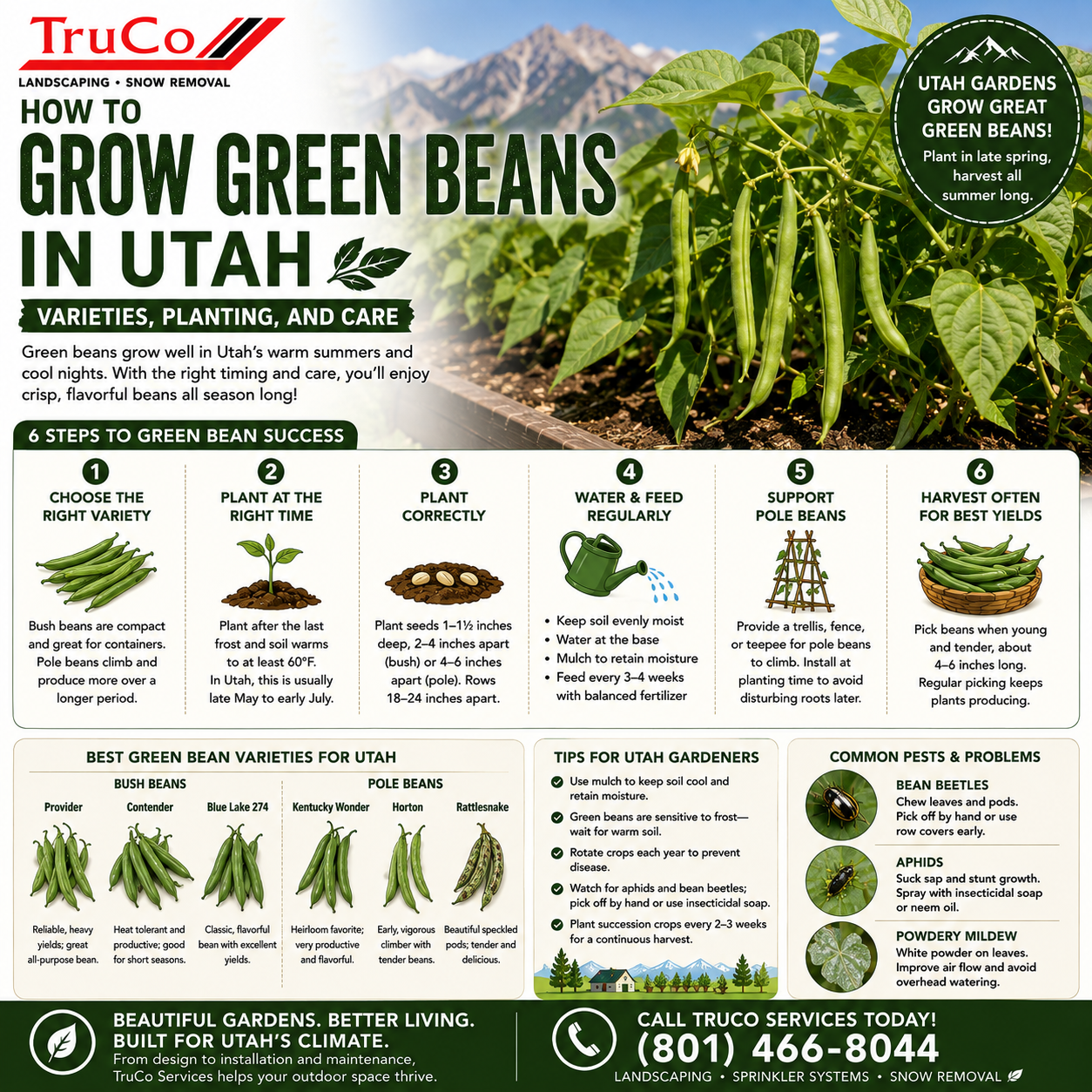
Green beans are one of the most dependable and productive vegetables for Utah gardens — they germinate quickly, grow vigorously in our sunny summers, and produce crisp, flavorful pods that are perfect fresh, frozen, or canned. Both bush and pole beans are easy to grow, and they are an excellent choice for beginner gardeners because they need very little care once planted. Beans also improve your soil by fixing nitrogen from the air, making them a great companion for other vegetables. This guide covers the best green bean varieties for Utah, when and how to plant, supporting pole beans on trellises, watering and feeding, growing in containers, common pests and diseases, and how to harvest and preserve your crop. Whether you plant a small row or a large patch, these tips will help you grow a heavy harvest of tender, delicious green beans in your Utah garden.
Best Green Bean Varieties for Utah
Choose green bean varieties based on your space, harvest preferences, and season length. Bush beans — compact plants that need no support — are the easiest and most popular for Utah gardens. Varieties like Blue Lake 274, Provider, Contender, and Roma II are reliable, productive, and mature in just 50-60 days; Provider is exceptionally early and cold-tolerant, making it ideal for northern Utah's short season. Pole beans, which climb 6-8 feet on trellises or poles, produce heavier, longer harvests from a small footprint — varieties like Blue Lake Pole, Kentucky Wonder, and Fortex are excellent, with Fortex prized for extra-long, tender pods. Wax beans like Golden Wax and Cherokee Wax add buttery color and flavor. Filet or haricot vert beans like Maxibel produce slender, gourmet pods. For southern Utah's heat, heat-tolerant varieties like Contender and Roma perform well. Many Utah gardeners plant bush beans for early harvests and pole beans for a longer, heavier production into fall. Match your selections to your space and season, and your bean patch will be productive from July through frost.
When and How to Plant Green Beans in Utah
Green beans are warm-season crops that grow best when soil warms to at least 60°F. In Utah, plant beans after the last spring frost — typically mid-May in northern Utah and late April in southern Utah. Beans germinate poorly in cold, wet soil, so wait until the soil is warm; planting too early is the most common mistake. Choose a sunny site with well-drained soil; beans tolerate a range of soils but prefer loose, fertile ground with a pH around 6.0-7.0. Before planting, work in compost, but skip high-nitrogen fertilizer — beans fix their own nitrogen, and excess nitrogen produces leafy growth with fewer pods. Plant bush bean seeds 1 inch deep and 2 inches apart in rows 18-24 inches apart, thinning to 4-6 inches between plants. Plant pole beans 1 inch deep and 3-4 inches apart in rows or hills, thinning to 6 inches, near a trellis, teepee, or fence. For a continuous harvest, plant a new row of bush beans every 2-3 weeks until mid-summer — this succession planting keeps you in fresh beans all season. In southern Utah, a late-summer planting produces a fall crop. With proper timing and spacing, bean seeds sprout within a week and plants begin flowering in about a month.
Supporting Pole Beans and Growing in Containers
Pole beans need sturdy support to climb — install a trellis, teepee of poles, or fence at planting time, before vines take off. A simple A-frame or trellis of netting 6-8 feet tall works well; beans twine naturally and need little guidance. Trellising keeps pods clean, improves airflow, and makes harvesting easier. Growing beans in containers is easy: choose a pot at least 10-12 inches deep with good drainage, plant 4-6 bush bean seeds per 12-inch container, and provide a small trellis for pole varieties. Fill with quality potting mix blended with compost. Containers dry out quickly in Utah's summer heat, so water when the top inch of soil is dry — often daily in July. Feed container beans every 3-4 weeks with diluted balanced liquid fertilizer, though beans need little feeding. Place containers in full sun. Bush beans are especially well suited to containers because they stay compact. With proper support and container care, you can grow a productive bean crop on a patio, balcony, or small Utah yard.
Watering and Caring for Green Beans
Beans need consistent moisture, especially during flowering and pod development. Water deeply 1-2 times per week, providing about 1 inch of water weekly, and increase watering during hot, dry spells. In Utah's dry climate, drip irrigation or soaker hoses are ideal, delivering water to the roots while keeping foliage dry to reduce disease. Water early in the morning. Avoid overhead watering late in the day, which can encourage fungal disease. Mulch around plants with straw or shredded leaves to conserve moisture, keep soil cool, and suppress weeds. Beans are light feeders; a compost side-dressing at planting is usually enough. Avoid high-nitrogen fertilizer, which promotes leaf growth over pods. Keep the bed weed-free, but cultivate carefully — beans have shallow roots that are easily damaged. As beans grow, keep the soil evenly moist but never soggy; water stress during flowering causes blossom drop and poor pod set. During Utah's hottest weeks, a layer of mulch and consistent deep watering keeps plants healthy. With steady moisture and light feeding, your bean plants stay productive for weeks, producing continuous flushes of tender pods through the season.
Common Bean Pests and Diseases in Utah
Utah bean growers encounter a handful of common issues. Mexican bean beetles, which look like ladybugs but are yellowish with black spots, skeletonize leaves and can defoliate plants — handpick adults, eggs, and larvae, and use row covers. Aphids cluster on new growth and undersides of leaves, sucking sap and spreading viruses — blast with water or use insecticidal soap. Spider mites thrive in hot, dry weather, causing stippling and webbing — hose foliage regularly and manage heat stress. Cutworms may sever young seedlings at the soil line — use collars around stems. Common diseases include bacterial blight, which causes brown spots with yellow halos on leaves and pods, and bean rust and powdery mildew in humid conditions — space plants for airflow, water at the base, avoid working among wet plants, and rotate crops. Anthracnose, another fungal disease, causes sunken dark lesions on pods. In cool, wet springs, damping-off can kill seedlings — plant in warm soil and avoid overwatering. Choose disease-resistant varieties when available. With prompt attention and good garden hygiene, most bean problems in Utah are easily managed, and healthy plants continue producing all season.
Harvesting Green Beans
Harvest green beans when pods are young, tender, and full — usually when they reach 4-6 inches long and before seeds bulge visibly. Picking frequently keeps plants producing; beans left to mature signal the plant to slow production. Hold the stem with one hand and snap the pod with the other, or use scissors, taking care not to damage the plant. Check plants every 2-3 days during peak production — beans can go from tender to tough quickly. Harvest early in the morning when pods are crisp and full of moisture. Bush beans produce most of their crop over a 2-3 week period, while pole beans produce continuously for 6-8 weeks or longer. Beans are best eaten soon after harvest; store fresh pods in the refrigerator for up to a week. For preserving, freeze blanched beans, can them, or make dilly beans — pickled green beans that are a Utah favorite. Let some pods mature and dry on the plant to save seed for next year. With regular picking, a few rows of beans supply fresh and preserved pods for months in any Utah garden.
When should I plant green beans in Utah? After the last spring frost, when soil reaches 60°F — mid-May in northern Utah, late April in southern Utah. Plant new rows every 2-3 weeks for continuous harvest.
Why are my bean plants flowering but no pods? Usually heat stress, inconsistent watering, or a lack of pollinators. Water steadily and avoid high-nitrogen fertilizer.
Why are my bean leaves full of holes? Likely Mexican bean beetles — handpick adults and larvae, use row covers, and remove egg clusters from leaf undersides.
Do green beans need a trellis? Only pole beans. Bush beans are compact and need no support; pole beans need a trellis, teepee, or fence to climb.
How often should I water beans in Utah? About 1 inch per week, kept consistent — especially during flowering and pod set. Use drip irrigation or soakers and mulch to conserve moisture.
Can I grow beans in containers in Utah? Yes — use a pot at least 10-12 inches deep, plant bush varieties like Provider or Contender, and provide a small trellis for pole types.