
How to Grow Zucchini and Summer Squash in Utah

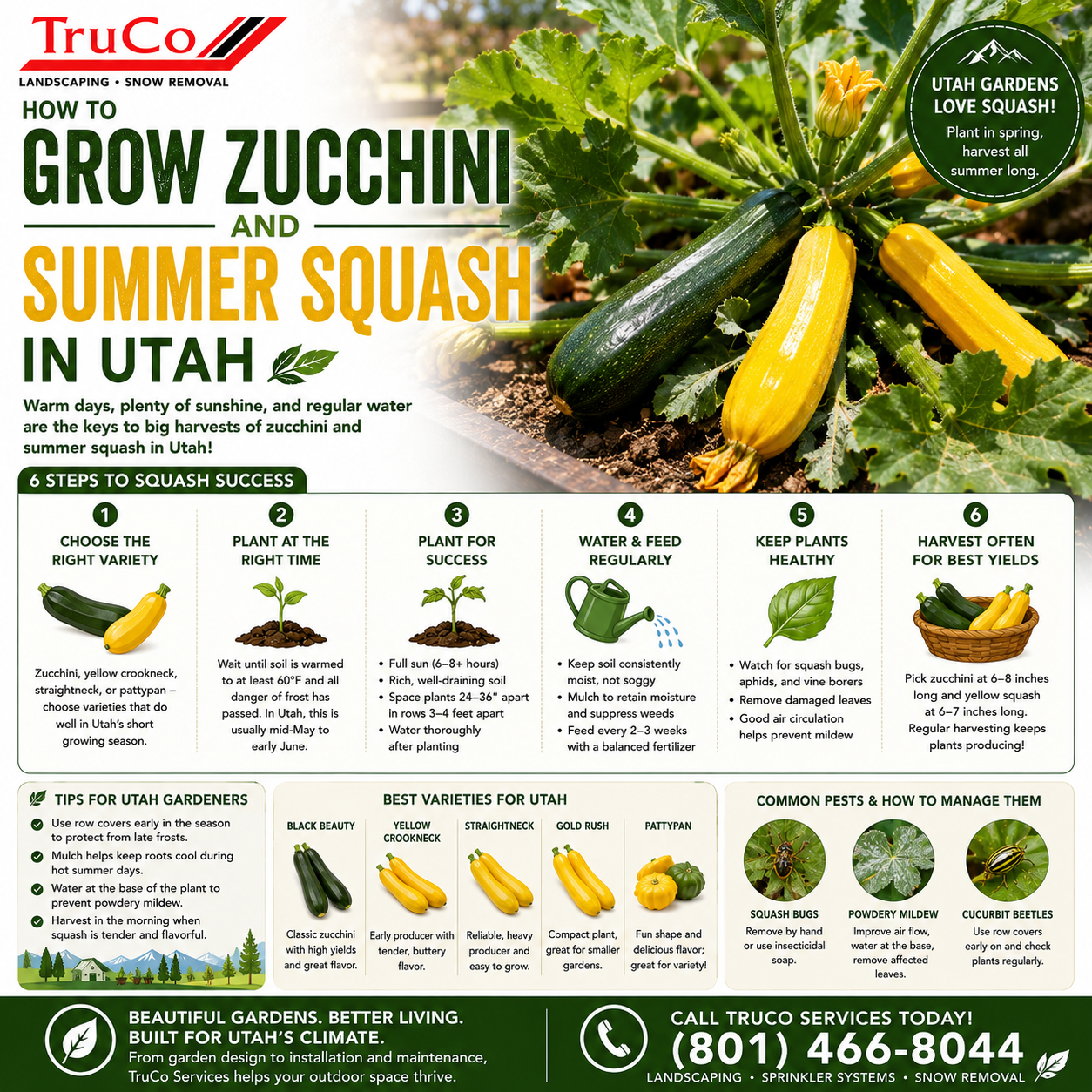
Zucchini and summer squash are famously productive — even a couple of plants can supply more squash than a family can eat, which is why they are a staple of Utah vegetable gardens. They grow quickly in Utah's warm summers, and they are among the easiest vegetables to grow from seed directly in the garden. With their sprawling habit, generous yields, and endless culinary uses — grilled, sautéed, spiralized, baked, and pickled — summer squash rewards even beginner gardeners. This guide covers the best zucchini and summer squash varieties for Utah, when and how to plant, watering and feeding, growing in containers and raised beds, managing common pests like squash bugs and vine borers, harvesting at the right size, and preserving the surplus. Whether you garden in northern Utah's short season or southern Utah's heat, these tips will keep your squash plants healthy, productive, and delicious from early summer through fall.
Best Zucchini and Summer Squash Varieties for Utah
Choose summer squash varieties based on your space, harvest preferences, and growing season. Classic green zucchini like Black Beauty, Costata Romanesco, and Raven are reliable producers with excellent flavor; Black Beauty is the standard, and Costata Romanesco has a nutty flavor and beautiful ribbed fruit. Yellow squash varieties like Yellow Crookneck, Early Prolific Straightneck, and Gold Rush add color and a mild, buttery flavor. Pattypan or scallop squash like Sunburst produces small, tender fruits ideal for grilling and stuffing. For container or small-space gardens, choose compact bush varieties like Patio Star, Bush Baby, and Eight Ball — these stay tidy and still produce abundantly. For early harvests in short-season northern Utah gardens, pick early-maturing varieties that begin producing in about 45-55 days. In southern Utah's long, hot season, most varieties thrive, but heat-tolerant types like Raven handle the heat well. Many gardeners plant both green and yellow types for variety, and a single planting of 2-3 plants of each supplies a family all summer. Choose varieties matched to your space and season, and your Utah squash patch will be overflowing by July.
When and How to Plant Zucchini in Utah
Zucchini and summer squash are warm-season crops that need warm soil and frost-free nights. In Utah, plant seeds or transplants after the last spring frost, when soil temperatures reach at least 65°F — typically mid-May in northern Utah and late April to early May in southern Utah. Squash is very frost-sensitive, so wait until nights are reliably warm. Choose a site with full sun (6-8 hours daily) and rich, well-drained soil. Before planting, work in 2-3 inches of compost and a balanced fertilizer. Plant seeds 1 inch deep, 2-3 seeds per hill, with hills 3-4 feet apart for bush types and 4-6 feet apart for vining types. Alternatively, sow seeds in rows 3-4 feet apart, thinning to one plant every 24-36 inches. In Utah's dry climate, build low mounds or use drip irrigation to keep roots consistently moist. For earlier harvests, start seeds indoors 3-4 weeks before the last frost and transplant carefully, or use black plastic mulch to warm the soil. In southern Utah, a second planting in mid-summer extends the season into fall. Zucchini germinates quickly, often sprouting within a week in warm soil. With proper timing and spacing, your squash vines begin flowering within a month and producing fruit shortly after.
Watering and Fertilizing Summer Squash
Summer squash needs consistent moisture to produce tender, abundant fruit. Water deeply 1-2 times per week, providing 1-1.5 inches of water weekly, and increase watering during hot spells and heavy fruiting. In Utah's dry climate, drip irrigation or soaker hoses are ideal, delivering water to the roots while keeping leaves dry to reduce mildew. Water early in the morning. Mulch with straw, shredded leaves, or black plastic to conserve moisture, suppress weeds, and keep fruit clean and off the soil. Fertilize at planting with a balanced fertilizer, then side-dress with compost or a low-nitrogen fertilizer every 4-6 weeks. Too much nitrogen produces giant leaves and vines with few fruits; balanced feeding supports steady flowering and fruiting. In sandy Utah soils, feed slightly more often; in clay, less. Container-grown squash needs feeding every 2-3 weeks with diluted liquid fertilizer. Consistent moisture and balanced feeding keep zucchini plants productive all season long — a healthy plant produces 6-10 pounds of fruit or more. When plants slow in late summer, a light side-dressing can revive them for a second wave of harvest.
Growing Zucchini in Containers and Raised Beds
Zucchini grows well in containers and raised beds, which is great news for small Utah yards and patios. For containers, choose a pot at least 12-16 inches deep and wide with good drainage — one plant per 5-gallon container works well, and compact bush varieties like Patio Star and Eight Ball are ideal. Fill with quality potting mix blended with compost. Containers dry out quickly in Utah's summer heat, so check daily and water when the top inch of soil is dry — often twice a day in July and August. Feed container squash every 2-3 weeks with diluted balanced fertilizer. In raised beds, prepare loose, compost-rich soil and plant seeds or transplants 24-36 inches apart; raised beds warm faster in spring, extend the season, and drain well. Provide support for heavy fruit if needed. Place containers and beds in full sun. In southern Utah's intense heat, afternoon shade can reduce stress and prevent blossom drop. A single container plant yields 6-10 fruits, while a raised-bed plant can produce far more. With the right variety and consistent care, container and raised-bed zucchini thrive on any sunny Utah property.
Common Zucchini Pests and Diseases in Utah
Utah squash growers face a few well-known challenges. Squash bugs are the most notorious — large, flat, brownish-gray bugs that suck sap from leaves, causing wilting and yellowing; handpick adults, eggs, and nymphs regularly, use row covers early in the season, and clean up debris where they hide. Squash vine borers are the other major pest — caterpillars that tunnel into stems and kill plants; wrap stems with foil or use row covers, and split stems to remove borers if found early. Cucumber beetles feed on leaves and spread disease — use row covers and handpick. Powdery mildew, a white coating on leaves in late summer, is common in humid spots — space plants for airflow, water at the base, and choose resistant varieties. Blossom-end rot and misshapen fruit often come from inconsistent watering — keep soil evenly moist. Blossom drop occurs during heat waves or poor pollination — hand-pollinate flowers in the morning if bees are scarce. Squash plants also drop female flowers when fruit is already setting, which is normal. With prompt attention and good garden hygiene, most Utah squash problems are easily managed, and your plants keep producing all summer.
Harvesting Zucchini and Summer Squash
Harvest zucchini and summer squash small and often for the best flavor and texture. Zucchini is at its peak when 6-8 inches long and 1.5-2 inches thick — larger fruits become seedy, watery, and tough. Yellow squash is best at 4-6 inches, and pattypan at 2-4 inches across. Cut fruit with a sharp knife, leaving a short stem attached. Check plants every day or two during peak production — zucchini can double in size overnight and quickly become oversized. Harvesting regularly keeps plants producing; leaving mature fruit on the vine signals the plant to slow down. Summer squash is best eaten fresh, within a few days of harvest; store in the refrigerator in a perforated bag. For preserving the surplus, freeze grated zucchini for baking, slice and freeze for soups and stir-fries, or make pickles, relishes, and zucchini bread. One healthy Utah zucchini plant produces 6-10 pounds of fruit over the season, and several plants can easily supply a whole neighborhood. With regular picking, your squash patch stays productive from early July through the first frost.
When should I plant zucchini in Utah? After the last spring frost, when soil reaches 65°F — mid-May in northern Utah, late April to early May in southern Utah.
Why is my zucchini rotting on the vine? Usually poor pollination — the small end fails to develop. Hand-pollinate in the morning, or plant bee-attracting flowers nearby.
Why are there flowers but no squash? Squash plants produce male flowers first, then female flowers. If bees are scarce, hand-pollinate by transferring pollen with a brush or cotton swab.
How do I get rid of squash bugs? Handpick adults, eggs, and nymphs daily, use row covers early, and remove plant debris. Squash bugs can quickly defoliate plants.
How often should I water zucchini? Deeply 1-2 times per week — about 1 to 1.5 inches. In containers and heat, check daily; consistent moisture prevents blossom-end rot.
Can zucchini grow in containers in Utah? Yes — use a 5-gallon pot or 12-16 inch container with bush varieties like Patio Star, water daily in heat, and feed every 2-3 weeks.