
How to Protect Trees During Home Renovations in Utah

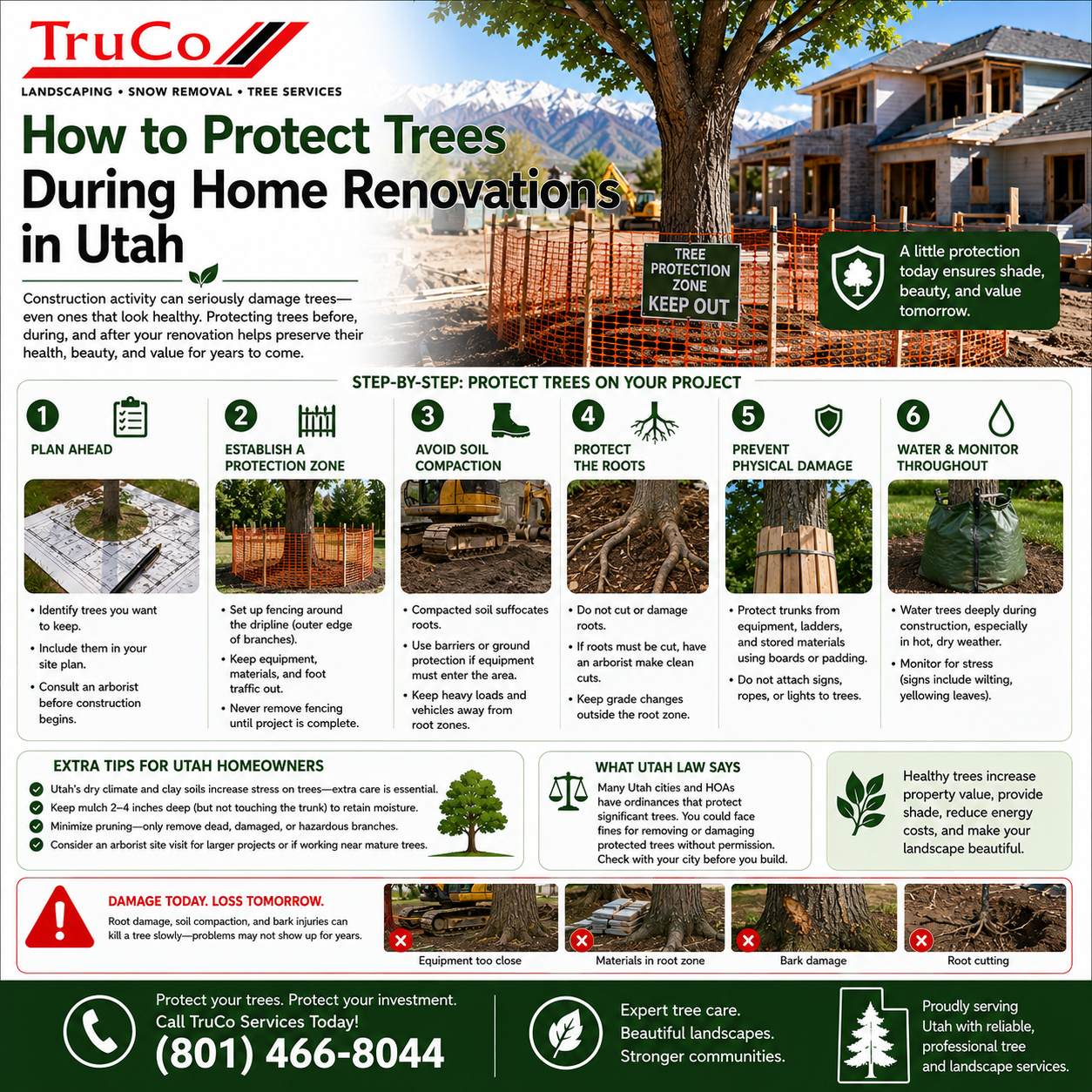
Why Home Renovations Threaten Trees in Utah
Home renovation projects — from kitchen remodels and bathroom additions to roof replacements, new decks, and basement finishing — often damage trees in ways homeowners don't anticipate. Unlike large construction projects, where tree protection is typically part of the planning process, home renovations often catch homeowners by surprise. A roofing crew parks a truck loaded with shingles under the maple tree, compressing its root zone. A contractor dumps leftover concrete washout near the oak's roots. A new deck requires footings that sever critical roots. In Utah, where clay soil already stresses trees, additional renovation-related damage can push a healthy tree into decline. The challenge is that tree damage from renovation activities often doesn't show symptoms for 2-5 years. By the time leaves turn yellow or branches die back, the damage is done and the tree may be beyond saving. Prevention is the only effective strategy. This guide covers how to protect your trees during home renovations, from pre-construction planning to contractor management and post-renovation care. With proper planning, you can complete your renovation and keep your trees healthy.
Pre-Renovation Tree Protection Planning
The most important step is planning tree protection before renovation work begins. Identify your tree protection zone — mark the critical root zone (CRZ) for each tree you want to protect. The CRZ extends to the dripline (the outermost edge of the canopy) and beyond. Tree roots can extend 2-3 times beyond the dripline. For renovation planning, the dripline is a practical minimum protection area. For valuable trees, extend the protection zone further. Map protected areas — create a simple site plan showing the location of each tree and its CRZ. Share this plan with all contractors before work begins. Mark protection zones clearly with temporary fencing (safety fencing, snow fencing, or brightly colored tape). In Utah, where renovation projects often involve multiple contractors, clear marking ensures everyone knows which areas are off-limits. Assess tree health — have a certified arborist evaluate trees before renovation. Trees with existing health issues are more vulnerable to additional stress. The arborist can recommend specific protection measures and document the tree's pre-construction condition. This documentation is valuable if tree damage claims arise later. Plan for material storage — designate storage areas for materials, equipment, and debris that are outside all tree protection zones. In Utah, common renovation materials (roofing supplies, lumber, concrete, paint) can damage soil and roots if stored under trees. Plan contractor access — designate access routes for vehicles and equipment that avoid tree protection zones. In Utah's clay soil, even one pass of a heavy vehicle can cause soil compaction that persists for decades. Plan for alternative access if the only route passes near trees. In Utah, where many homes have mature trees near driveways and access points, creative solutions may be needed. Consider using plywood road mats or track mats over tree root zones if vehicle access is unavoidable.
Common Renovation Activities That Damage Trees
Understanding specific renovation risks helps you prevent damage. Soil compaction — heavy equipment, material storage, and foot traffic compress soil in the root zone. In Utah's clay soil, compaction reduces oxygen availability to roots and restricts root growth. Compaction damage is invisible but can reduce tree health and growth for decades. Prevention: keep all activities outside the CRZ. Root severance — digging for foundations, footings, utility lines, or landscaping severs tree roots. Cutting roots over 2 inches in diameter or removing more than 25% of the root system can destabilize a tree or cause decline. Prevention: hand-dig around major roots, tunnel under roots when possible, and avoid trenching within the CRZ. Grade changes — adding soil (fill) or removing soil (cut) within the root zone damages roots. Even 2-3 inches of added soil can suffocate roots in Utah's clay soil. Prevention: maintain existing grade within the CRZ. If grade changes are unavoidable, consult an arborist about mitigation measures. Chemical damage — concrete washout, paint, solvents, and other chemicals can poison soil and roots. In Utah, where concrete work is common in renovations, concrete washout is a frequent tree killer. Prevention: contain all chemicals and washout, dispose of properly, and keep all mixing and cleaning areas far from trees. Trunk and branch damage — equipment, materials, and work activities can damage tree trunks and branches. Bark damage creates entry points for disease and pests. Prevention: protect trunks with wooden barriers or commercial tree wrap if work occurs near trees. Prune damaged branches promptly. Roof and siding work — roof replacements and siding installation near trees can damage overhanging branches. Workers may also trim or remove branches without permission. Prevention: discuss tree protection with roofing and siding contractors before work begins. Clearly mark branches that must not be cut.
Contractor Communication and Contracts
Clear communication with contractors is essential for tree protection. Include tree protection requirements in all contractor contracts. Specify that no vehicles, equipment, or materials may be parked or stored within tree protection zones. Include penalties for violations (such as paying for tree damage assessment or replacement). Provide contractors with a written tree protection plan. Include a map showing protection zones, access routes, and material storage areas. Explain why tree protection matters — contractors who understand the value of mature trees (which can be worth $5,000-50,000+) are more likely to respect protection measures. Walk the property with contractors before work begins. Point out tree protection zones, access routes, and storage areas. Answer questions about what is and isn't allowed. In Utah, where renovation season runs from spring through fall, contractors are often managing multiple projects. Clear, in-person communication is essential. Include tree protection in daily briefings. At the start of each work day or phase, remind workers about tree protection zones. A quick reminder prevents accidental violations. Require contractors to report any accidental tree damage immediately. Early assessment and treatment can prevent long-term damage. Have a certified arborist on call for damage assessments. Monitor contractor compliance. Inspect tree protection zones regularly during renovation. If violations occur, address them immediately. In Utah, a single day of material storage under a tree can cause damage that lasts for years. Document all contractor communications about tree protection. Written records (emails, meeting notes, signed contracts) are valuable if disputes arise. In Utah, tree damage claims can be significant and documentation protects your interests.
Post-Renovation Tree Care
After renovation work is complete, help your trees recover. Water deeply — renovation activities often disrupt normal watering. Resume regular deep watering immediately after construction ends. In Utah, this means watering trees deeply every 1-2 weeks during the growing season. Pay special attention to trees that may have experienced root damage or compaction. Apply mulch — spread 2-4 inches of organic mulch over the root zone (avoiding the trunk) to help soil recover from compaction and disturbance. Mulch moderates soil temperature, retains moisture, and supports beneficial soil organisms. In Utah, wood chip mulch is ideal for post-construction recovery. Aerate if needed — if soil compaction occurred despite your precautions, core aeration or air spading can help. A certified arborist can assess compaction levels and recommend treatment. In Utah, post-construction aeration is a common and effective treatment. Monitor for stress — watch for signs of tree stress over the next 2-3 years: leaf yellowing, reduced growth, dieback, or pest infestations. In Utah, post-construction stress often shows up 1-3 years after renovation. Early treatment improves the chances of recovery. Have the arborist reassess trees 6-12 months after renovation. A follow-up assessment can catch problems early and recommend corrective care. In Utah, many tree care companies offer post-construction tree care programs. Be patient — tree recovery from renovation stress takes time. With proper care, most trees will recover within 2-3 years. Provide consistent care during this period. If a tree shows severe decline despite good care, consult an arborist about treatment options.
Frequently Asked Questions
Can a tree recover from root damage during renovation? Yes, if the damage is limited (less than 25% of roots affected) and the tree is healthy. Provide deep watering, mulch, and minimal pruning during recovery. Have an arborist assess the damage and recommend specific care. Severe root damage may require years of recovery or may be permanent.
How do I protect tree roots during a driveway or patio renovation? Keep all equipment and materials off the root zone. Use hand excavation near tree roots. If roots must be cut, have an arborist make clean cuts. Consider permeable paving materials that allow water and air to reach roots. Install root barriers to protect the new hardscape from future root growth.
Should I prune my trees before or after renovation? Prune before renovation if branches are in the way or could be damaged. Have a certified arborist do the pruning — never allow contractors to prune trees without professional oversight. Proper pruning cuts minimize stress and prevent disease. After renovation, only remove damaged branches.
Can roof replacement damage nearby trees? Yes. Heavy equipment and material storage on the roof can damage overhanging branches. Roofing debris (shingles, nails) can contaminate the soil under trees. Workers may be tempted to cut branches for easier access. Discuss tree protection with your roofing contractor before work begins.
How long does it take for a tree to show damage from renovation? Tree damage from renovation activities often doesn't appear for 1-5 years. Root damage, soil compaction, and grade changes cause slow decline that may not be visible until the tree is severely stressed. This delayed response is why prevention is so important — by the time you see symptoms, the damage is already done.