
West Valley City UT Permanent Holiday Lighting

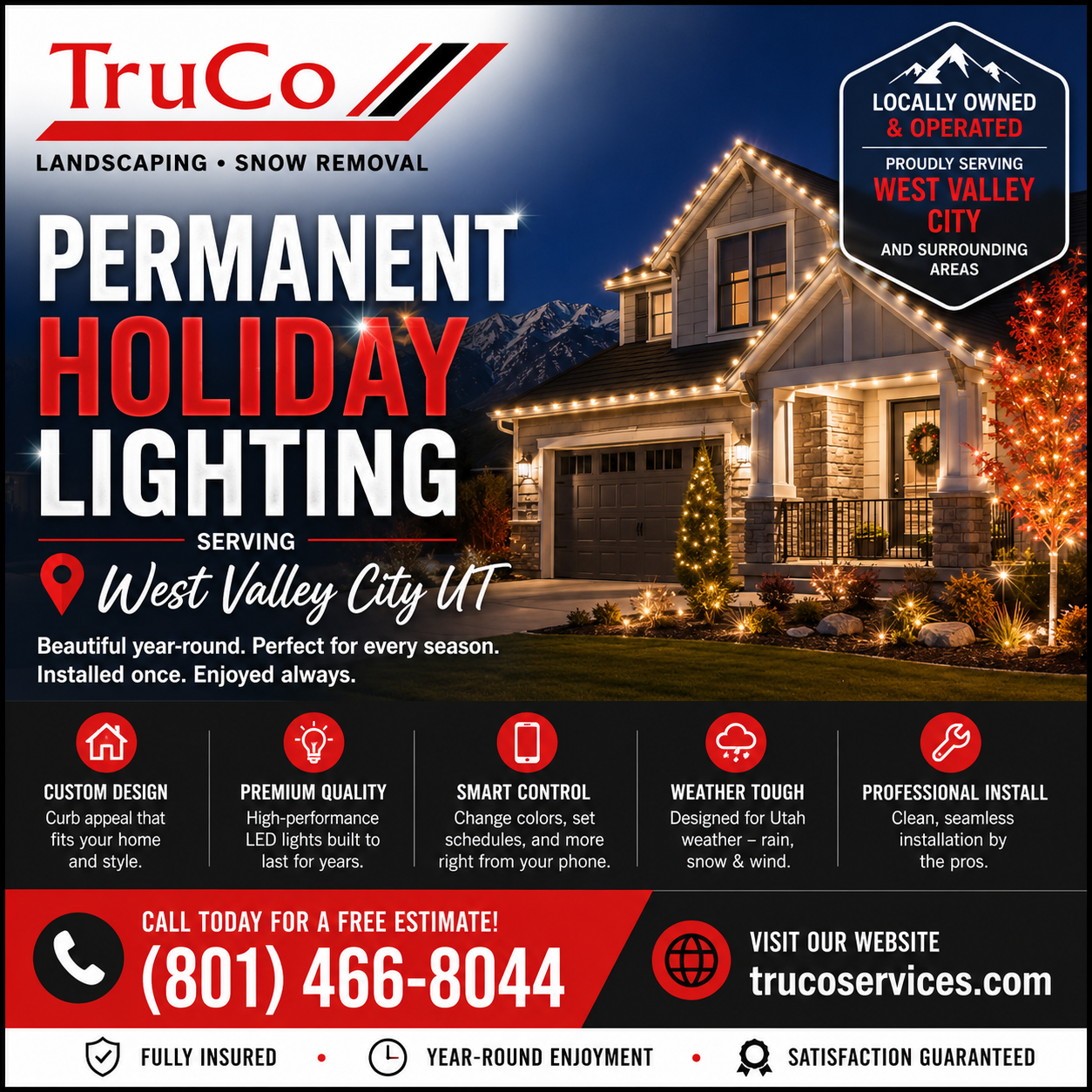
West Valley City UT permanent holiday lighting is a professionally planned, long-term exterior LED system that stays installed along rooflines, soffits, gables, patios, or architectural trim while allowing homeowners to change colors and schedules for holidays, events, and everyday accent lighting. Unlike temporary Christmas lights, it eliminates much of the annual ladder work, storage, tangled cords, and inconsistent appearance associated with seasonal displays.
The most important takeaway is this: a permanent lighting system should be treated as an exterior improvement—not as a simple set of holiday lights. Product durability, electrical protection, roofline condition, mounting method, HOA approval, brightness controls, and service support all affect whether the system remains clean, safe, and useful over time. West Valley City homeowners should plan for winter moisture, freeze-thaw cycles, summer sun, wind, and neighborhood light-spill concerns. This guide explains how permanent Christmas lights work, the most common installation mistakes, realistic costs and tradeoffs, electrical and permit considerations, system options, and how expert guidance can help you get a long-lasting result.
What Is West Valley City UT Permanent Holiday Lighting?
Permanent holiday lighting is an exterior LED lighting system installed on a home for year-round use. It is commonly called permanent Christmas lighting, permanent roofline lighting, permanent LED holiday lights, smart exterior lighting, or color-changing soffit lighting.
The system is designed to remain mounted throughout the year. Instead of installing strings of lights every December and removing them in January, the homeowner changes colors, effects, brightness, and schedules through an app, controller, remote, timer, or smart-home integration.
Key components
Most permanent holiday lighting systems include:
Individually controlled LED lights or “pucks”
A color-matched mounting track or channel
Exterior-rated wiring and sealed connectors
A low-voltage power supply
A controller or control box
App, Wi-Fi, Bluetooth, timer, or remote functionality
A suitable exterior power source
Programming for colors, zones, scenes, and schedules
A typical permanent outdoor lighting project begins with a home evaluation. The installer measures rooflines, identifies power access, evaluates trim and soffit conditions, plans controller and wire locations, installs the mounting channel and LEDs, tests the system, and shows the homeowner how to use the controls.
What is included—and what is not
A permanent holiday lighting installation can include roofline, soffit, gable, patio, entryway, and accent lighting. It may include custom scenes for Christmas, Halloween, Independence Day, birthdays, sports events, and everyday warm-white lighting.
It usually does not automatically include tree wrapping, yard décor, wreaths, garland, temporary inflatables, landscape lighting, window décor, roof repairs, gutter repair, or additional electrical upgrades unless those items appear in the written scope of work.
For example, a homeowner could use soft white lights at 20 percent brightness for normal evenings, switch to orange and purple in October, red and green in December, and red-white-and-blue for a July celebration—all without changing the physical installation.
Electrical and permit considerations
Permanent lighting may involve a fixed electrical installation, a controller, power supply, new receptacle, or wiring modifications. West Valley City states that building permits and inspections are required for certain work on single-family homes, including adding fixed electrical appliances that are not simply replacements. Because individual projects vary, homeowners should confirm their exact requirements with the city before installation.
Outdoor power connections also need appropriate protection. The National Fire Protection Association notes that outdoor receptacles require GFCI protection, and outdoor lighting components should be properly listed and suitable for wet locations where applicable.
8 Important Things to Know Before Installing Permanent Holiday Lights
1. A permanent system must be built for year-round weather
West Valley City’s weather can be hard on exterior equipment. Permanent holiday lights face UV exposure, summer heat, wind, snow, rain, ice, and significant temperature changes. A system that performs well for one holiday season may not remain reliable if the LEDs, wiring, controller, connectors, mounting channel, or power supply are not intended for long-term exterior use.
The product matters, but so does the complete system. A durable installation uses weather-appropriate components, protected connections, a properly fitted channel, stable mounting hardware, and a serviceable power/control setup. Inexpensive consumer strips or adhesive-backed lights may look attractive initially, but adhesive can release, connectors can corrode, and exposed wires can become visually distracting or vulnerable to damage.
Ask specific questions before purchasing:
Is the lighting system designed for permanent outdoor installation?
Are the lights, wires, connectors, and controller rated for the intended location?
What happens when an individual LED or section fails?
Can replacement components be obtained in the future?
Does the warranty cover labor as well as parts?
How are power supplies and controllers protected from moisture?
A quality system should disappear visually during the day as much as possible and operate reliably at night. Choosing a system solely because it has bright colors or a polished app often overlooks the components that determine long-term performance.
2. Mounting location changes how the finished system looks
Permanent roofline lights can be installed under soffits, behind fascia, near gutters, along gables, around patios, or on architectural trim. The same product can look dramatically different depending on placement.
A deeper soffit position may create a subtle wash of light, while a more forward position can create a crisp, visible point-light outline. Neither is automatically better. The correct design depends on the home’s architecture, roofline depth, trim color, street viewing angle, and the homeowner’s preferred look.
Poor layout planning can lead to dark gaps, uneven spacing, awkward transitions at corners, exposed wiring, crooked channels, or light points that appear too close to the roof edge. These issues are more obvious at night, but poorly matched channels or visible runs can also affect curb appeal in daylight.
Before work begins, ask to see where the channel will be mounted. Confirm how wires will cross between roofline sections, where the controller will sit, whether the channel color matches your trim, and how gables, dormers, valleys, and disconnected rooflines will be handled.
A high-quality layout should look intentional from the street and remain serviceable later. The goal is not merely “lights on the house.” It is a clean architectural outline that fits the property.
3. Electrical planning is essential for safety and reliability
Permanent holiday lighting needs a suitable electrical source. Depending on the system and project layout, that may involve an existing GFCI-protected outdoor receptacle, a garage outlet, a protected power supply, a dedicated circuit, or electrical work performed as part of the project.
The important issues are circuit capacity, moisture protection, grounding, GFCI protection, accessible disconnects, proper load planning, and safe wire routing. A system should not depend on damaged extension cords, improvised connections, overloaded outlets, or unprotected wiring.
West Valley City homeowners should not assume that a nearby receptacle is automatically suitable. That outlet may already serve a refrigerator, freezer, tools, outdoor equipment, garage door opener, or other electrical load. Frequent tripping may indicate moisture, connection damage, an overloaded circuit, or another issue that requires attention.
The Electrical Safety Authority recommends using properly rated lights, replacing damaged cords or plugs, and using GFCI protection for outdoor connections.
Ask the installer who handles electrical work, whether an electrician is needed, how the system will be protected from weather, and whether any permit or inspection applies. Safe power planning helps prevent nuisance outages, shock hazards, moisture problems, and expensive troubleshooting.
4. Brightness and light spill can become neighborhood problems
Permanent LED holiday lights can create a tasteful, welcoming effect—or become a source of glare and complaints. Problems typically arise when homeowners run lights at maximum brightness every night, use flashing or strobe-like effects late at night, or allow light to spill into neighboring bedrooms or toward the street.
The best systems include brightness adjustment, zone control, scene scheduling, and timers. These features let you use a subtle warm-white setting on ordinary evenings and reserve brighter colors or animation for limited holiday periods.
A practical rule is to use the lowest brightness that still delivers the desired look. Brighter is not always better. A lower setting often looks more upscale, reduces glare, uses less electricity, and is easier on neighbors.
Be especially mindful of rooflines that face nearby homes, narrow lots, corner properties, or streets with frequent vehicle traffic. Avoid directing lights outward or upward unnecessarily. Set an automatic shutoff time that respects the neighborhood.
This approach also aligns with basic outdoor-lighting principles: lighting should have a purpose, be directed where it is needed, and avoid excess brightness or spill beyond the property. Thoughtful programming can prevent conflict while still giving your home a festive appearance.
5. HOA approval may apply even if lights are subtle
If your home is governed by an HOA, permanent exterior lighting may require architectural approval. The exact requirements depend on the association’s CC&Rs, design standards, and approval procedures.
An HOA may regulate:
Exterior channels or trim modifications
Controller-box placement
Visible wire routing
Lighting color and brightness
Animation effects
Daily operating hours
Roofline or façade changes
Installation approval before work begins
Homeowners sometimes assume that permanent lights are exempt because they are small or hidden under soffits. However, the system is a year-round exterior modification. Installing before approval can lead to fines, disputes, or removal requirements, even when the lights themselves are attractive.
Read your association documents before signing a contract. If approval is required, submit an application with the proposed layout, product information, channel color, controller location, and any requested images. Keep written approval for your records.
If the rules are unclear, ask for written guidance. Do not rely on a verbal conversation or assume that a neighbor’s installation establishes permission for yours.
6. Smart controls need a practical service plan
App control is one of the strongest benefits of permanent holiday lighting. You can create scenes, select colors, program zones, set schedules, dim brightness, and control the system without going outside. But smart technology should simplify ownership, not create a new headache.
Before selecting a system, ask:
Does it use Wi-Fi, Bluetooth, cloud access, or a combination?
Can multiple family members have app access?
What happens when the Wi-Fi router or password changes?
Can the lights operate during an internet outage?
Is there a physical switch or reset option?
Can the controller be accessed safely from the ground?
Is setup help included after installation?
Is there support if the app changes or a phone is replaced?
A controller buried in an inaccessible attic, mounted in an exposed location, or placed where Wi-Fi is weak can create unnecessary problems. The ideal setup is protected from weather, available for service, and easy for the homeowner to understand.
A reliable smart-lighting system should give you flexibility while preserving basic control. You should not need an urgent service call simply because you replaced your router or forgot an app password.
7. Roofline, soffit, and gutter conditions should come first
Permanent lights should be installed on solid, stable surfaces. They should not be used to hide failing fascia, loose soffits, damaged gutters, peeling trim, water-stained eaves, or roof problems.
Before installation, inspect the planned mounting areas for:
Loose or sagging gutters
Rotted or soft fascia
Cracked soffit panels
Water stains or leak evidence
Damaged paint or siding
Missing fasteners
Pest damage
Ice-dam or drainage concerns
Areas scheduled for future repair or replacement
West Valley City homes can experience snow accumulation and freeze-thaw conditions that expose drainage weaknesses. If gutters overflow or water regularly reaches the soffit area, address that condition before installing a permanent lighting channel.
Otherwise, you may need to remove and reinstall parts of the system during future repairs. That adds cost and can create alignment problems. A professional installer should identify obvious mounting concerns, explain how they may affect the job, and avoid making promises that ignore the condition of the home.
8. Warranty and service details matter as much as the product
A broad “lifetime warranty” statement does not tell you enough. Permanent holiday lighting warranties can vary significantly. One company may cover LEDs but not labor. Another may cover parts for a limited period but exclude power supplies, controllers, weather damage, roof work, accidental damage, animal damage, and service-call fees.
Get written answers to these questions:
How long are the LEDs covered?
How long are wiring, connectors, channels, controllers, and power supplies covered?
Is labor included for repairs?
Is there a service-call or trip fee?
What weather-related exclusions apply?
Does the warranty transfer if the home is sold?
How quickly can service be scheduled during the holiday season?
What happens if a matching replacement part is no longer available?
A strong service plan helps protect your investment. The goal is not simply to have a warranty document; it is to know how a real problem will be handled years after installation.
The Real Cost of Getting Permanent Holiday Lighting Wrong
The cost of a poor installation is more than the price of replacing a broken LED. Financial consequences can include removal and reinstallation, damaged trim repairs, electrical troubleshooting, controller replacement, roof or gutter-related service work, HOA fines, and replacement of an entire run if the original system cannot be serviced.
Time costs are often overlooked. A homeowner may spend hours trying to reset an app, troubleshoot tripping breakers, coordinate a repair, seek retroactive HOA approval, or schedule roof and lighting work around each other. If a system fails during December, repair availability may be limited because installers are at their busiest.
There are emotional costs as well. Holiday lighting is supposed to create enjoyment. A display that produces glare, fails before an event, creates tension with neighbors, or becomes the subject of HOA complaints can quickly become frustrating.
Long-term consequences can include visible exterior damage, mismatched replacement components, hard-to-service wiring, and a home that looks unfinished during the day.
Most of these costs are avoidable. Careful system selection, electrical planning, roofline inspection, clear written scope, appropriate brightness settings, HOA review, and a real service plan can prevent many problems before the first channel is installed.
How an Experienced Lighting Professional Helps
An experienced permanent lighting professional helps homeowners make decisions before those decisions become expensive. The process should begin with a site evaluation, not a generic quote based only on linear footage.
A well-planned project includes:
Measuring and evaluating the roofline
Identifying suitable mounting locations
Checking soffit, fascia, trim, and gutter conditions
Planning discreet wire routing
Choosing a channel color that fits the exterior
Identifying a safe, accessible power and controller location
Explaining product and warranty differences
Discussing app controls, scenes, and scheduling
Addressing HOA and local permitting questions
Testing the system after installation
Providing basic homeowner training and service information
Professional guidance also reduces safety risks. Roof access, exterior wiring, weatherproofing, and power connections require more care than ordinary temporary holiday decorations.
For homeowners considering West Valley City permanent holiday lighting, Truco Services can provide practical guidance on planning, exterior lighting installation considerations, and long-term system care. The focus should be on a lighting design that looks clean, operates reliably, and works for both holiday displays and everyday use.
Permanent Holiday Lighting Options and Strategies
Roofline and soffit lighting
Roofline and soffit lighting is the classic permanent holiday-lighting option. Individually controlled LEDs are mounted along eaves, fascia, gables, or soffits to define the home’s silhouette.
This option is best for homeowners who want a visible, polished display from the street. Its main limitation is that layout quality is highly visible. Uneven spacing, poor channel selection, and exposed wiring can reduce the value of the investment.
Architectural accent lighting
Architectural accent lighting uses permanent LEDs more selectively around entryways, columns, patios, pergolas, or specific roofline features.
It is appropriate for homeowners who prefer subtle everyday curb appeal with occasional holiday colors. Its limitation is that it may not create the full outline effect expected from a traditional Christmas-light display.
App-controlled, zoned lighting
Zoned permanent lighting divides the home into separately controllable sections. For example, the front roofline, gables, patio, and entryway can use different colors or schedules.
This is useful for large homes, multiple roof levels, or homeowners who want more creative scene control. The limitation is greater system complexity, potentially higher cost, and a greater need for clear programming support.
Seasonal temporary lights
Traditional temporary holiday lights remain a valid alternative. They are appropriate for renters, budget-conscious homeowners, people who want a completely different display each year, or homeowners who do not want a permanent exterior modification.
Their drawbacks include annual installation and removal, storage, repeated ladder use, tangled cords, and a less custom-fitted appearance.
What to Do If You Have a Problem Now
Turn the system off immediately if you smell burning, hear buzzing, see damaged wiring, notice water entering electrical components, or experience repeated breaker trips.
Do not climb onto a wet, snowy, icy, or steep roof to inspect the system.
Take photos and video of the issue, including the affected lights, controller, wiring, trim, and any error messages in the app.
Check basic items from ground level: breaker position, GFCI receptacle reset, timer settings, app connection, controller power, and Wi-Fi status.
Review your contract, installation documentation, product information, and warranty terms.
Contact the installer with a concise description of the problem, dates, photos, and the system’s serial or account information if available.
Seek qualified electrical evaluation promptly if the problem involves repeated tripping, damaged wiring, moisture intrusion, or power concerns.
If the issue involves an HOA notice, respond in writing, provide approval documents if you have them, and ask what specific correction is requested.
For permanent Christmas lights in West Valley City, consider consulting Truco Services for guidance focused on planning, installation quality, safety, and long-term usability.
Common Mistakes People Make
Choosing the lowest price without reviewing the scope. A lower quote may omit service support, weather-ready components, electrical work, or proper channel installation.
Skipping HOA approval. Exterior lighting can be considered an architectural alteration, even when the system is small and hidden.
Installing on damaged trim or gutters. Lighting should not be mounted over existing water, roof, soffit, or fascia problems.
Using maximum brightness all night. High-intensity displays can create glare, neighbor complaints, and a less refined appearance.
Ignoring controller placement. A poorly placed controller can suffer from weak Wi-Fi, water exposure, difficult access, or poor serviceability.
Assuming any outlet will work. Outdoor lighting needs suitable power, GFCI protection, and enough circuit capacity.
Not asking about roof replacement. Future roofing, gutter, painting, or trim work can require temporary light removal and reinstallation.
Failing to read the warranty. Understand what is covered, what is excluded, who performs repairs, and whether labor is included.
Frequently Asked Questions
What is permanent holiday lighting?
Permanent holiday lighting is a weather-appropriate exterior LED system that stays installed year-round and can be programmed for holidays, events, and everyday accent lighting.
Is permanent holiday lighting different from temporary Christmas lights?
Yes. Temporary lights are usually installed and removed seasonally. Permanent systems use installed channels, weather-rated components, controllers, and programmable LEDs intended for long-term exterior placement.
Can permanent lights stay up all year?
Yes. The hardware stays installed year-round, while the color, brightness, and schedule can be changed through the system controls.
Can I use permanent Christmas lights for holidays other than Christmas?
Yes. Homeowners commonly use them for Halloween, Independence Day, birthdays, sports events, graduations, parties, and warm-white everyday lighting.
Are permanent holiday lights visible during the day?
They may be somewhat visible, but properly fitted channels that match the home’s trim help reduce daytime visibility.
How long do permanent LED lights last?
Lifespan depends on the product, installation method, weather exposure, electrical protection, operating habits, and maintenance. Ask about component-specific warranty coverage rather than relying on a general lifespan claim.
Do permanent lights work in West Valley City snow?
Outdoor-rated permanent systems are designed for exterior use, but snow, ice, moisture, drainage, and installation quality still matter. Properly protected components and connections are essential.
Are permanent lights safe?
They can be safe when installed with suitable outdoor-rated equipment, appropriate electrical protection, safe wire routing, and proper maintenance. Electrical problems should be evaluated promptly.
Do permanent holiday lights need GFCI protection?
Outdoor electrical connections generally need GFCI protection. NFPA notes that outdoor receptacles require GFCI protection.
Do I need a permit in West Valley City?
The answer depends on the exact system and whether the project includes fixed electrical work or changes. West Valley City identifies certain fixed electrical installations as permit-and-inspection work, so confirm project-specific requirements with the city.
Does my HOA need to approve permanent lights?
Possibly. Many HOAs require approval for year-round exterior modifications. Review your CC&Rs and architectural guidelines before installation.
Can permanent lights cause neighbor complaints?
Yes, if they are overly bright, animated late at night, flash excessively, or cast light onto neighboring homes. Dimming and scheduling help prevent this.
Can I control permanent lights from my phone?
Many systems offer app-based control. Ask whether the system uses Wi-Fi, Bluetooth, cloud access, or a combination, and how it handles internet outages.
Can I set automatic schedules?
Usually, yes. Many systems allow automatic schedules based on time, day, sunset, or custom calendar programming.
What happens if my Wi-Fi changes?
Some systems may need to be reconnected or reconfigured. Ask the provider to explain reset steps and whether the controller has a backup control option.
Will permanent lights increase my electric bill?
LED lighting generally uses less energy than traditional incandescent holiday lights, but your actual cost depends on system size, brightness, color effects, and hours of use.
Can individual lights be replaced?
It depends on the product design. Ask whether individual LEDs, sections, controllers, wiring, and power supplies can be repaired or replaced.
Can permanent lights be installed on a two-story house?
Yes, but height, roof access, roof pitch, wire routing, safety, and future service access require additional planning.
Can lights be installed around gutters?
They can be installed near gutters depending on the system and layout, but gutter condition, drainage, ice, and future maintenance should be considered first.
Will permanent lights damage my roof?
A properly planned system should avoid unnecessary roof penetration and should be mounted according to the system’s instructions. Discuss mounting locations before work begins.
Can I install permanent holiday lights myself?
Some systems are sold for DIY use. However, homeowners should consider roof safety, electrical protection, mounting precision, weatherproofing, and warranty limitations before choosing that route.
Can permanent lights be used as security lights?
They can provide general decorative illumination, but they are not a substitute for purpose-designed, targeted security lighting where brighter coverage and motion detection are needed.
How bright should my permanent lights be?
Use the lowest brightness that provides the look you want. Lower brightness is often more attractive for daily use and reduces glare.
Can I use flashing or animated settings?
Many systems allow animation, but it should be used carefully. Avoid patterns that look like strobes, distract drivers, or disturb neighbors late at night.
What maintenance do permanent lights require?
Maintenance may include checking the controller and app, keeping connections protected, inspecting visible damage, addressing roof or gutter work, and arranging service for failed sections.
What happens if I replace my roof?
The system may need protection, removal, or reinstallation. Discuss this with the lighting provider before roof work begins.
Can permanent lighting improve curb appeal?
A carefully designed, low-profile system can enhance architectural features and create a finished appearance. Poor placement, exposed wiring, or excessive brightness can have the opposite effect.
What should I ask about the warranty?
Ask about coverage for LEDs, wires, controllers, power supplies, channels, labor, service calls, weather damage, roof work, and whether the warranty transfers to a future homeowner.
Key Rules, Standards, and Safety Considerations
Permanent outdoor holiday lighting is subject to several overlapping considerations:
West Valley City permits and inspections: The city identifies certain electrical additions and fixed installations as work that requires permits and inspections. Confirm your specific scope before beginning.
Electrical safety: Outdoor equipment should be suitable for exterior conditions. Use properly rated products, protect outdoor connections with GFCI devices, and replace damaged cords, plugs, or components.
National Electrical Code considerations: The local authority having jurisdiction determines enforcement and inspection requirements. Permanent installations may be evaluated differently from temporary holiday decorations.
HOA requirements: Written HOA approval may be required before installing visible exterior channels, wiring, or year-round lighting systems.
Manufacturer instructions: Follow the product’s installation, load, connection, mounting, and maintenance instructions. Deviating from those instructions can create safety problems or void warranty coverage.
Plan Your Permanent Lighting the Right Way
West Valley City UT permanent holiday lighting can provide safer, easier, and more flexible holiday decorating while adding year-round architectural interest. The key is to plan beyond colors and effects. Choose durable equipment, verify electrical needs, inspect mounting surfaces, control brightness responsibly, obtain required approvals, and understand service and warranty terms.
Most permanent-lighting problems are avoidable when homeowners make informed decisions before installation. A system that is thoughtfully designed, carefully installed, and easy to operate can become a long-term home upgrade rather than an annual source of stress.
For guidance with West Valley City UT permanent holiday lighting, contact Truco Services at (801) 466-8044 to discuss a practical permanent lighting plan for your home.