
What Is the Best Ground Cover for Shady Areas in Utah?

Challenges of Growing Ground Cover in Shady Utah Yards
Shady areas in Utah present unique challenges: Utah's dry climate means even shaded areas get less than 12-15 inches of annual precipitation. Competition from tree roots for water and nutrients. Utah's alkaline soil (pH 7.5-8.5) limits which plants thrive. North-facing slopes stay cooler and retain moisture longer. Dense shade under mature trees can create bare soil where nothing grows.
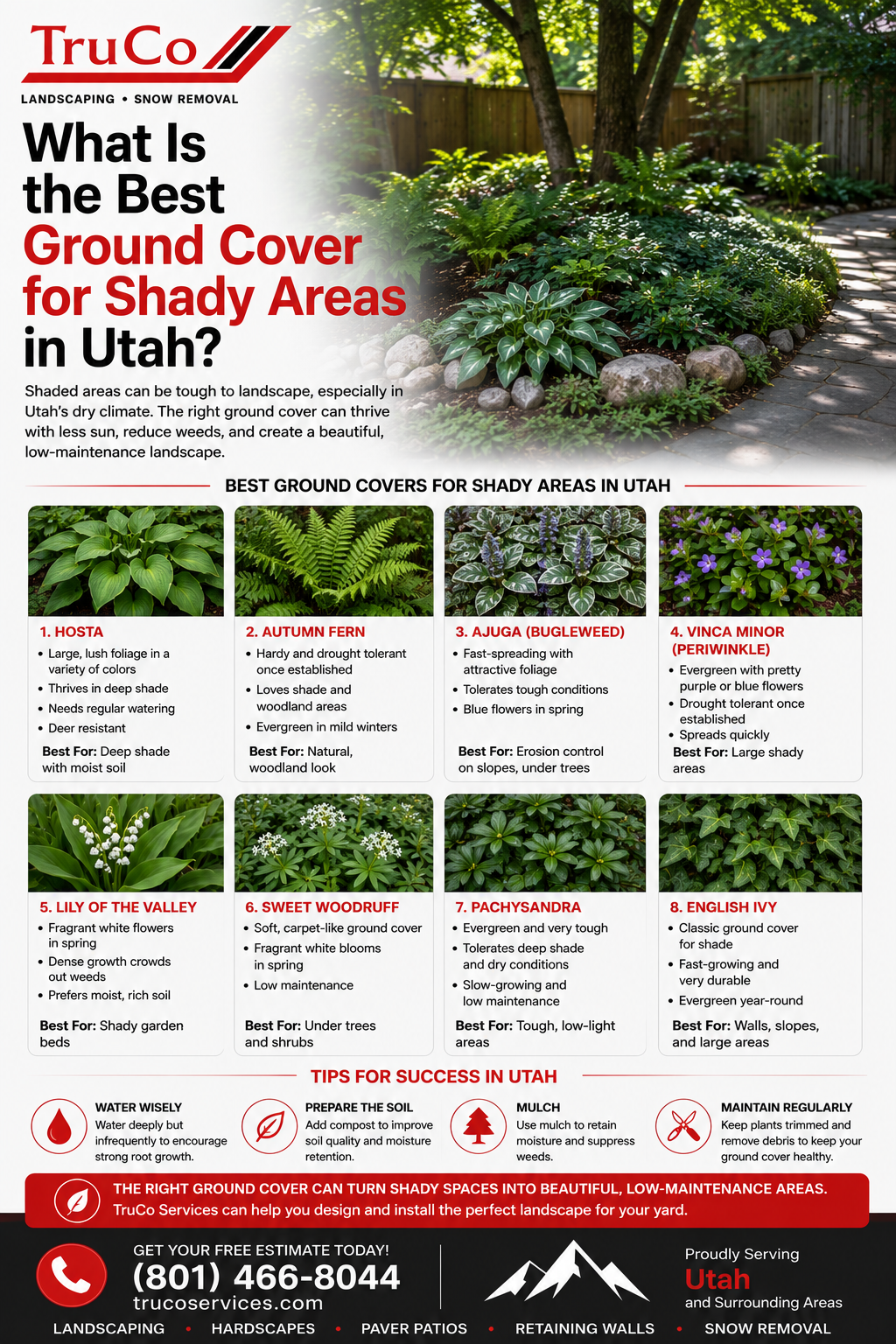
Best Shade-Tolerant Ground Covers for Utah
Creeping Thyme (Thymus serpyllum): Thrives in partial shade, tolerates Utah's alkaline soil, drought-tolerant once established, fragrant flowers, deer-resistant. Best for: partial shade areas with well-drained soil. Walkable with occasional foot traffic. Sedum / Stonecrop (Sedum spp.): Tolerates full shade to full sun, extremely drought-tolerant, thrives in poor alkaline soil, evergreen in milder Utah winters. Best for: dry shade under trees, rock gardens, north-facing slopes. Vinca Minor (Periwinkle): Thrives in dense shade, tolerates clay soil, evergreen foliage, blue-purple flowers in spring. Best for: deep shade under trees where nothing else grows. Can be invasive — plant with care. Pachysandra terminalis (Japanese Spurge): Excellent for dense shade, shallow root system works well under trees, evergreen in Utah's climate. Best for: deep shade areas under large shade trees. Kinnikinnick (Arctostaphylos uva-ursi): Utah native plant, thrives in partial shade, evergreen, red berries attract birds, extremely drought-tolerant. Best for: naturalized shady areas, slopes, native landscapes.
Ground Cover Under Trees: Special Considerations
Growing ground cover under established trees requires careful planting to avoid damaging tree roots. Plant small transplants rather than digging large holes. Water deeply but infrequently to encourage deep root growth. Add 2-3 inches of organic mulch (not rock) to retain moisture. Avoid compacting soil around tree roots. Consider Utah's water restrictions — hand-watering new ground covers may be necessary during establishment. USU Extension recommends sheet mulching (layering cardboard and compost) as a no-dig method for converting bare soil under trees to planted ground cover.
Ground Cover for North-Facing Slopes
North-facing slopes in Utah receive the least direct sunlight and stay coolest. They also tend to be the most erosion-prone. Recommended plants: creeping Oregon grape, kinnikinnick, creeping juniper, and snow-in-summer. On steep slopes, use jute netting or erosion control blankets to hold soil while ground covers establish. Plant on contour — along the slope, not up and down — to slow water runoff. Space plants closer together (8-12 inches apart) on slopes for faster coverage.
Planting and Maintenance Tips
Plant in spring (April-May) or fall (September) for best establishment in Utah. Water regularly during the first growing season — even drought-tolerant plants need consistent moisture for root development. After establishment, most Utah shade ground covers need deep watering only every 2-4 weeks. Apply 2-3 inches of organic mulch (wood chips, shredded bark) annually. Pull competing weeds promptly. Thin or divide spreading ground covers every 3-4 years to prevent overcrowding.
Frequently Asked Questions
What ground cover grows best under trees in Utah? Vinca minor and pachysandra are the most reliable for dense shade under trees. Kinnikinnick works well in partial shade under native trees.
Can I grow grass in shady areas of my Utah lawn? Fine fescue is the most shade-tolerant grass for Utah, requiring 3-4 hours of direct sun daily. For deeper shade, use non-grass ground covers.
What is the most drought-tolerant shade ground cover for Utah? Sedum and kinnikinnick are the most drought-tolerant. Both thrive in Utah's dry climate once established.
How long does it take for ground cover to fill in? Most ground covers take 1-3 years to fully establish and fill in, depending on spacing, soil conditions, and watering. Plant closer together for faster coverage.
Do I need to water ground cover in winter in Utah? Evergreen ground covers benefit from monthly winter watering during dry spells when temperatures are above 40°F and the ground isn't frozen. This prevents winter desiccation.
Can I use decorative rock instead of ground cover in shade? Rock mulch in shady areas actually makes the microclimate worse — it absorbs heat during the day and radiates it at night, drying out the soil. Organic mulch is better for shade ground covers.