
How to Winterize Your Irrigation System in Utah

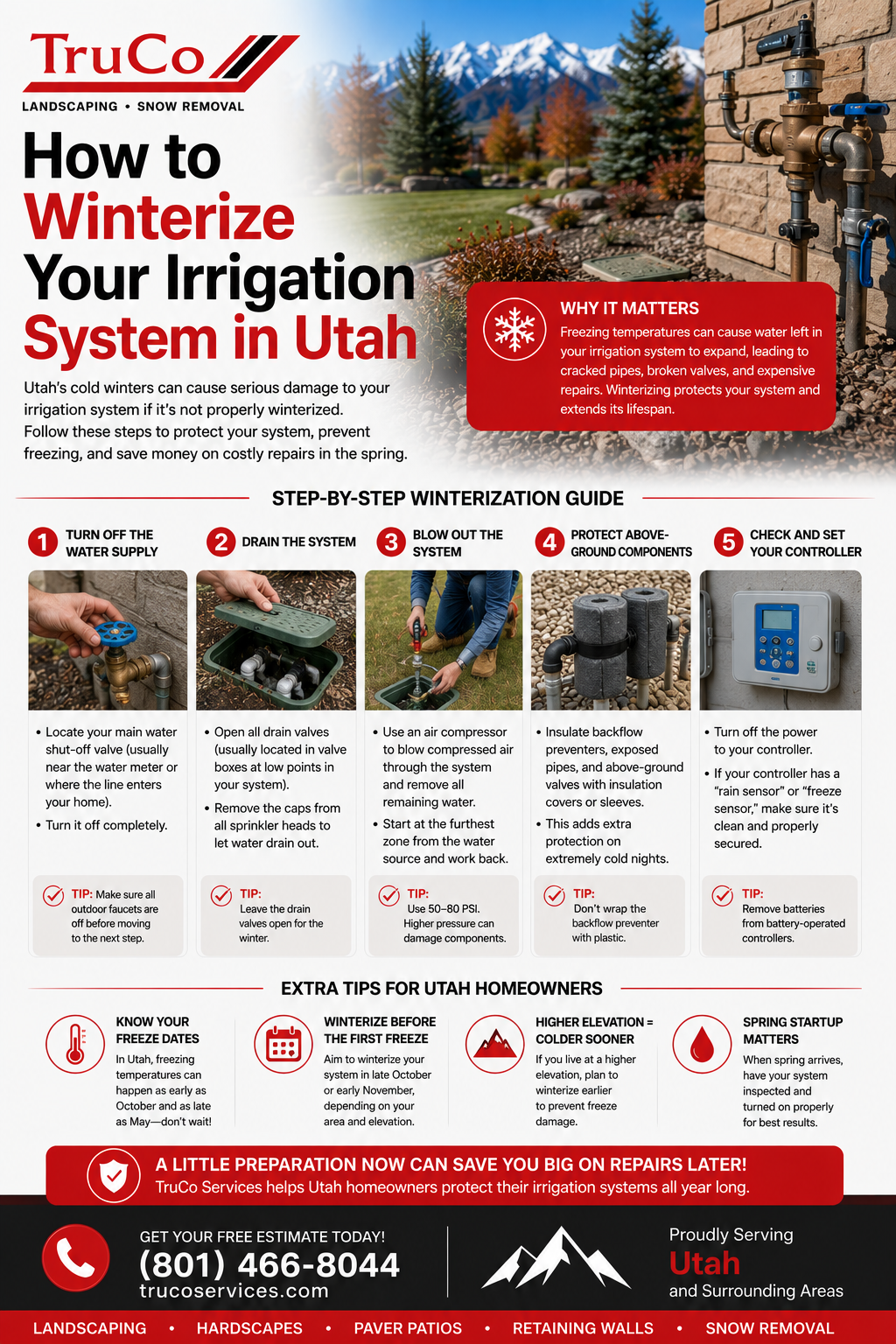
Why Winterizing Is Critical in Utah's Climate
Utah's winters bring sustained sub-freezing temperatures that can destroy an unprepared irrigation system. Water expands as it freezes, and that expansion generates thousands of pounds of pressure per square inch inside pipes, fittings, and valves. A single frozen, burst pipe can cost $500-$2,000 to repair. Winterizing your irrigation system in Utah is not optional — it's the single most important maintenance task of the year for any sprinkler system.
When to Winterize in Utah (Timing by Elevation)
Park City, Heber Valley, Park City (6,000-7,000 ft): Winterize by October 1. First freeze: typically mid-September. Wasatch Front valleys (Salt Lake, Utah, Davis, Weber counties, 4,000-5,000 ft): Winterize by October 15-31. First freeze: typically mid-October. St. George / Washington County (2,800 ft): Winterize by November 15-30. First freeze: typically late November. The rule: winterize at least two weeks before the average first freeze date for your area.
Step-by-Step Irrigation Blowout Guide
Step 1: Turn off the water supply at the main shutoff valve or backflow preventer. Step 2: Open the manual drain valves at the lowest points of the system — let gravity drain as much water as possible. Step 3: Attach an air compressor to the system using a quick-connect fitting. Use 50-80 CFM compressor at 40-80 PSI. Do not exceed 80 PSI — excessive pressure can blow fittings apart. Step 4: Open one zone at the controller and blow air through until only mist comes from the sprinkler heads (30-60 seconds per zone). Step 5: Repeat for each zone. Step 6: Close the backflow preventer test cocks and drain the backflow device itself.
How to Drain Your System Without a Compressor
If you don't have an air compressor, you can manually drain the system by opening all manual drain valves and letting gravity remove the water. This works adequately for systems installed with proper slope (pipes graded to drain). After draining, open all zone valves manually to relieve pressure. Systems without proper slope or with low points will still hold water and risk freeze damage — a compressor blowout is always better.
Winterizing Backflow Preventers
Backflow preventers are the most freeze-vulnerable component. Utah Administrative Rule R309-112 requires backflow testing for commercial properties and many residential systems. To winterize: turn off shutoff valves, open test cocks to drain water, leave test cocks slightly open through winter, and insulate the backflow device with foam covers. Never wrap backflow preventers in plastic — it traps moisture and promotes corrosion.
Cost of Winterization Services in Utah
Professional blowout services: $40-$100 for residential systems along the Wasatch Front. Additional charges for backflow testing ($50-$150) and repairs ($50-$200 per broken component). DIY compressor rental: $40-$80 per day from equipment rental yards. Hiring a professional is recommended for systems over 8 zones or systems installed on steep slopes.
Spring Startup: How to Reactivate Your System
In spring (typically April-May along the Wasatch Front, March-April in St. George): slowly open the main water supply, close backflow test cocks, pressurize the system, inspect each zone for broken heads or leaks, and adjust sprinkler heads that shifted over winter. Run a full system test before the first scheduled watering of the season.
Frequently Asked Questions
Can I winterize my irrigation system myself? Yes, if you have an air compressor with sufficient capacity (50-80 CFM). Without a compressor, manual draining is possible but riskier. Hire a professional if you're unsure.
What happens if I don't winterize my sprinkler system? Water freezes and expands, bursting pipes, valves, and sprinkler heads. Repair costs typically range from $500-$2,000 and can be much higher if underground pipes need excavation.
How much PSI should I use to blow out sprinklers? 40-80 PSI is the safe range for most residential systems. Never exceed 80 PSI. PVC pipes can burst at higher pressures.
Do I need to winterize drip irrigation? Yes. Drip lines hold water and will burst when frozen. Blow them out at lower pressure (30-40 PSI) to avoid damaging emitters.
Should I leave sprinkler valves open or closed over winter? Open manual drain valves and leave zone valves in their normal position. Open test cocks on backflow preventers slightly to allow drainage.
When is the best time to winterize in Salt Lake County? Mid-October, before the first hard freeze. Monitor weather forecasts and winterize at least two weeks before the forecast first freeze.